
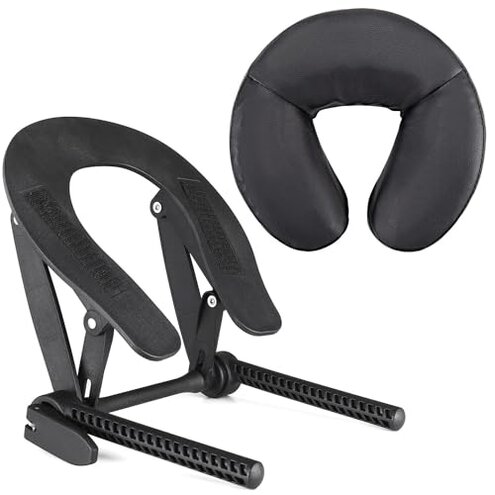
Product evaluated: Universal Massage Table Face Cradle & Cushion, Adjustable Massage Chair Spa Bed Headrest & Face Pillow Support, Massage Platform Head Rest Cushion Cradle for Salon Home Mattress Top Massage Kit
Related Videos For You
OneTouch Massage Table Face Cradle Adjustment - How To Adjust a Face Cradle
Earthlite Flex-Rest Massage Table Face Cradle with Strata Facepillow
Data basis: This report used dozens of written buyer reviews and several user-shot videos collected through early 2024 to early 2026. Most feedback came from written reviews, supported by video demonstrations, and signals leaned toward recent purchasers describing setup and in-use problems.
| Outcome | Universal face cradle | Typical mid-range alternative |
|---|---|---|
| Comfort | Mixed — some find padding soft, others report pressure points after long sessions. | More consistent — mid-range models usually balance padding and support for long sessions. |
| Fit & stability | Higher risk — wobble and loose rods reported more often than typical for this category. | Lower risk — mid-range alternatives commonly offer tighter clamps and longer rods. |
| Durability | Questionable — repeated reports of fast wear and peeling after several months. | Better — most mid-range options show steadier material life under similar use. |
| Cleaning & smell | Easy-clean claim but occasional complaints of early peeling or odor when new. | Comparable — mid-range covers resist stains and usually hold up longer with regular care. |
| Regret trigger | Fit instability — wobble during use that can spoil long treatments. | Less likely — regret usually stems from comfort choice, not instability. |
Why does the headrest wobble or shift during a massage?
Regret moment: Wobble often shows up during first full session and becomes worse under long pressure.
Pattern: This is a commonly reported problem across user feedback and video tests.
Usage anchor: The issue appears during use when clients turn their heads or when therapists apply pressure in long sessions.
Category contrast: This feels worse than normal because most mid-range headrests secure tightly to table rails, reducing movement.
How hard is it to get a secure fit on your table?
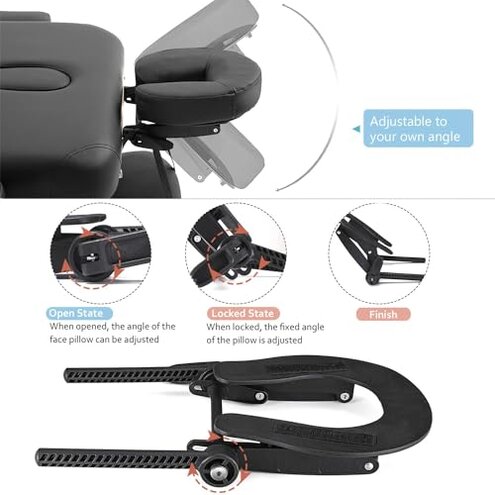
- Early signs: Rods that slide or don’t lock solidly during first setup are a primary issue.
- Frequency tier: This is a primary issue for many buyers, appearing more often than padding complaints.
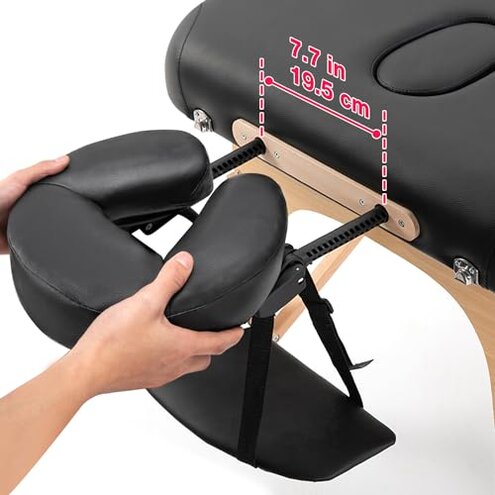
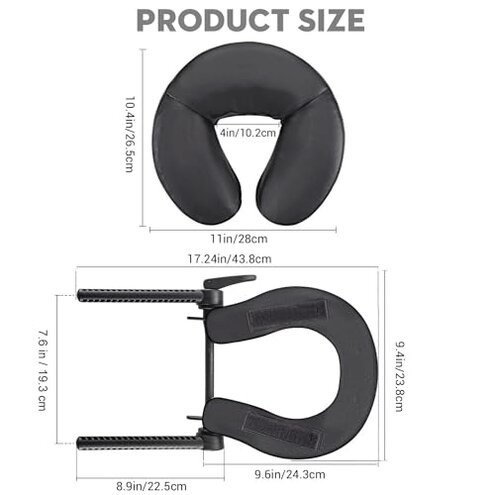
- Probable cause: Short or thin rods and loose backing can cause poor clamping to diverse table rails.
- Impact: The headrest shifts mid-session and interrupts treatments, creating client discomfort.
- Fix attempts: Buyers often try DIY shims or retightening, which adds setup time and is not a permanent fix.
Does the cushion stay comfortable over time?
- Primary sign: Initial softness can turn into uncomfortable firmness after repeated use, a secondary issue.
- Wear timeline: Comfort loss is reported after repeated use, not just first week.
- Cause: Thin cushioning or inadequate internal support can compress faster than mid-range options.
- Impact: Pressure on nose or forehead during long massages becomes more noticeable.
- Attempts: Users rotate or add extra padding, which increases bulk and reduces the cradle’s fit effectiveness.
- Hidden requirement: Buyers often need to confirm their table thickness because the adjustable height tops out near 3.15 inches and may not clear thicker tops.
- Fixability: Partial fixes exist but they usually reduce stability or require extra purchases.
Are there durability, smell, or finish problems?
- Common reports: Early peeling or seam separation is a secondary complaint seen across written feedback.
- New-product smell: A minority call out a faint odor on arrival, an edge-case that often fades with airing.
- Cleaning trade-off: The surface wipes clean easily but may peel sooner than expected under heavy use.
- When it worsens: Durability declines faster if used daily in a professional setting rather than occasional home use.
- Impact: Peeling and seam wear reduce both appearance and hygiene confidence for therapists.
- Attempted fixes: Users recommend gentle cleaners and avoiding oils, but these steps don’t restore worn edges.
- Category contrast: This feels worse than typical because many mid-range options use stronger edging and glue techniques.
Illustrative excerpts
Excerpt: "Facerest slid forward during a 45-minute session, upsetting the client." — primary pattern.
Excerpt: "Padding compressed after a few uses, not as soft anymore." — secondary pattern.
Excerpt: "Needed extra shims to fit my thick tabletop, added extra setup time." — edge-case pattern.
Who should avoid this
- Professional therapists who run back-to-back long sessions should avoid it because stability and durability fall short of professional needs.
- Buyers with thick tabletops should avoid it unless they confirm clearance, due to the height limit requirement.
- Those prioritizing long-term appearance should avoid it because surface peeling occurs more often than expected in this price tier.
Who this is actually good for
- Occasional home users who want an inexpensive cradle and accept some wobble for light, infrequent sessions.
- Buyers wanting simple cleaning who tolerate possible early wear in exchange for an easy-wipe surface.
- Non-professional hobbyists who can add their own padding or shims and accept extra setup time for lower cost.
Expectation vs reality
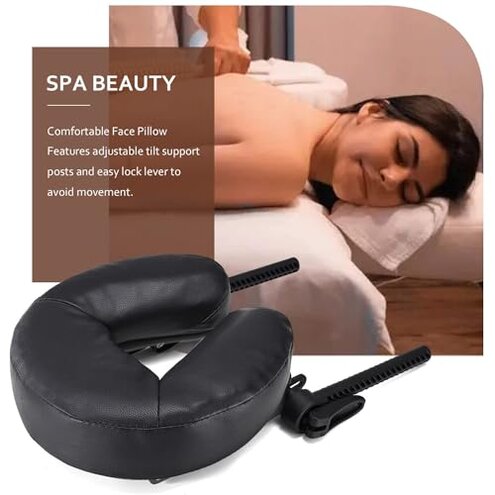
Expectation: A universal cradle should clamp securely to most tables, as is reasonable for this category.
Reality: Many users report loose fit and wobble that undermines long-session reliability.
Expectation: Cushion remains comfortable for months under normal use.
Reality: Comfort can compress after repeated use and often requires added padding to restore feel.
Safer alternatives
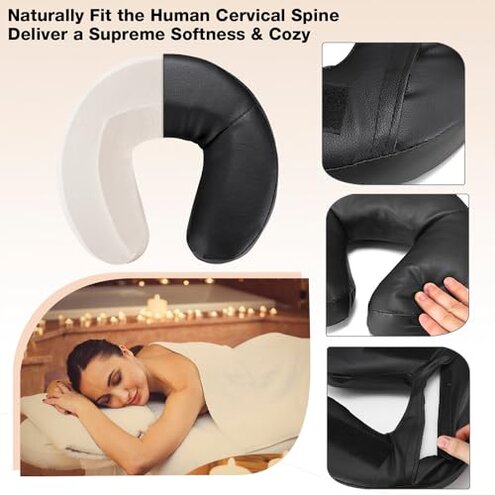
- Choose longer rods — prefer models advertised with longer or thicker rods to reduce the wobble risk.
- Look for reinforced clamps — pick cradles that list locking clamps to solve the fit instability directly.
- Check height specs — confirm adjustable height exceeds your mattress thickness to avoid the hidden requirement.
- Prefer better edging — select covers with reinforced seams to reduce early peeling.
- Budget for upgrades — if you need professional reliability, plan to spend more on a mid-range model with proven durability.
The bottom line
Main regret: The most frequent trigger is fit instability that interrupts sessions and demands workarounds.
Why worse: This product shows higher-than-normal risk for wobble and early wear compared with typical mid-range cradles.
Verdict: Avoid this cradle if you need secure, long-session performance or professional durability.
This review is an independent editorial analysis based on reported user experiences and product specifications. NegReview.com does not sell products.