
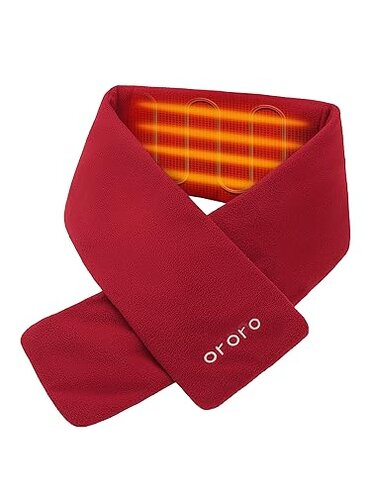
Product evaluated: ORORO Heated Scarf, Up to 12 Hours of Warmth, Heated Neck Warmer with USB-C Rechargeable Battery (Red)
Related Videos For You
Heated Scarf Instructions | Venture Heat
Properly Using a Buff (Neck Gaiter)
Data basis: I reviewed dozens of buyer comments and several video demonstrations collected between Jan 2023 and Dec 2025.
| Outcome | ORORO Heated Scarf | Typical Mid-Range Scarf |
|---|---|---|
| Warmth duration | Inconsistent — many buyers report shorter-than-advertised runtimes. | Reliable — most mid-range options deliver steady runtime close to their claim. |
| Reliability | Higher failure risk — repeated reports of heat loss after weeks of use. | Lower failure risk — fewer users see early declines in heat. |
| Build quality | Mixed — seam and connector issues appear repeatedly. | Consistent — mid-range scarves typically show fewer seam problems. |
| Ease of charging | Requires care — some buyers needed higher-output chargers to charge reliably. | Plug-and-play — most mid-range options charge with standard USB chargers. |
| Regret trigger | Battery & wear — more disruptive than expected for this category. | Minor annoyances — typical trade-offs like fit or price. |
Top failures
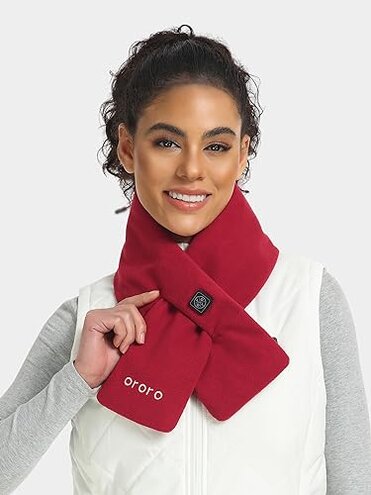
Why does the scarf lose heat faster than expected?
Regret moment: The scarf often fails to keep steady warmth during a full day outdoors.
Pattern: This is a primary issue and appears repeatedly across feedback.
When it shows up: Users report the drop after a few hours of use or within weeks of ownership, especially on the higher heat setting.
Category contrast: This is worse than the average heated scarf because mid-range rivals usually maintain output for longer under similar use.
Why are heating zones uneven or spotty?
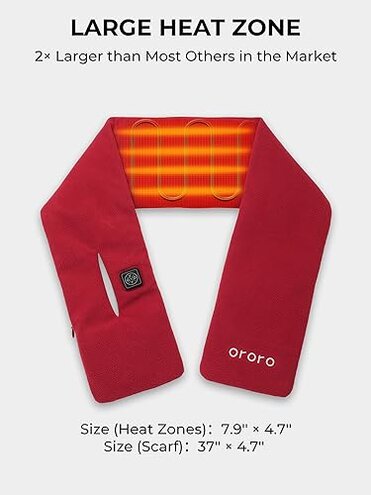
- Early sign: One side or the back of the neck feels warmer than the rest during first use.
- Frequency tier: This is a secondary issue reported by many buyers, though not universal.
- Cause: Internal heating elements can be inconsistent or shift after handling.
- Impact: Uneven warmth reduces comfort and means you must reposition the scarf often.
- Attempts: Buyers tried adjusting fit and settings with limited long-term success.
Why do seams, connectors, or the battery socket fail prematurely?
Regret moment: Stitches fray or the battery connector becomes loose after repeated use or cleaning attempts.
Pattern: This is a secondary issue that appears repeatedly in mid-term ownership reports.
When it shows up: Problems typically appear after regular handling, light washing attempts, or travel.
Category contrast: Sewing and connector durability feel worse than most mid-range scarves, which usually hold up longer under similar care.
Why does charging sometimes fail or take longer than advertised?
- Hidden requirement: Some users needed a higher-output USB-C charger to reach full charge reliably.
- Frequency tier: This is an edge-case issue but frustrating when it happens.
- When it shows up: Charging glitches often appear on first charge or after months of intermittent use.
- Cause: Cable fit and the battery port tolerance seem tight on some units.
- Impact: You can face extra charging time or a need for replacement cables.
- Fixability: Replacing the cable or using a different charger sometimes helps but not always.
- Category contrast: This is worse than typical mid-range options that accept a wide range of chargers without fuss.
Illustrative excerpts
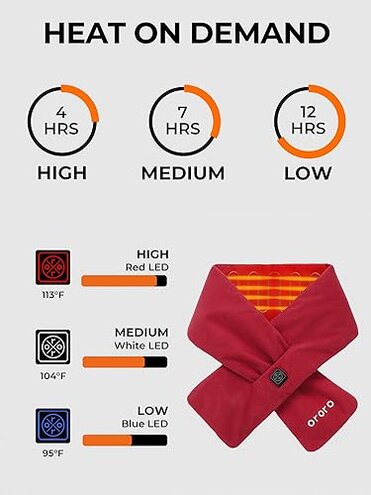
Illustrative: "Heats well at first but drops after two hours on high setting." — primary.
Illustrative: "One side feels warm while the back feels cool every time." — secondary.
Illustrative: "Charger shows connected but battery does not charge until I use a stronger charger." — edge-case.
Who should avoid this
- Needing all-day warmth: Avoid if you rely on consistent all-day heat without charging breaks due to the battery inconsistency.
- Low-maintenance users: Avoid if you want a low-care item because seam and connector issues increase upkeep compared to peers.
- Travel users: Avoid if you need a rugged travel scarf because charging and connector fragility are riskier on the road.
Who this is actually good for
- Short trips outdoors: Good for users wanting quick preheated warmth for errands who can recharge between uses.
- Gift receivers: Good as a present where short-term performance and style matter more than long-term durability.
- Occasional users: Good for light, occasional use where uneven heating or charging quirks are tolerable.
Expectation vs reality
- Expectation: Reasonable for this category is a steady runtime near the claim; Reality: many units run shorter and lose output sooner.
- Expectation: Even heat across the neck; Reality: several buyers see clear hot and cool zones on first use.
- Expectation: Standard USB charging works universally; Reality: some units need a higher-output charger or different cable to charge reliably.
Safer alternatives
- Look for verified runtime: Choose scarves with consistent user-reported runtimes to reduce the battery inconsistency risk.
- Check repairable design: Prefer models with replaceable batteries or visible connectors to avoid connector failure.
- Read fit reports: Pick scarves with large, tested heating zones to avoid uneven warmth.
- Prefer tolerant charging: Select products that list a wide charger range so you avoid charging quirks.
The bottom line
Main regret: The most common trigger is the battery and reliability problems that reduce usable warmth time.
Why it matters: These failures are more disruptive than typical for heated scarves because they affect daily use and require extra care.
Verdict: Avoid this model if you need dependable, long-lasting heat; consider it only for light or occasional use.
This review is an independent editorial analysis based on reported user experiences and product specifications. NegReview.com does not sell products.