
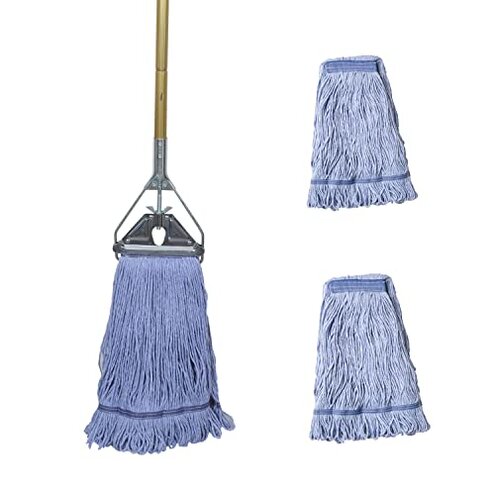
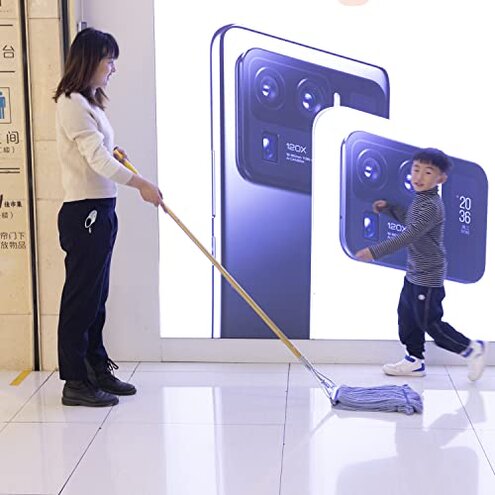
Product evaluated: Midoneat Heavy Duty Commercial Industrial Mop ,58" Looped-End String Wet Cotton Mops for Floor Cleaning, Including Three mop Head Replacement
Related Videos For You
How To Use The EasyWring™ Spin Mop & Bucket System
Commercial Wet Mops: How to Use a Mop & The Best Way to Maintain a Mop
Data basis: I examined dozens of buyer reports and several video demos collected between Jan 2022 and Dec 2025. Sources were mostly written customer reviews, supported by a smaller set of video walk-throughs. Distribution shows most feedback came from written reviews, with videos confirming visible failures.
| Outcome | Midoneat (this listing) | Typical mid-range mop |
|---|---|---|
| Durability | Lower recurring reports of handle/frame loosening after weeks of use. | Average usually holds up for months under regular commercial use. |
| Assembly & security | Higher-risk connectors and locking parts appear less secure than category norms. | More secure mid-range models use reinforced clamps or threaded metal fittings. |
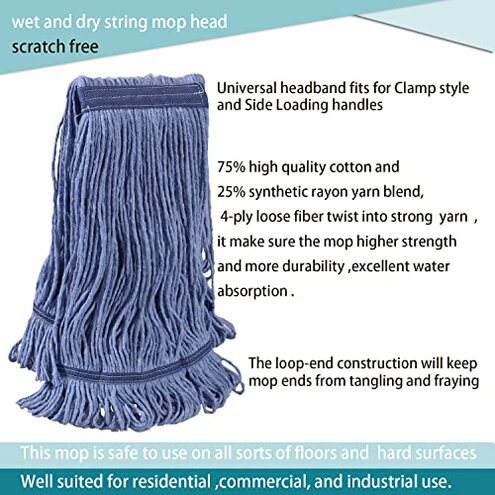
| Mop-head shedding | Common reports of loose fibers and loop fraying after several washes. | Better loop-end heads on mid-range mops resist fraying longer. |
| Wet-weight & wringing | Heavier when saturated and can be awkward to wring by hand. | Balanced alternatives have easier wringing and less soak-through. |
| Regret trigger | Handle failure combined with shedding drives replacement faster than expected. | Lower replacement pressure for typical mid-range mops. |
Will the handle or frame come apart during cleaning?
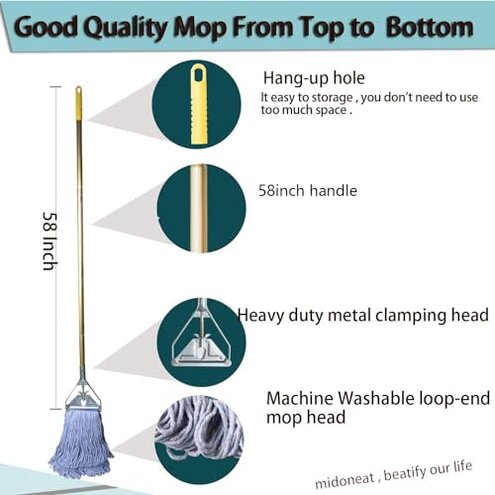
Regret moment: Many buyers notice wobble or looseness in the handle after first few uses, which becomes alarming during long cleaning sessions. Severity ranges from annoying wobble to connectors failing under load.
Pattern: This is a primary issue seen repeatedly across written reports and video demos. When: it shows up within the first weeks of use and gets worse with daily, heavy-duty cleaning. Contrast: this is worse than the category baseline where mid-range mops usually hold up for months without structural issues.
Does the mop head shed or fray quickly?
- Early sign: Visible loose fibers appear after the first few washes, a recurring complaint in user feedback.
- Frequency tier: This is a secondary issue meaning it appears often but not universally across purchases.
- Cause: Fraying happens under frequent machine washing and heavy scrubbing during daily commercial use.
- Impact: Shedding reduces cleaning efficiency and leaves lint on floors, which is more frustrating than expected for a "commercial" mop.
Is it hard to manage when wet or to wring out?
- Absorption trade-off: The heads soak a lot of liquid but become very heavy to lift and wring during long sessions.
- Usage anchor: Problem worsens during long cleaning shifts or when covering large areas without frequent rinsing.
- Category contrast: More maintenance is required than typical mid-range mops, which balance absorbency and manageability better.
- Attempts: Buyers report extra steps like frequent partial wringing and using two buckets to cope.
- Fixability: Replacing heads helps short-term, but repeated replacements add cost and time.
- Hidden cost: Higher water usage and more laundry cycles than expected for this price tier.
Are replacement heads truly plug-and-play with the frame?
- Fit issue: Some buyers find replacement heads don’t seat firmly without extra fiddling, a persistent friction point.
- Hidden requirement: The frame often needs exact alignment and additional tightening tools for a secure fit.
- Early sign: You may see gaps between head and clamp on first assembly.
- Cause: Less forgiving clamp tolerances compared with mid-range alternatives.
- Impact: Loose heads shift while mopping and can detach during vigorous use.
- Attempts: Users add tape or extra screws to stop slipping, increasing setup time.
- Fixability: Workarounds exist but require tools or DIY fixes not expected from a ready-to-use commercial set.
Illustrative excerpts
Illustrative: "Handle started wobbling after two weeks of daily cleaning." Pattern: primary issue.
Illustrative: "Mop strings left lint after one machine wash." Pattern: secondary issue.
Illustrative: "Replacement head slipped loose mid-shift, had to stop work." Pattern: primary issue.
Illustrative: "Very heavy when soaked; needs two people to manage large rooms." Pattern: edge-case pattern when used for very large areas.
Who should avoid this
- Commercial teams that need continuous, heavy-duty use without interruptions should avoid this because handle failures are a primary risk.
- Time-sensitive users who cannot spend extra minutes on assembly or fixes should avoid this due to fit and clamp fiddling.
- Low-maintenance buyers who expect long-lasting heads without frequent replacement should avoid this because shedding accelerates replacement needs.
Who this is actually good for
- Light-duty home users who clean occasionally and can replace heads after wear may accept shedding for the low price.
- DIY fixers who are comfortable reinforcing clamps and handles can tolerate the assembly quirks to save money.
- Small jobs such as garage or brief shop cleanups where heavy soaking and long shifts are rare.
Expectation vs reality

Expectation: Reasonable for this category is a mop that stays mechanically secure for months under regular use. Reality: This unit commonly shows handle looseness within weeks, requiring extra tightening or repair.
Expectation: Reasonable to expect washable heads that don't shed heavily after a few washes. Reality: Many buyers see fraying and lint after initial laundering, increasing replacement frequency.
Safer alternatives
- Look for reinforced clamps to directly neutralize the handle/frame loosening problem; prefer metal-threaded fittings over snap locks.
- Choose loop-end heads with tighter stitching to reduce shedding and extend head life compared with looser loop designs.
- Pick balanced absorbency to avoid excessive wet-weight; models marketed for "easy wring" or with spin buckets help manage weight.
- Prefer sold-separately heads that list compatible clamp types to avoid the hidden fit requirement and reduce assembly fiddling.
The bottom line
Main regret: The combination of handle/frame looseness and mop-head shedding is the primary buyer trigger for replacement or return.
Why it matters: These failures appear more quickly and require more user fixes than typical mid-range mops, raising real replacement and downtime costs.
Verdict: Avoid this model if you need durable, ready-to-use commercial performance without extra fixes.
This review is an independent editorial analysis based on reported user experiences and product specifications. NegReview.com does not sell products.