
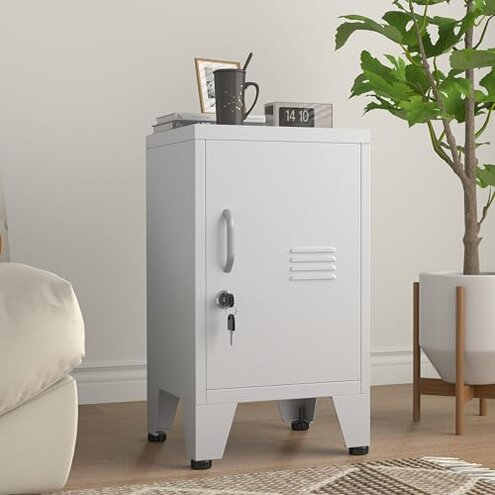
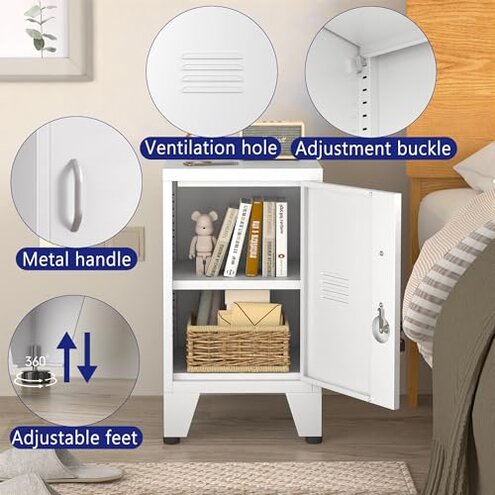
Product evaluated: PAOFIN 24.4" H Metal Locker Storage Cabinet with 1 Doors, Pantry with Shelves, Storage Cabinet with Adjustable Leveling Foot for Kitchen, Employees, Office, Kids Locker
Related Videos For You
On-site Installation video of white 2 door metal storage cabinet
Mingyou 17SEA Mini Steel Security Safe Box Electronic Home Safety Locker Small Caja Fuerte
Data basis: This report blends dozens of buyer comments collected from product-page feedback and short-form demonstration surfaces between 2024 and 2025. Most input came from written reviews, with smaller support from photo and video-led feedback, which helps show whether complaints stop at setup or continue into daily use.
| Buyer outcome | PAOFIN cabinet | Typical mid-range option |
| Assembly stress | Higher risk of time-consuming setup and part alignment frustration | Moderate setup effort with fewer fit surprises |
| Stability feel | More sensitive to floor level and careful placement after setup | Usually steadier under normal light-duty use |
| Door fit | Above-normal chance of needing adjustment to close cleanly | More forgiving door alignment out of the box |
| Storage reality | Smaller-useful space than some buyers expect from listing photos | Closer match between expected and practical storage |
| Regret trigger | Buying for easy setup or daily heavy handling | Buying for basic storage with fewer corrections needed |
Why does a simple cabinet turn into a setup project?
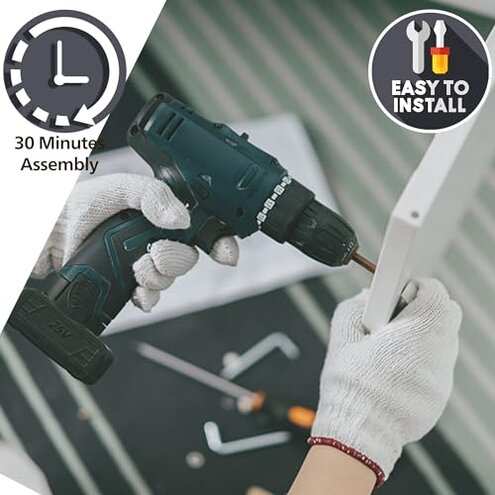
Assembly friction appears to be a primary issue and among the most common complaints for this type of small metal cabinet. The regret usually starts on first setup, when buyers expect a quick build but run into alignment-sensitive panels and extra correction steps.
Pattern: This is a recurring complaint, not a universal one, and it shows up most often before the cabinet is ever used. Compared with a typical mid-range storage cabinet, this feels less forgiving because small mistakes during assembly can affect door fit and stability later.
- Early sign: Trouble often starts when panels seem similar enough to slow down part matching.
- Frequency tier: This is a primary issue, showing up more often than cosmetic complaints.
- Usage moment: The frustration hits during initial assembly, especially if one person tries to do it alone.
- Hidden requirement: Buyers may need two adults, which adds effort beyond what many expect for a compact cabinet.
- Impact: Setup can stretch into a longer project, and mistakes can carry into daily use.
- Fixability: It is often fixable with patience, but that still means extra time and rework.
Why can the door alignment feel off after you finish building it?
Door-fit issues are a secondary problem, but they are more frustrating when they happen because they show up after buyers think the hard part is done. The problem usually appears right after assembly and gets worse if the cabinet sits on an uneven floor or if the frame was tightened out of square.
Pattern: This appears repeatedly across feedback types, though not on every unit. In this category, minor adjustment is normal, but this can feel worse than normal because a small cabinet is expected to be easier to align, not more finicky.
Trade-off: Adjustable feet help in theory, but they also create another step between setup and normal use. That means buyers wanting a plug-and-place experience may feel the cabinet asks for too much tuning.
- Symptom: The door may not sit as cleanly as expected once the cabinet is upright.
- When: It shows up after final tightening or after moving the cabinet into place.
- Worsens when: Uneven flooring or frequent repositioning can make the fit feel less consistent.
- Buyer impact: Daily opening and closing becomes more annoying than the cabinet’s price suggests.
- Attempted fix: Re-leveling or loosening and re-tightening can help, but adds more setup steps.
- Comparative risk: This is a higher-than-normal hassle for a compact metal locker.
- Persistence: Once alignment is off, the annoyance tends to stay until corrected.
Why does the small size bother some buyers more than expected?
- Primary mismatch: A common regret moment happens during first fill, when the cabinet looks useful but holds less than expected in real rooms.
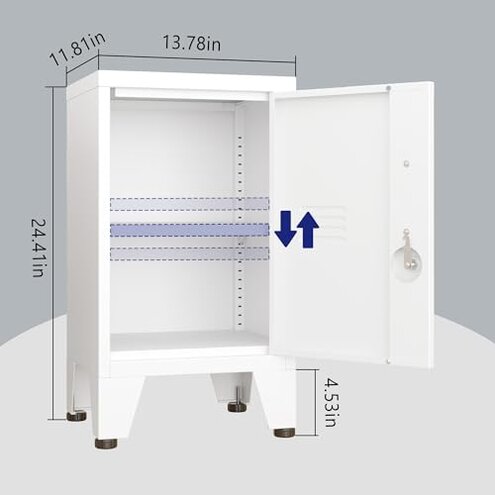
- Context: At about 24.4 inches high, this is better suited to light organization than broad pantry duty.
- Pattern: Space disappointment is a secondary issue that appears repeatedly among buyers who pictured a more flexible storage role.
- Worsens when: The mismatch gets clearer if you plan to store bulky kitchen items or taller office supplies.
- Category contrast: Small cabinets are expected to be compact, but this can feel more limiting because the listing language suggests wider use than the size supports.
- Practical impact: Buyers sometimes end up using it as a niche organizer rather than the main storage fix they planned.
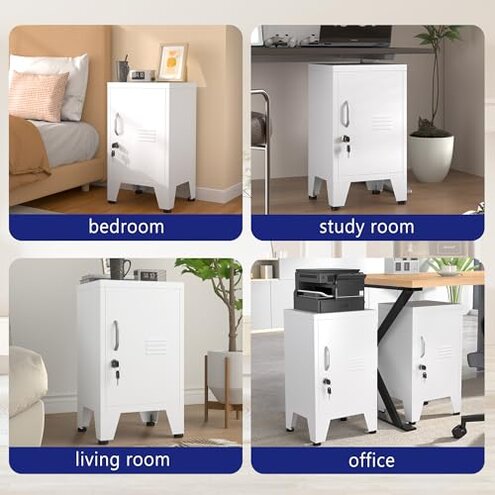
- Mitigation: It works better when treated as a bedside, toy, or personal-item cabinet instead of a true pantry replacement.
- Regret trigger: The issue is strongest when shoppers buy from photos first and dimensions second.
Why can the lightweight feel reduce confidence in daily use?
- Frequency tier: This is an edge-case issue compared with assembly complaints, but it becomes more frustrating for frequent-use spaces.
- When: It tends to show up during daily handling, especially when the cabinet is opened often or loaded unevenly.
- Context: At 13.7 pounds, the cabinet is easier to move, but some buyers may read that as less planted.
- Worsens when: High-traffic rooms, kids’ use, or rough opening can make the cabinet feel less steady.
- Category contrast: Light-duty cabinets are normal in this price band, but this can feel less solid than expected if you were hoping for the feel of a heavier office locker.
- Impact: The result is not always failure, but a lower-confidence feel that can disappoint buyers wanting sturdy everyday handling.
- Workaround: Careful placement and lighter contents help, though that limits how flexible the cabinet really is.
Illustrative: “I thought this would be quick, but setup took way longer than expected.” — Primary pattern
Illustrative: “The door works, but I had to keep adjusting it to line up.” — Secondary pattern
Illustrative: “It looks useful until you start putting real items inside.” — Secondary pattern
Illustrative: “Fine for light stuff, not the solid locker feel I expected.” — Edge-case pattern
Who should avoid this
- Avoid it if you want a cabinet that feels easy to assemble without rework or alignment checks.
- Avoid it if you need dependable door fit right after setup with minimal tweaking.
- Avoid it if you expect true pantry-like storage from a compact cabinet footprint.
- Avoid it if the cabinet will be opened often by kids or in a busy shared space.
Who this is actually good for
- Good fit for buyers who need a small personal-item cabinet and can tolerate a slower setup.
- Good fit for light-duty office or bedroom use where the door is not opened constantly.
- Good fit if you measured carefully and only need compact, vertical organization.
- Good fit for shoppers who do not mind minor leveling or alignment adjustments after assembly.
Expectation vs reality
Expectation: A small cabinet should be a quick afternoon build.
Reality: This one may ask for more patience, more correction, and sometimes a second person.
Expectation: Adjustable feet should solve placement issues fast.
Reality: They can help, but they also add another tuning step before the cabinet feels finished.
Reasonable for this category: Some minor alignment adjustment is normal in flat-pack metal storage.
Worse here: The annoyance can feel higher than expected because door fit and stability depend heavily on getting early assembly steps right.
Safer alternatives
- Choose pre-assembled or partly assembled storage if your main concern is setup time and alignment risk.
- Pick heavier cabinets if daily use and a steadier feel matter more than easy moving.
- Prioritize clear dimensions and compare them to your actual items, not just room space, to avoid storage mismatch.
- Look for simpler door designs if you do not want to spend time leveling and re-adjusting after assembly.
- Shop by use case and choose a true pantry unit if you need kitchen storage, not just a compact locker.
The bottom line
Main regret comes from the gap between its compact size and the amount of setup tuning some buyers may need. That risk feels higher than normal for a small storage cabinet because assembly mistakes can spill into door fit and daily usability. If you want easy setup and broader storage flexibility, this is one to skip. If you only need light-duty organization and can tolerate adjustment, it is easier to accept.
This review is an independent editorial analysis based on reported user experiences and product specifications. NegReview.com does not sell products.