
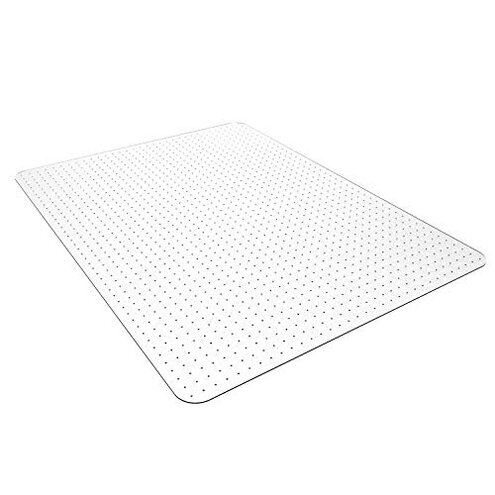
Product evaluated: HOMEK Large Chair Mat for Carpet, Easy Glide Plastic Carpet Floor Protector Mat for Office Chairs for Work & Home
Related Videos For You
Stop DESTROYING Your Home Office Carpet! Build a Chair Mat For CHEAP!
Data basis: This report uses dozens of buyer impressions collected from written comments and short video-style demonstrations between 2023 and 2026. Most feedback came from written experiences, with visual posts helping confirm setup and daily-use problems like movement, flattening, and edge behavior.
| Buyer outcome | HOMEK mat | Typical mid-range alternative |
|---|---|---|
| First-day setup | Higher risk of needing extra time to flatten and position correctly. | Usually lower effort, though some unrolling time is still normal. |
| Chair rolling feel | Mixed; can feel smooth once placed well. | More consistent glide across low-pile carpet. |
| Staying in place | Less predictable during daily shifting and long desk sessions. | Usually steadier if sized correctly for the carpet type. |
| Edge behavior | Higher-than-normal chance of curl frustration after unpacking or repositioning. | Moderate category risk, but often less intrusive. |
| Regret trigger | Buying for quick use and then dealing with setup and movement issues. | Buying too thin for thick carpet is the more common regret. |
Need it to lie flat right away?
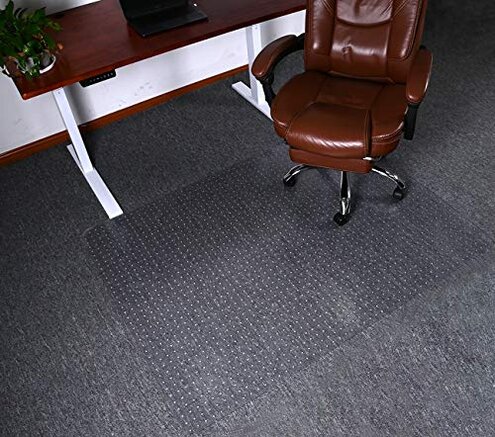
Primary issue: one of the most common frustrations is the mat not settling fast enough after arrival. The regret moment usually shows up on first use, when you want a simple drop-in setup and instead spend extra time flattening corners.
Pattern: this appears repeatedly in buyer feedback and feels more disruptive than expected for this category because chair mats are usually bought to solve hassle, not add it. A typical mid-range mat may still arrive rolled, but this type of setup friction feels less forgiving than normal.
- Early sign: corners or edges resist staying down after you place the mat on carpet.
- When it hits: the problem is most noticeable right after unrolling and during the first work session.
- Why it matters: raised sections can interrupt chair movement and make the area feel unfinished.
- Frequency tier: this is a primary complaint, not a rare one-off annoyance.
- Hidden requirement: some buyers end up needing extra waiting time, weight on the corners, or a warm room before normal use.
- Fixability: it can improve, but the extra steps reduce the convenience buyers expected.
Illustrative: “I expected unroll and go, not a project under my desk.” Primary pattern.
Want it to stay put during long work sessions?
- Recurring issue: movement on carpet appears as a secondary but persistent complaint during daily chair use.
- Usage moment: it tends to show up after setup, once repeated rolling and foot pressure start shifting the mat.
- Buyer impact: instead of protecting one area neatly, the mat can drift and need repositioning.
- Category contrast: some shifting is category-normal, but this feels more frequent than expected for a product sold on grip.
- Worsens when: long desk sessions and frequent scooting in and out make the problem more noticeable.
- Trade-off: smooth rolling can feel good at first, but less stable placement can cancel out that benefit.
- Fix attempts: buyers commonly try re-centering it or pressing it down more firmly, which adds routine upkeep.
Illustrative: “It works, but I keep nudging it back into place.” Secondary pattern.
Using thicker or softer carpet than expected?
Persistent mismatch: a less frequent but more frustrating issue happens when the mat meets carpet that is softer or less ideal than the buyer assumed. The problem usually appears during daily use, when the chair does not roll as easily as hoped.
Why this stings: chair mats for carpet already depend on carpet type, but buyers reasonably expect basic tolerance for normal home-office surfaces. Compared with a typical mid-range option, this can feel pickier about carpet conditions than expected.
- Early clue: chair movement feels heavier than expected, even after the mat is placed correctly.
- Pattern level: this is a secondary issue, but it creates stronger disappointment when it happens.
- When worse: heavier chairs, longer rolling paths, and frequent back-and-forth movement can make drag easier to notice.
- Real cost: the mat may still protect carpet, but it may not deliver the smoother motion buyers wanted.
- Hidden requirement: buyers may need to match it carefully to low-pile carpet instead of assuming broad carpet compatibility.
- Fixability: there is limited fix potential if the carpet itself is the mismatch.
Illustrative: “Protection is fine, but my chair still feels harder to move.” Secondary pattern.
Expecting durable edges that stop annoying you?
- Edge-case issue: edge and corner behavior is less frequent than setup complaints, but more frustrating when it keeps catching attention.
- When noticed: it shows up after repositioning, cleaning around the mat, or repeated chair passes near the perimeter.
- User-visible impact: the mat can look uneven or feel like it needs babysitting to stay tidy.
- Category contrast: some edge memory is normal, but buyers often find this inconvenience lasts longer than a mid-range baseline.
- Why regret grows: small edge problems become bigger when you roll across the same area all day.
- Attempted workaround: buyers may avoid using the outer area, which reduces the practical size of the mat.
- Long-session effect: the annoyance is minor at first but repeats enough to become a daily irritation.
- Fixability: improvement is possible, but not universal, so this remains an edge-case risk.
Illustrative: “The corner keeps reminding me this never fully settled.” Edge-case pattern.
Who should avoid this
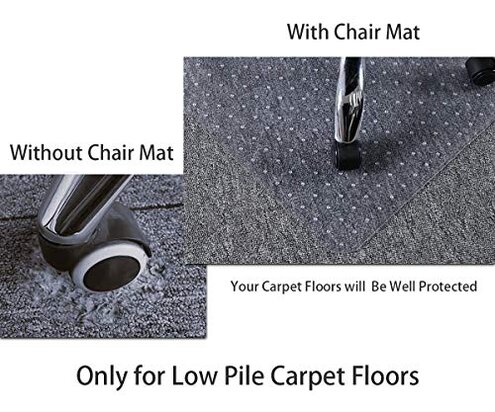
- Avoid it if you want a true unroll-and-use mat with minimal setup patience.
- Skip it if mat movement during long desk hours would bother you more than occasional carpet marks.
- Pass if your carpet is thicker, softer, or hard to classify, because compatibility regret can exceed normal category tolerance.
- Look elsewhere if curled edges or visual unevenness will keep catching your eye every day.
Who this is actually good for
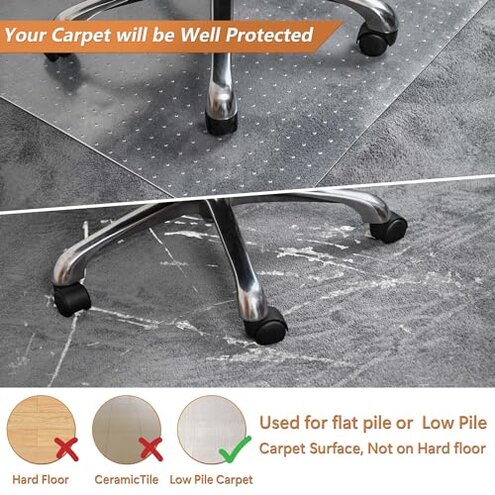
- Better fit for buyers on low-pile carpet who can tolerate some setup time to get a clear mat in place.
- Works better for lighter-use desks where the chair does not constantly roll across the full mat.
- Fine option for shoppers focused more on basic carpet protection than perfect stability.
- Reasonable choice if you accept that edge settling may take effort and that convenience is not the main strength.
Expectation vs reality
Expectation: a clear carpet mat should be simple to place and start using the same day.
Reality: setup can take extra time, and that is a worse-than-expected first impression for this category.
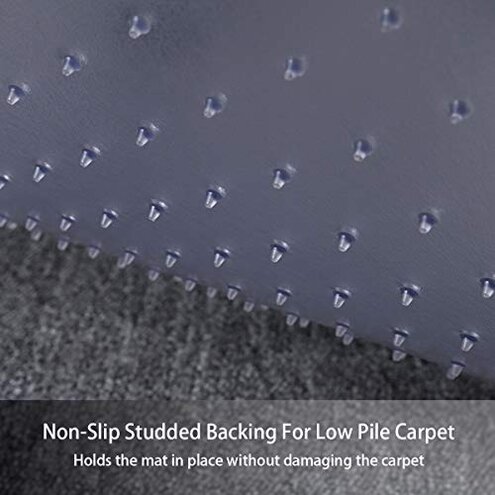
Expectation: grip features should reduce movement during normal office use.
Reality: some buyers still report repositioning during daily sessions, especially with repeated rolling.
Reasonable for this category: some unrolling memory and minor settling are normal.
Worse here: the inconvenience can last longer or demand more effort than many mid-range buyers expect.
Safer alternatives
- Choose flatter-shipping options if your main concern is first-day curl and setup delay.
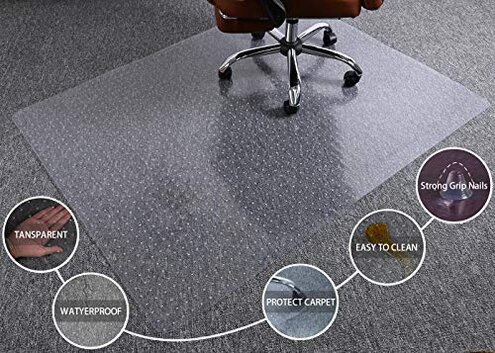
- Match the mat to carpet type very carefully, especially low-pile versus thicker carpet, to avoid drag and disappointment.
- Look for stronger stability feedback if you work long hours and need less repositioning.
- Consider a thicker mid-range mat if edge behavior and long-session rolling feel matter more than a low upfront price.
The bottom line
Main regret trigger: buyers expecting quick setup and steady daily performance may get stuck dealing with flattening, shifting, or carpet-match issues instead. Why it exceeds normal risk: these problems hit the exact convenience benefits people buy a chair mat for, and they can take extra time to manage. Verdict: avoid it if you want low-fuss use from day one, especially on anything other than clearly low-pile carpet.
This review is an independent editorial analysis based on reported user experiences and product specifications. NegReview.com does not sell products.