
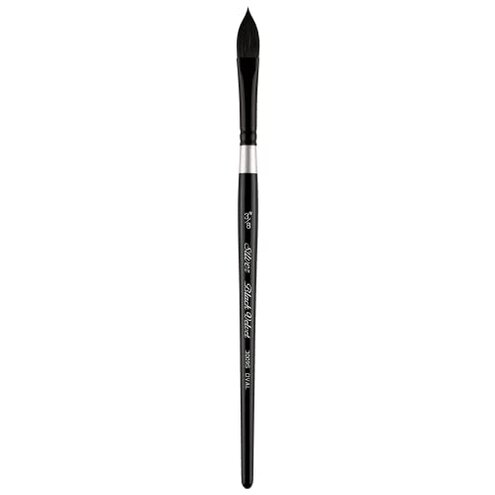
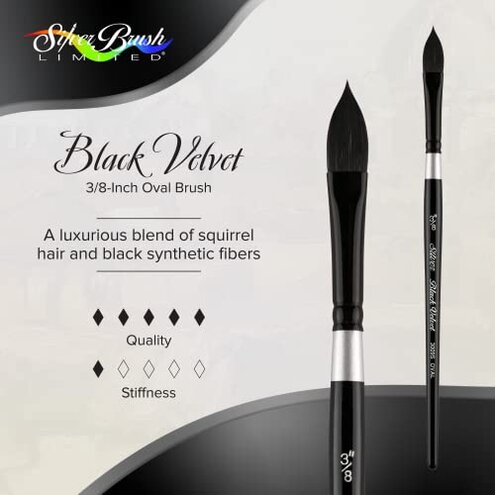
Product evaluated: Silver Brush Limited 3009S-1/2 Black Velvet Oval Wash Paintbrush for Watercolor, Gouache, Inks, & Dyes, Size 1/2 Inch, Short Handle
Related Videos For You
Cleaning & Caring For Your Watercolor Brushes
How to fix damaged paint brush Artist Hack - Paintastic Arts
Data basis: This report is based on dozens of aggregated buyer feedback items collected across a multi-year window ending in recent months. Sources include written ratings and Q&A-style discussions, with most detail coming from longer written notes and some support from brief usage updates.
| Buyer outcome | Silver Brush Black Velvet 3009S | Typical mid-range wash brush |
|---|---|---|
| First-session feel | Excellent softness and water carry, but less forgiving if it arrives imperfect | Good feel with more consistent out-of-box tolerances |
| Hair control | Higher risk of stray hairs or shape drift, especially during wet washes | Lower risk of random strays, but may hold less water |
| Durability per dollar | More disruptive when defects happen because the price raises expectations | More predictable lifespan for the money, even if less “luxury” |
| Upkeep burden | Higher-than-normal need for careful cleaning, reshaping, and storage | Moderate upkeep with less sensitivity to routine handling |
| Regret trigger | Paying premium and getting a brush that sheds or won’t keep a point | Accepting average performance, but avoiding expensive quality swings |
Top failures
“Why is my expensive brush leaving hairs in my wash?”
Regret moment: you lay a smooth wash and a stray hair dries into the paint. You then spend extra time lifting it out or repainting the area.
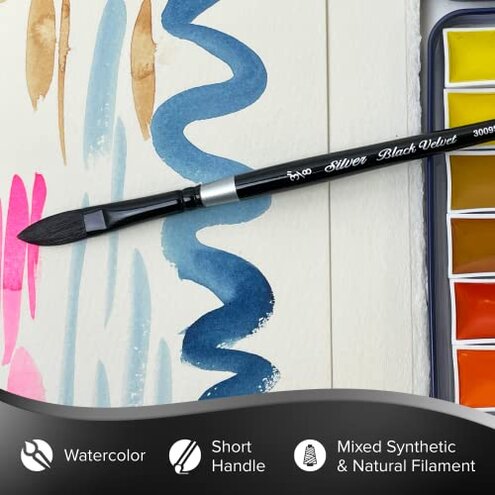
Pattern: shedding and loose hairs appear repeatedly in aggregated feedback, though it is not universal. It shows up early for some buyers, often in the first few painting sessions.
Worse than baseline: a little shedding can happen with artist brushes, but buyers flag this as more frustrating here because the brush is priced like a “no-compromises” tool.
- Early sign: you notice one or two hairs separating during the first wash.
- Primary issue: shedding is described as among the most common complaints for disappointed buyers.
- Trigger moment: it’s most annoying mid-stroke when you are trying to keep an even sky or background.
- Impact: you lose time to tweezers, re-wetting, or repainting after hairs dry in.
- Fixability: some report it settles after extra cleaning, but others call it persistent and return-worthy.
- Hidden requirement: you may need more careful break-in and gentle cleaning than you expect for a single brush.
“Why won’t it keep a crisp edge when it’s supposed to?”
- Recurring note: tip control concerns show up repeatedly, but less often than shedding.
- When it hits: the issue shows during edge work right after a big wet wash.
- Worsens with: longer sessions and frequent re-wetting can make the brush feel floppier than expected.
- Buyer impact: you end up switching brushes more, which adds extra steps mid-painting.
- Category contrast: mid-range wash brushes often have less “luxury flow,” but they can feel more predictable for straight edges.
- Workaround: some buyers compensate by using lighter pressure and less water, which reduces the brush’s main advantage.
- Risk tier: this reads as a secondary issue, but it becomes a dealbreaker for detail-focused painters.
“Is this brush too delicate for normal daily use?”
- Persistent theme: durability worries appear across multiple feedback types and tend to show after repeated use.
- Real moment: problems show up after routine rinsing, then you notice the shape needs more babying.
- Worsens with: daily painting, travel kits, or storage where the head can get bumped.
- Extra upkeep: you may need to reshape more often and be strict about drying position to avoid warping.
- Opportunity cost: the time spent protecting it can exceed what most mid-range brushes demand.
- Category contrast: it’s normal to treat brushes gently, but buyers call the sensitivity here higher-than-normal for a general wash brush.
- Fixability: careful cleaning helps, but it does not fully offset a brush that arrived with quality variance.
- Risk tier: this is a secondary issue that becomes primary if you paint often.
“Did I just get a bad one?”
- Common frustration: quality consistency worries appear repeatedly in buyer feedback.
- When it shows: you notice it at first inspection or first use, when the head looks uneven or behaves oddly.
- Why it stings: at this price, buyers expect tight consistency, not a brush that feels hit-or-miss.
- Real impact: you spend time testing, cleaning, and comparing instead of painting, or you start a return.
- Category contrast: mid-range options can vary too, but the regret is lower because the cost is lower.
- Mitigation: inspect immediately, do a short water-only test, and decide quickly if it’s a keeper.
- Risk tier: this is an edge-case for many owners, but it is the most expensive when it happens.
Illustrative excerpts (not real quotes)
- “It paints beautifully, but I keep pulling hairs out of my wash.” Primary pattern because shedding appears repeatedly.
- “For the price, I expected zero fuss, not this much babying.” Secondary pattern tied to upkeep sensitivity.
- “Mine wouldn’t keep a clean edge once it was really wet.” Secondary pattern related to control during wet work.
- “I think I got a dud, because my friend’s seems perfect.” Edge-case pattern reflecting perceived quality variation.
- “I spend more time fixing the brush than finishing the painting.” Primary pattern when shedding or shape issues persist.
Who should avoid this
- Detail-first painters who can’t tolerate a stray hair ruining a gradient, since shedding is a primary complaint.
- Daily users who want a workhorse wash brush, because sensitivity and shape control can worsen with frequent re-wetting.
- Value shoppers who expect consistent quality at this price, since variance is a repeated frustration.
- Low-maintenance buyers who don’t want extra break-in and careful storage, because the upkeep burden is reported as higher-than-normal.
Who this is actually good for
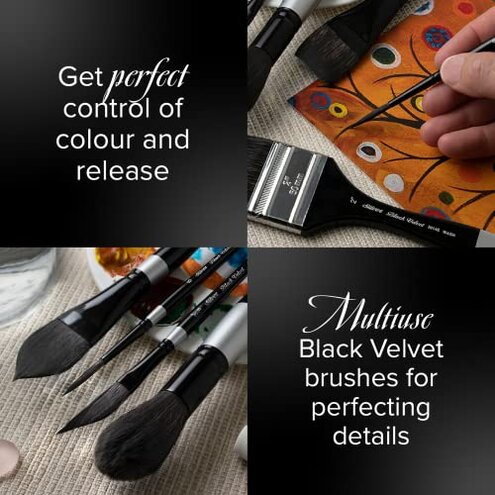
- Wash lovers who prioritize water carry and softness, and can tolerate extra inspection and gentle care.
- Studio painters with controlled storage and cleaning habits, where the “delicate” risk is easier to manage.
- Experienced watercolorists who already do careful break-in and shaping, and won’t be surprised by a fussier brush.
- Buyers with easy returns who can swap if they hit a bad unit, reducing the sting of quality swings.
Expectation vs reality
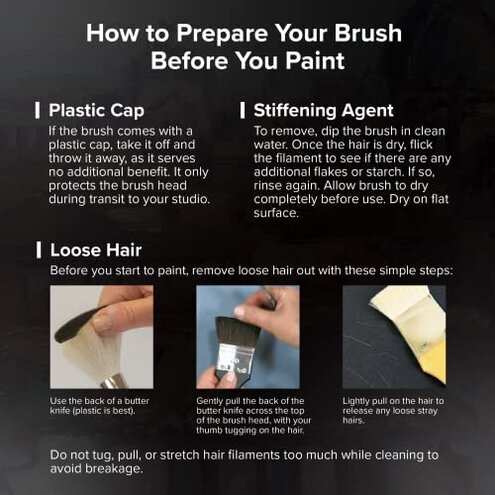
Expectation: for this category, it is reasonable to expect minor upkeep and gentle handling.
Reality: feedback suggests this brush can demand more care than many mid-range options, especially if your unit sheds or loses control.
- Expectation: a premium brush should arrive ready with stable performance.
- Reality: some buyers report early issues that force a break-in routine or a return decision.
- Expectation: an oval wash brush should switch from wash to edge work smoothly.
- Reality: control complaints show up during very wet passages, when you need predictability most.
Safer alternatives

- Choose mid-range synthetics if you hate stray hairs, because they usually reduce shedding risk during smooth washes.
- Prioritize spring if you want crisp edges, since more resilient hair blends can feel more predictable when fully wet.
- Buy from sellers with easy exchanges to neutralize quality variance if you still want a softer wash brush.
- Look for travel-friendly durability if you paint on the go, because delicate brushes can deform with routine bumps.
- Consider a cheaper “beater” wash brush for heavy lifting, and reserve premium tools for finish work.
The bottom line
Main regret trigger: paying premium money and dealing with shedding or inconsistent control during wet washes.
Why it exceeds baseline: these are common brush annoyances, but they become more disruptive here because buyers expect near-perfect consistency at this price.
Verdict: avoid if you need a predictable, low-fuss wash brush. Consider it only if you can inspect early, baby it, and accept the chance of a swap.
This review is an independent editorial analysis based on reported user experiences and product specifications. NegReview.com does not sell products.