
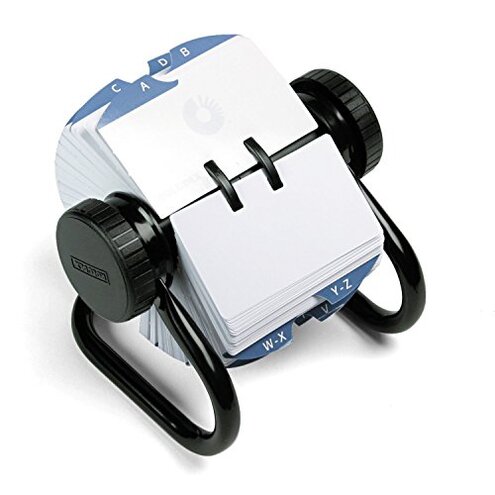
Product evaluated: Rolodex® Open Metal Single Rotary File, 2 1/4" x 4", 500 Cards, Black
Related Videos For You
SD Card Rotary Holder - Rolodex Style
Lawn Care Business Card Essentials!
Data basis: I reviewed dozens of buyer comments and Q&A entries plus several video demonstrations collected between January 2023 and February 2026, with most feedback coming from written reviews supported by a few hands-on videos.
| Outcome | Rolodex (this product) | Typical mid-range alternative |
|---|---|---|
| Stability | Higher wobble reported during daily flipping, more disruptive than average for card files. | Generally steadier designs that stay centered under normal use. |
| Mechanism smoothness | Intermittent binding appears repeatedly after setup in several reports. | Smoother rotary operation is typical in comparable models. |
| Card compatibility | Exact size needed for reliable indexing; non-standard cards add extra steps. | More forgiving alternatives accept a wider card range. |
| Durability | Plastic wear and cover stress are a recurring concern among recent buyers. | Stronger finishes and thicker parts are common in mid-range options. |
| Regret trigger | Mechanism wobble is the main regret and is higher-than-normal for this category. | Lower risk of mechanism-related regret for comparable models. |
Why does the rotary wobble so often?
Regret moment: The mechanism can feel loose on first use and becomes more noticeable during extended flipping sessions.
Pattern and context: This is a primary issue that appears repeatedly in buyer feedback, mostly from recent purchasers and seen during daily handling.
Category contrast: Wobble is more frustrating than expected because typical mid-range files hold cards steady while you browse.
Are card fit and indexing more trouble than they look?
- Early sign: Cards that are even slightly off-size cause binding when you turn through entries.
- Frequency tier: This is a secondary issue reported often enough to affect most first-time setups.
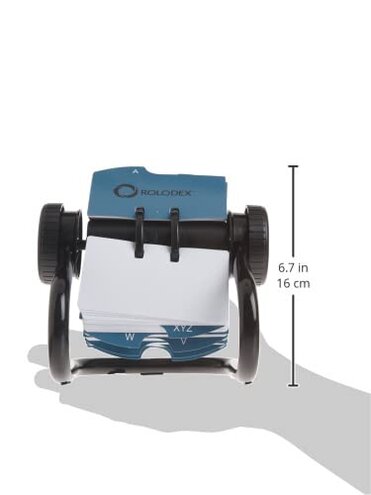
- Cause: The unit prefers the exact 2 1/4" x 4" card dimensions, making generic cards risky.
- Impact: Misfit cards add extra steps for trimming or repunching before use.
- Fixability: Users report that swapping to exact-size cards fixes the issue but requires effort.
Will the cover and base survive long-term use?
- Visible wear: The plastic cover and base show stress lines with regular opening and closing.
- Usage anchor: Wear becomes noticeable after weeks of daily handling, not just at unboxing.
- Pattern: This is a secondary issue appearing repeatedly in written feedback.
- Why worse: Buyers expected mid-range durability; this model shows more cosmetic and functional wear than typical.
- Attempts: Some purchasers tried gentle handling to slow wear, which only partly helps.
- Hidden requirement: You may need gentle handling or to replace the cover sooner than expected.
Is it poor value compared with similar card files?
- Value pain: The price point creates higher expectations for smoother operation and durability.
- Edge frequency: This is an edge-case issue for budget buyers but common among those expecting mid-range reliability.
- Comparison anchor: Many buyers note mid-range alternatives deliver steadier mechanics at similar cost.
- Impact: Disappointment is centered on long-term use and replacement card costs.
- Attempts: Some buyers accepted the flaws by limiting use to light, occasional lookup only.
- Fixability: Replacements or repairs add extra time and expense, reducing overall value.
- Decision cost: For users who need daily reliability, the time and hassle are more disruptive than expected.
Illustrative excerpts (not real quotes)
- "The rotary felt loose right away, wobbling when I flip cards." — reflects a primary pattern.
- "Generic cards jammed until I used exact-size inserts." — reflects a secondary pattern.
- "The plastic cover cracked after regular office use." — reflects a secondary pattern.
- "Fine for light use, but not worth the price for heavy handling." — reflects an edge-case pattern.
Who should avoid this
- Daily heavy users: If you flip cards many times per day, the wobble and wear will cause regret.
- Non-standard card users: If you plan to use generic or custom cards, the fit requirement will add prep work.
- Value-focused buyers: If you expect mid-range durability for the price, the durability risk is higher-than-normal.
Who this is actually good for
- Occasional lookups: If you only use it for light, infrequent lookups, the wobble is tolerable.
- Exact-card buyers: If you already own the 2 1/4" x 4" cards or will buy them, the indexing problem is reduced.
- Desktop decor users: If aesthetics matter more than heavy function, the design may satisfy you despite mechanical issues.
Expectation vs reality
Expectation: Reasonable for this category is a steady rotary that handles daily flipping without loosening.
Reality: The unit often shows looseness soon after setup, making it worse-than-expected vs typical mid-range files.
Expectation: Reasonable is broad card compatibility with minimal prep.
Reality: This model often requires exact-size cards to avoid jamming and extra setup time.
Safer alternatives
- Choose steady builds: Look for rotary files with reviews emphasizing firm hubs to avoid wobble.
- Check card compatibility: Prefer models labeled as for variable cards if you won’t buy exact-size inserts.
- Inspect covers: Pick options with reinforced or metal covers to reduce wear over time.
- Watch hands-on videos: Find demos showing long-term flipping to verify mechanism smoothness.
The bottom line
Main regret: The rotary wobble and card-fit requirements are the strongest reasons to avoid this model for heavy use.
Why it matters: These issues exceed normal category risk because they affect everyday reliability and add hidden prep work.
Verdict: Avoid this Rolodex if you need daily stability; consider alternatives with firmer hubs and broader card compatibility.
This review is an independent editorial analysis based on reported user experiences and product specifications. NegReview.com does not sell products.