
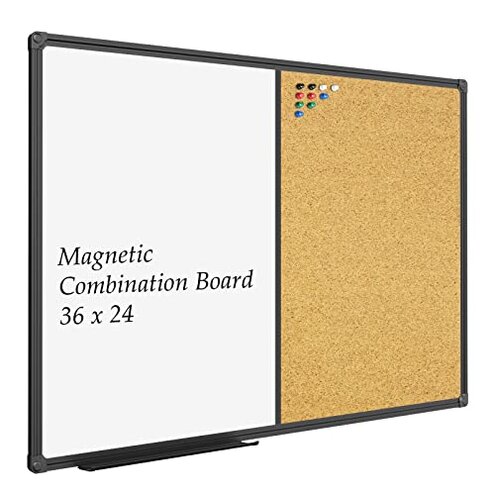
Product evaluated: JILoffice White Board & Bulletin Corkboard Combination, Combo Board 36 x 24 Magnetic Whiteboard, Black Aluminum Frame Wall Mounted Board for Office Home and School with 10 Push Pins
Related Videos For You
Hang Magnetic Whiteboard on wall
How to Assemble Dry Erase & Cork Boards
Data basis: Dozens of buyer comments, product Q&A entries and several video demonstrations were reviewed between Jan 2020 and Feb 2026. Most feedback came from written reviews, supported by video demonstrations and question threads.
| Outcome | JILoffice 36x24 | Typical mid-range board |
|---|---|---|
| Build quality | Lower frame flex and panel wear reported more often than expected for this price tier. | Average sturdier frames and more durable panels are common at similar prices. |
| Whiteboard use | Ghosting and marker staining appear repeatedly during normal classroom or home use. | Cleaner surfaces resist ghosting for longer with comparable markers. |
| Mounting | Unreliable alignment and loose fittings are frequently reported after installation. | More secure mounts and clearer hardware instructions are typical. |
| Magnet strength | Weaker magnetic hold for common magnets, reducing usefulness of the cork/magnet combo. | Stronger magnetic hold is more normal for mid-range magnetic boards. |
| Regret trigger | Higher-than-normal risk of disappointment driven by early wear and mounting problems. | Lower risk of early failure with most mid-range alternatives. |
Top failures
Why does the frame feel flimsy after first use?
Regret moment: You install the board and notice frame flex or misalignment within days of light use.
Pattern: This is a commonly reported issue across written reviews and installation videos.
Context: It appears during setup and worsens with wall bumps or frequent repositioning.
Category contrast: This is worse than expected because most mid-range boards stay rigid after basic mounting, so the extra maintenance adds time and replacement risk.
Why does the whiteboard stain or ghost quickly?
- Early sign: Fresh marker strokes leave visible ghosting after a few cleans.
- Frequency tier: This is a primary issue for many buyers, not an isolated complaint.
- Cause: Surface finish seems to attract marker residue under normal classroom or home use.
- Impact: Staining reduces usable writing area and demands stronger cleaners or replacement.
- Fix attempts: Buyers report that standard erasers and water often fail to fully remove marks.
Why are magnets and the tray disappointing?
- Functional gap: Magnets have weaker hold than users expect for a 'magnetic' board.
- Secondary pattern: This is a secondary issue seen across different feedback sources.
- Usage anchor: Weak magnetism shows up when posting heavy papers or using larger clips.
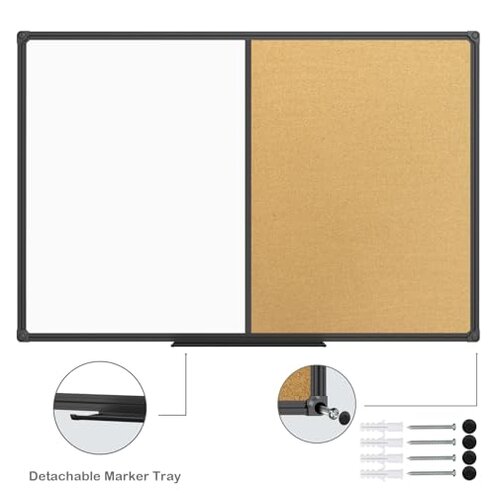
- Marker tray: The removable tray is reported as loose or flimsy under daily use.
- Why it matters: Reduced magnet strength and a weak tray add extra steps during classes or meetings.
- Attempted fixes: Buyers often compensate with stronger magnets or external trays to regain function.
Why is mounting and hardware a frequent pain?
- Installation pain: Hardware appears misaligned or insufficient for easy leveling.
- Hidden requirement: Successful mounting often needs extra tools not included in the package.
- When it shows: Problems happen during first installation and when moving the board.
- Scope signal: Seen across written reviews and video demos as a recurring setup friction.
- Impact: Misaligned boards sit crooked or require re-drilling, adding time and wall damage risk.
- Fixability: Buyers who can drill new holes or use stronger anchors recover function more reliably.
- Category contrast: Typical mid-range boards include clearer hardware and easier leveling, so this product needs more buyer effort.
Illustrative excerpts (not real quotes)
"Board wobble within days, screws loosened after one month." — Primary pattern
"Markers ghost even after heavy scrubbing, needs stronger cleaner." — Primary pattern
"Magnets slide off when I pin a calendar sheet." — Secondary pattern
"Mounting required extra anchors and a level I didn't expect to use." — Edge-case pattern
Who should avoid this

- Frequent users: Avoid if you need a daily-use board in classrooms or busy offices because early wear and ghosting are disruptive.
- Renters/fragile walls: Avoid if you cannot drill new holes since mounting can require re-drilling for stability.
- Heavy magnetic use: Avoid if you rely on magnets for charts or photos because the magnetic hold is weaker than expected.
Who this is actually good for
- Occasional users: Good for light home use where infrequent writing and low stress mounting are acceptable.
- DIY fixers: Good for buyers willing to add stronger anchors or replace magnets because they can correct the main issues.
- Budget short-term needs: Good as a temporary solution when you need an affordable combo board and plan to replace later.
Expectation vs reality

- Expectation: Reasonable for this category to expect a solid frame and included hardware for easy mounting.
- Reality: The board often requires extra tools and re-drilling, which increases installation time and wall impact.
- Expectation: Reasonable for a magnetic board to hold standard magnets and papers without slippage.
- Reality: Magnets commonly slide or fail to secure larger documents.
Safer alternatives

- Buy stiffer frame models: Choose boards that advertise rigid aluminum frames or have reinforced corners to avoid early flex.
- Check surface specs: Prefer boards with explicit anti-ghosting or melamine-coated claims to reduce staining risk.
- Inspect mounting kit details: Pick products that list included anchors and leveling guides to prevent re-drilling.
- Test magnet strength: Look for user comments about strong magnets or buy stronger neodymium magnets separately.
- Consider local pickup: If possible, inspect the board in person to verify frame fit and surface feel before buying.
The bottom line

Main regret: Early frame flex, marker ghosting, weak magnets, and finicky mounting are the core triggers for buyer disappointment.
Risk level: These problems create a higher-than-normal risk compared with typical mid-range combo boards because they appear during setup and early use.
Verdict: Avoid this board if you expect durable daily performance or a hassle-free installation unless you plan to invest time or parts to fix the issues.
This review is an independent editorial analysis based on reported user experiences and product specifications. NegReview.com does not sell products.