
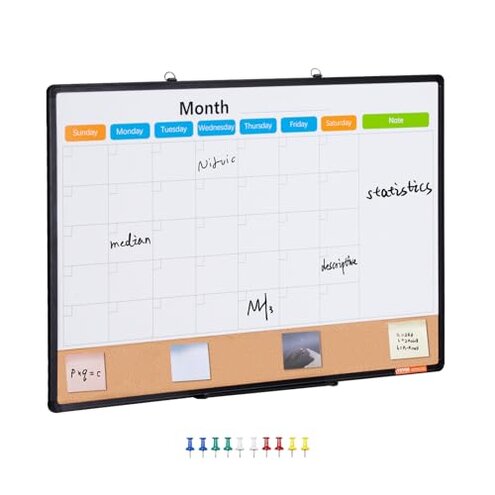
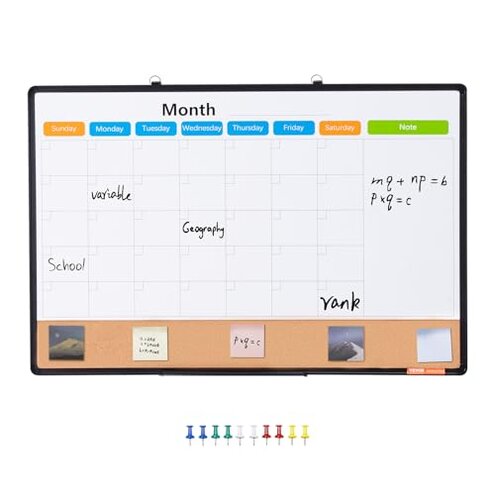
Product evaluated: VEVOR 36"x 24" Monthly Calendar Whiteboard & Cork Board Combo with Aluminum Frame – 2-in-1 Magnetic Dry Erase Bulletin Board for Wall Mount – Ideal for School, Home, Office
Related Videos For You
Glass Magnetic Whiteboard Review and Installation
How To Clean Whiteboards and Dry Erase Boards
Data basis: I analyzed dozens of buyer reports and product details collected between Aug 2024 and Feb 2026. Feedback came mostly from written reviews and was supported by video demonstrations. The sample also referenced listing specs and packaging photos.
| Outcome | VEVOR 36"x24" | Typical mid-range board |
|---|---|---|
| Durability | Higher risk of cork bulge and frame looseness after setup. | Expected moderate longevity with occasional edge wear. |
| Surface cleaning | Mixed reports of marker ghosting and harder erasing. | Better erase performance on most mid-range alternatives. |
| Mounting reliability | Above-normal risk of misaligned holes or missing anchors. | Lower installation friction with clearer hardware in peers. |
| Value for price | Attractive price but trade-offs in long-term use. | Balanced cost and reliability for everyday use. |
| Regret trigger | Warping or loose corners that force re-mounting or replacement. | Minor fixes like tightening screws or re-leveling are more common. |
Top failures

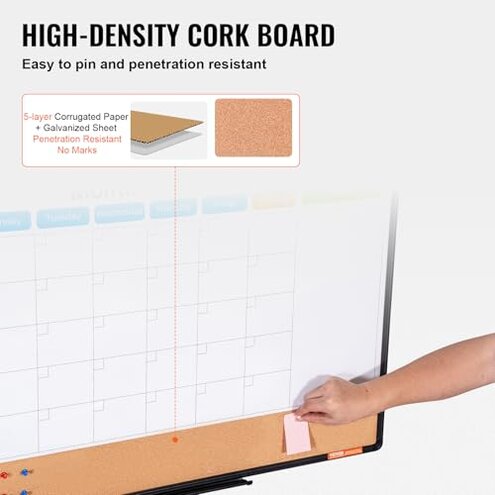
Why does the cork bulge and feel uneven so soon?
Regret moment: Users commonly notice a raised or wavy cork area after initial mounting or within weeks of use.
Severity: This is a primary complaint that makes pinning items unreliable and looks shabby compared with mid-range boards.
Pattern: This problem appears repeatedly and is often reported after setup, especially in humid rooms or when the board is handled frequently.
Category contrast: Most mid-range combos keep a flat pin surface for months; this model shows more visible bulging and thus causes faster regret.
Why is mounting harder than it should be?
- Missing hardware: Many buyers report lacking the proper anchors or screws, a common installation blocker.
- Misaligned holes: Wall holes may not match frame holes, which appears across multiple reports.
- Hidden tools: You often need a level, drill, or anchors not included, a hidden requirement for safe mounting.
- Corner looseness: Frame corners can separate after wall stress, a persistent structural complaint.
- Re-mount time: Fixing alignment or loose corners adds extra steps and time during setup.
- Worse-than-expected: Mid-range boards usually include clearer hardware or templates, so this creates more work.
- Repair effort: Customers often needed to add their own brackets or replace screws to secure the board.
Why won’t markers wipe off cleanly?
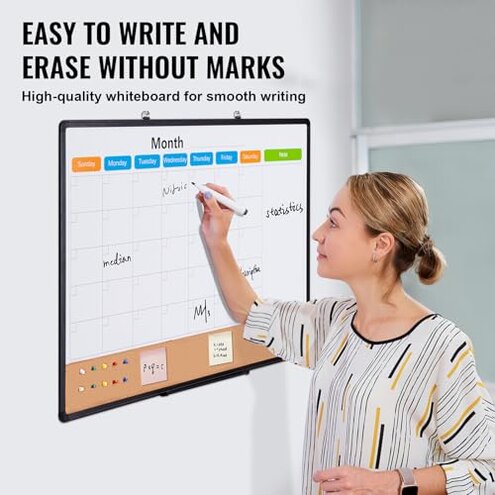
- Ghosting reports: Several buyers report marker residue remains after erasing, a common surface issue.
- Early scratches: The dry-erase area can scratch with moderate use, which worsens ghosting.
- Cleaning needs: Stronger cleaners or repeated wiping are often required during daily use.
- Category expectation: Typical mid-range whiteboards erase more cleanly, so this causes extra maintenance.
Why are edges, finish, or packaging a concern?
- Cosmetic dings: Some buyers note scuffs or bent frame corners on arrival, a recurring shipping problem.
- Protective layers: Protective film may not cover the whole surface, requiring extra cleaning.
- Packing variability: While packaging uses corrugated layers, damage still appears occasionally in heavier shipments.
- Size accuracy: A few buyers found the usable cork/whiteboard area smaller than expected.
- Aesthetic impact: Visible flaws hurt office presentation and classroom use.
- Fixability: Cosmetic issues are usually fixable but add time and possible returns.
Illustrative excerpts
Excerpt (illustrative): "Board bowed along cork edge within two weeks of light use." — Primary pattern
Excerpt (illustrative): "Mounting holes didn’t line up; I had to drill new ones." — Primary pattern
Excerpt (illustrative): "Markers leave a faint ghost after erasing cleanly once." — Secondary pattern
Who should avoid this
- Frequent users: Avoid if you need a board for daily heavy use because the cork bulge and surface wear escalate quickly.
- Presentation settings: Avoid if appearance matters in meetings since cosmetic dings and ghosting are noticeable.
- Renters without tools: Avoid if you lack drills or anchors because the mounting often requires extra hardware.
Who this is actually good for
- Light home use: Good for occasional family scheduling where the price outweighs long-term durability concerns.
- Short-term needs: Useful for temporary dorm or short-term office setups where minor wear is acceptable.
- DIY fixers: Works for buyers willing to add anchors or reinforce corners to avoid mounting issues.
Expectation vs reality

- Expectation: Reasonable for this category to get a flat cork surface after mounting.
- Reality: This product shows earlier bulging and often needs rework, which is worse than typical mid-range combos.
- Expectation: Reasonable to expect included mounting hardware for immediate wall installation.
- Reality: Many buyers face missing or misaligned hardware and need extra tools or parts.
Safer alternatives

- Look for reinforced backing: Choose boards that advertise a rigid backing to neutralize the cork bulge failure.
- Check mounting kit details: Prioritize listings that list anchors, templates, and screws to avoid hidden tools.
- Prefer sealed surfaces: Pick whiteboards with explicitly non-porous surfaces to reduce ghosting.
- Review unboxing photos: Inspect customer images for arrival condition to reduce risk of cosmetic dings.
The bottom line
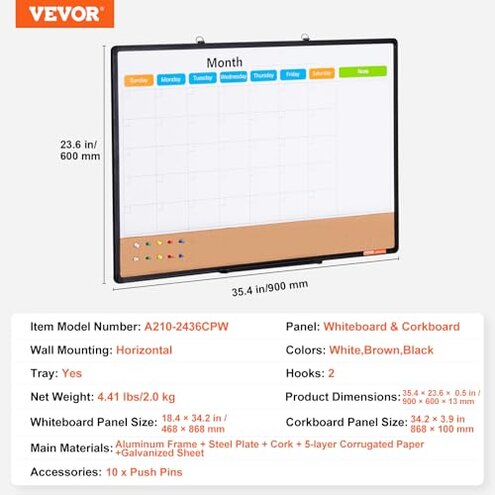
Main regret: The most common trigger is cork bulging and mounting trouble that appears soon after setup and forces extra fixes.
Verdict: This board offers a strong price but carries a higher-than-normal risk for buyers who need durable, ready-to-hang performance.
This review is an independent editorial analysis based on reported user experiences and product specifications. NegReview.com does not sell products.