
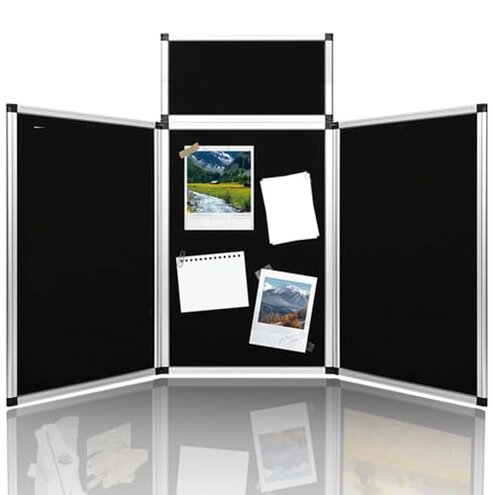
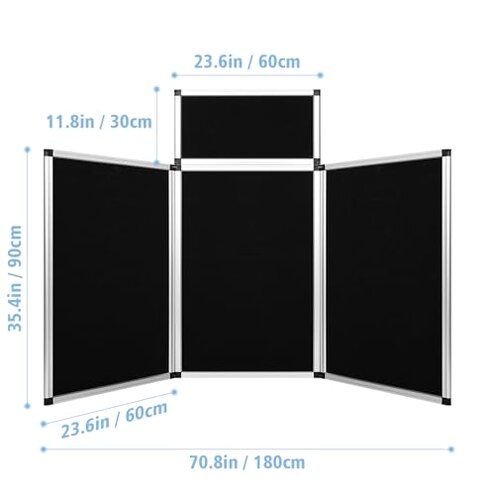
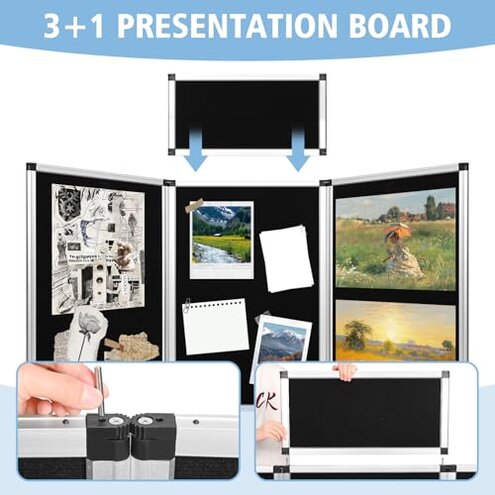
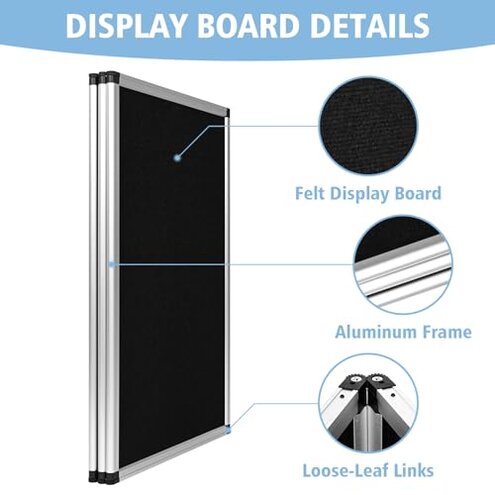
Product evaluated: Nisorpa 3+1 Panel Folding Trade Show Presentation Board 70.8“ x 35.4” Trifold Desktop Display Board with Carry Bag Large Metal Frame Tabletop Display 4 Panels-Black
Related Videos For You
ShowFlex Umbrella Display 52" x 52" Tabletop Set-up Instructions
Fabric Care: Fabric Graphics - How To Clean and Care for your Fabric Displays and Graphics
Data basis This report is drawn from dozens of written reviews and several video demonstrations collected between mid‑2023 and late‑2025; most feedback came from written reviews, supported by demonstration clips and customer Q&A.
| Outcome | Nisorpa (this listing) | Typical mid-range alternative |
|---|---|---|
| Stability | Wobbly — often reported instability on tables and during handling. | Stable — most mid-range boards stay steady on a flat table. |
| Build quality | Fragile points — frame and hinges show early wear in reports. | Robust — thicker frames and reinforced hinges are common. |
| Setup & parts | Hidden needs — extra connectors or repairs required when expanding panels. | All-in-one — alternatives include clear connectors and instructions. |
| Portability | Mixed — bag included but reports note fit and protection issues. | Reliable — dedicated padded cases or rigid covers more common. |
| Regret trigger | High-risk — buyers report regret when stability or frame failure occurred at events. | Lower-risk — mid-range choices cause fewer event failures. |
Top failures

Why does the board feel unstable and wobble during shows?
Stability Many buyers list wobble as a primary complaint, making this one of the most common problems. Usage context It appears during first setup and reappears when moving the board or during long event sessions.
Category contrast This is worse than the typical mid-range display because customers expect desktop displays to remain steady on flat tables without extra shimming.
Why do hinges or the metal frame feel fragile and wear quickly?
- Primary sign — recurring reports of bent frames or loose hinges after limited use.
- Frequency tier — a secondary but persistent complaint compared with stability issues.
- When it shows — usually after repeated assembly, transport, or long display runs.
- Cause clue — thinner frame sections and pivot points appear to concentrate stress.
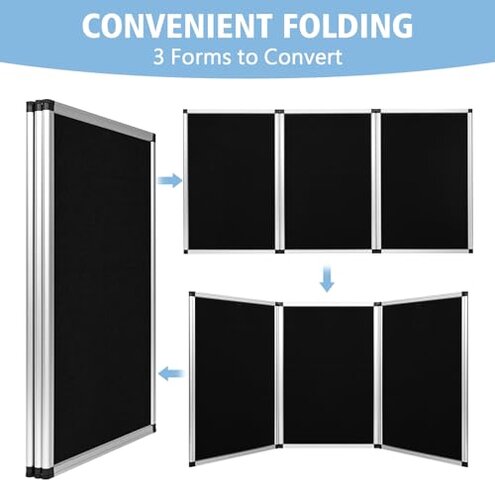
- Impact — leads to misalignment and panels that won't sit flat together.
Why is assembly fiddly, and what hidden parts are required?
- Hidden requirement — expanding multiple boards requires extra connectors beyond the included nails.
- Early sign — missing or small fasteners make combining panels awkward during setup.
- Usage anchor — problem surfaces when buyers try to join more than one board or reconfigure layouts.
- Frequency — commonly reported by buyers who attempt modular setups.
- Attempts to fix — users add aftermarket screws or tape, which adds time and cost.
- Category contrast — mid-range boards usually include clear joiners or better hardware for modular linking.
Why does the carrying bag and portability disappoint at events?
- Bag fit — many describe the bag as loose or thin, offering limited protection.
- Transport stress — fabric cover does not prevent frame bending during tight packing.
- When it matters — issues appear during transit between venues and airline handling.
- Frequency tier — frequent enough to be a secondary worry for regular exhibitors.
- Impact — damaged frames force on-site repairs or substitutions.
- Fixability — packing with extra padding helps but adds bulk and time.
- Category contrast — many competitors offer padded cases or sturdier bags for frequent travelers.
Illustrative excerpts

Illustrative "Board rocked on the table during my presentation, embarrassing and distracting." — primary pattern.
Illustrative "Joined two panels and parts didn't line up; had to tape them together." — secondary pattern.
Illustrative "Bag barely covers the frame; corners were dented after travel." — secondary pattern.
Who should avoid this
- Frequent exhibitors — if you travel often, the frame and bag risks exceed normal tolerance.
- Modular displays — those who plan to link multiple boards should avoid due to hidden connector needs.
- Heavy use — users expecting long-term daily use will find wear and hinge issues worsen over time.
Who this is actually good for
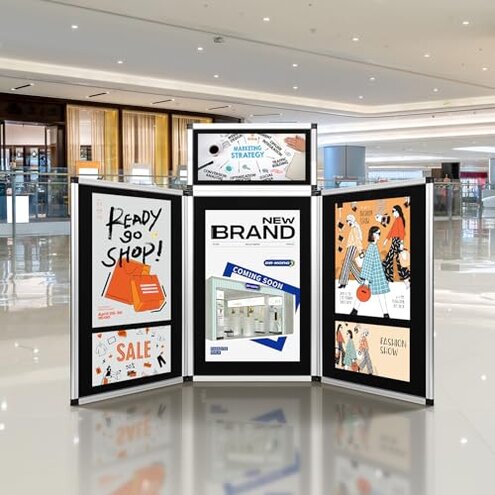
- Infrequent users — occasional table-top displays where light handling is expected can tolerate these issues.
- Budget events — buyers prioritizing low price over long-term durability may accept the trade-offs.
- Static installs — single-location setups that won’t be moved often reduce transport-related failures.
Expectation vs reality
Expectation Reasonable for this category: buyers expect a tabletop display to stay steady on a flat surface.
Reality Many report wobble or hinge looseness during first use or after moving the board, which is worse than the typical mid-range product.
Expectation Reasonable for this category: included carrying bag should protect the frame for travel.
Reality The bag often provides minimal protection, leading to dents or bent corners after transit.
Safer alternatives
- Choose reinforced frames — look for displays with thicker frame sections and reinforced hinge plates to reduce wobble and breakage.
- Prefer padded cases — select products that include a padded or hard case if you plan to travel frequently.
- Check joiner hardware — buy alternatives that include modular joiners or clear instructions for linking panels.
- Inspect return policy — favor sellers with easy returns and clear damage guarantees for event use.
The bottom line
Main regret The most common trigger is instability and early frame wear during transport or repeated use.
Why it matters These failures exceed normal category risk because they occur at events, causing visible failures and on-site fixes.
Verdict Avoid this board if you need reliable, travel-ready stability; it can work for occasional, low-risk displays only.
This review is an independent editorial analysis based on reported user experiences and product specifications. NegReview.com does not sell products.