

Product evaluated: ISXACFF 6+1 Panel Trade Show Presentation Board, 82.6" H x 70.8" W Portable Display Panel System, Folding 6 Panels Exhibition Boards Single Sided Tabletop Display 6 Panels,Hook & Loop-Receptive Fabric
Related Videos For You
Connecting Portable Monitors to iPhones and iPads
Aero Table Top Trade Show Display from Classic Exhibits
Data basis: Dozens of written reviews and several video demonstrations were aggregated between Jan 2024 and Jan 2026 to build this report. Most feedback came from written buyer reviews, supported by video demonstrations and unboxing notes.
| Outcome | ISXACFF 6+1 Panel | Typical mid-range alternative |
|---|---|---|
| Stability | Higher risk: commonly reported wobble on tables, worse than expected for this category. | Lower risk: many mid-range displays remain steady on standard tabletops. |
| Setup time | Longer: hidden alignment steps and extra pegs add time. | Quicker: typical competitors use simpler click-lock hinges. |
| Durability | Mixed: fabric and joints show wear after repeated use. | Better: mid-range units usually tolerate frequent travel better. |
| Portability | Heavier: large assembled footprint and 29 lb shipping weight make solo handling harder. | Lighter: many rivals pack lighter or fold more compactly. |
| Regret trigger | Setup & wobble: more likely to cause immediate buyer disappointment than is typical. | Lower chance: mid-range units rarely create the same instant regret. |
Why does it wobble on my table?
Regret moment: Buyers describe the display rocking after setup, notably when people lean on the table or reach across it. Commonly reported in feedback and visible in several video demos.
When it shows up: after first use or during multi-hour events, wobble increases with light table bumps. Worsens when the table edge is uneven or heavily used.
Category contrast: more unstable than most mid-range tabletop displays, which usually lock more securely and require fewer alignment tricks.
What hidden steps make setup take longer?
- Early sign: extra pegs and alignment needed beyond simply unfolding the panels.
- Frequency tier: a primary issue that appears repeatedly across written feedback.
- Cause: hinge tolerances and required peg placement demand careful alignment.
- Impact: setup time commonly doubles versus expectations for quick tabletop displays.
- Fixability: partially fixable by practicing setup and keeping spare pegs, but still inconvenient.
Is the product truly portable for solo use?
- Weight note: the packaged weight is heavy for a single person to carry easily.
- Bag quality: the included tote bag is reported as thin and struggles with repeated travel.
- Frequency tier: secondary issue that appears often enough to affect travel plans.
- Handling impact: two-person transport recommended for frequent use.
- Hidden cost: buyers commonly add protective cases or replace the bag.
- When worse: long-distance travel or airline transport increases the chance of wear.
Why do posters and signs not stay attached reliably?
- Surface limitation: the single-sided fabric accepts hook-and-loop but can allow edges to curl or peel.
- Pattern signal: persistent complaints appear about signs drooping during events.
- Usage anchor: problem shows up after several hours or under heat from lighting.
- Cause: adhesive strips and pegs included are often insufficient for heavier prints.
- Impact: repeated adjustments interrupt presentations and create a messy look.
- Attempts: buyers report adding extra tape or clips to keep materials attached.
- Category contrast: worse than mid-range options that use stiffer display surfaces or built-in fasteners.
Illustrative excerpts
"Falls forward when someone reaches across the table." — illustrative; reflects a primary pattern.
"Bag ripped after one trip to the office." — illustrative; reflects a secondary pattern.
"Needed extra clamps not included in the box." — illustrative; reflects an edge-case pattern.
Who should avoid this
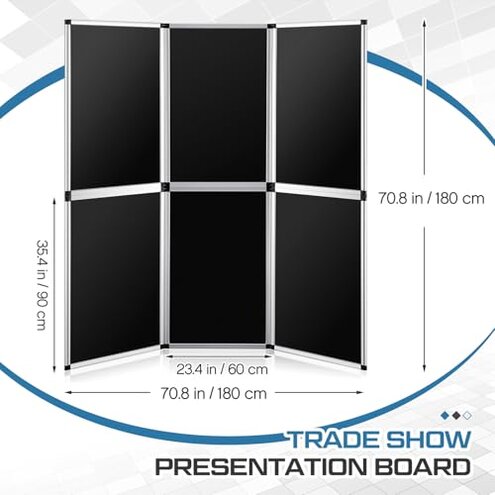
- Frequent travelers: avoid if you move displays often, since the bag and joints show travel wear.
- Solo presenters: avoid if you must carry and set up alone due to weight and alignment steps.
- High-stakes events: avoid if flawless presentation stability matters, because wobble is common.
Who this is actually good for
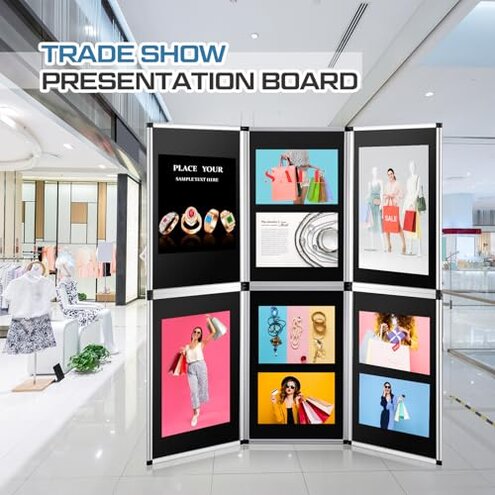
- Occasional users: good for one-off presentations where long-term durability is less critical.
- Budget setups: acceptable if you can tolerate extra setup time and add your own fasteners.
- Static displays: suitable for low-interaction panels that won’t be bumped frequently.
Expectation vs reality
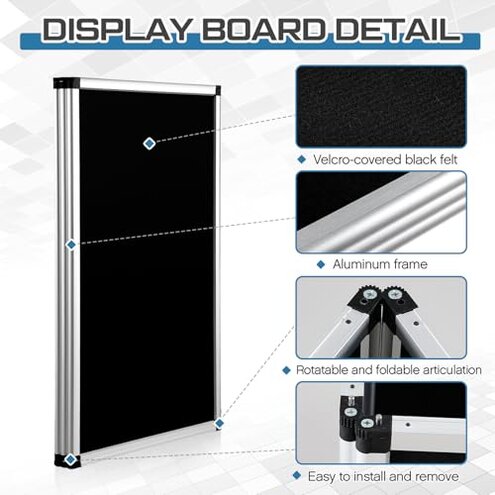
Expectation: reasonable for this category to unfold and lock quickly for tabletop use. Reality: extra pegs and alignment steps increase setup time.
Expectation: tabletop displays stay steady for hours. Reality: wobble appears during long sessions or when the table is jostled.
Expectation: a travel bag will protect repeated trips. Reality: buyers report bag damage and added replacement costs.
Safer alternatives
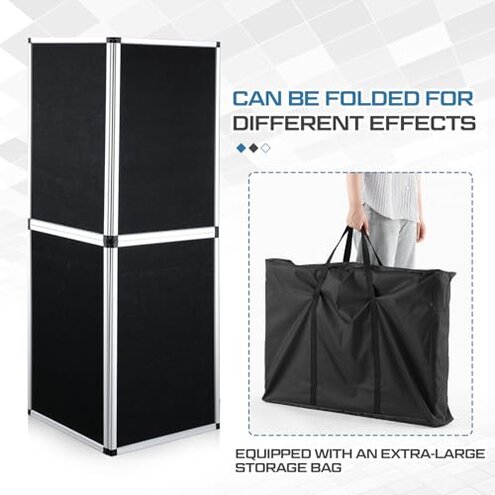
- Choose locked hinges: look for displays with positive-lock hinges to reduce wobble risk.
- Prefer rigid panels: select models with firmer surfaces to avoid posters peeling or curling.
- Check carry case quality: pick products that include padded, reinforced cases for repeated travel.
- Test setup time: favor units with tool-free, one-person setup if you present alone often.
The bottom line
Main regret: frequent wobble and extra setup steps are the most common buyer complaints.
Why worse: these failures are more disruptive than typical mid-range tabletop displays, especially during events.
Verdict: avoid this unit if you need reliable, quick, and travel-durable tabletop stability.
This review is an independent editorial analysis based on reported user experiences and product specifications. NegReview.com does not sell products.