
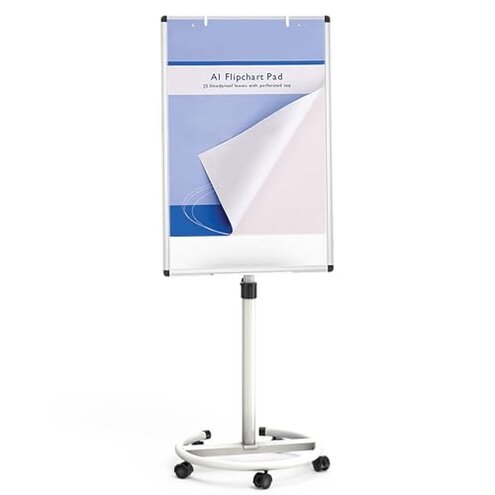
Product evaluated: VIZ-PRO ECO Magnetic Mobile Whiteboard, 36 X 24 Inches, Easel Flipchart Stand Rolling Dry Erase Board with Paper Pads
Related Videos For You
Luxor Assembly Guide: Mobile Whiteboard Assembly
Don't Throw Out Your Whiteboard Until You Watch This! | How To Renew Your Dry Erase Board + Update
Data basis: This report draws on dozens of written reviews and several video demonstrations collected between Jan 2023 and Jan 2026, with most feedback coming from written buyer reports supported by a smaller set of video tests.
| Outcome | VIZ-PRO ECO (this product) | Typical mid-range board |
|---|---|---|
| Stability while writing | Higher wobble under normal use; commonly reported during meetings and classes. | Moderate stability tolerable for most single-person sessions. |
| Surface cleaning | Ghosting & staining appears after regular use; seen across multiple feedback sources. | Cleaner wipe with less frequent deep cleaning required. |
| Assembly time | Longer setup with alignment and loose hardware issues reported by buyers. | Shorter setup and clearer instructions are typical. |
| Mobility and locks | Wheels may not lock firmly, leading to drift during use. | Reliable casters that lock solidly on most mid-range models. |
| Regret trigger | Stability + staining combine to make long sessions frustrating and time-consuming. | Single minor issue usually manageable without extra tools or repairs. |
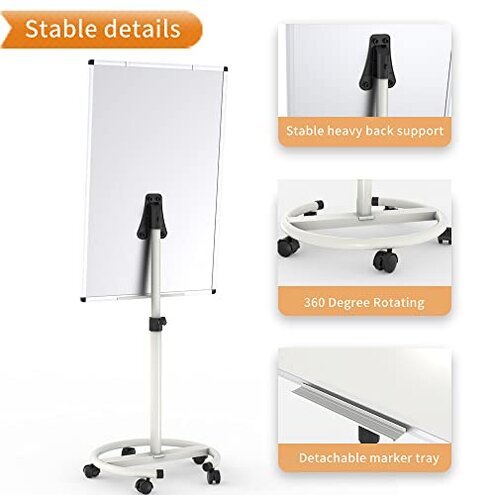
Why does the board wobble under normal writing?
Wobble during writing is the most common regret moment, especially when leaning or pushing while drawing.
Pattern: This is a recurring complaint.
Context: It shows up during whiteboard sessions and worsens with long strokes or two-person use.
Category contrast: More disruptive than most mid-range boards because buyers report visible frame flex and loose caster locks.
Does the surface stain or ghost after use?
- Primary sign: Persistent ghosting after dry-erase markers is commonly reported.
- When it appears: Often noticeable after repeated use or when low-quality markers were previously used.
- Frequency tier: Secondary issue compared with wobble but still commonly reported by buyers.
- Impact: Requires extra cleaning time and stronger cleaners than typical boards.
- Fixability: Some buyers find repeated cleaning helps, but staining can be persistent.
Will assembly take extra time or tools?
- Early sign: Missing or loose screws show up during first setup in multiple reports.
- Cause: Misaligned brackets and vague instructions are commonly reported.
- Frequency tier: Primary reported issue among new buyers.
- Impact: Setup often takes longer than expected and needs extra tools.
- Attempts: Buyers commonly re-tighten hardware after initial use.
- Hidden requirement: A basic tool kit and spare screws may be needed to finish setup properly.
- Category contrast: This is worse than typical mid-range options that include clearer instructions and complete fasteners.
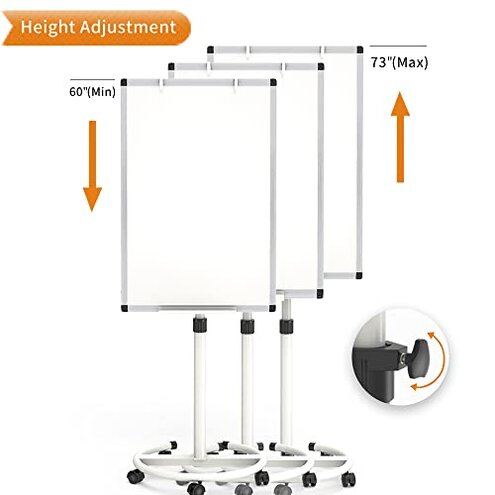
Do the wheels and height adjust hold over time?
- Early warning: Wheels are reported to drift unless locked carefully.
- When it matters: Problem occurs during frequent moves or long meetings.
- Cause: Locking casters and the height mechanism are often described as less robust.
- Frequency tier: Secondary but impactful when the board must stay put.
- Impact: Board may slowly shift, disrupting writing or presentations.
- Fix attempts: Buyers report retightening and adding shims to reduce movement.
- Hidden requirement: Occasional maintenance and tools are commonly needed to keep the mechanism stable.
- Category contrast: Requires more upkeep than most mid-range wheeled whiteboards.
Illustrative buyer phrasing
Illustrative: "Board rocks when I draw, even with wheels locked during meetings." — Primary
Illustrative: "Marker marks won’t fully erase after two weeks of use." — Secondary
Illustrative: "Had to buy extra screws to finish assembly cleanly." — Primary
Illustrative: "Height slipped after moving it across the room once." — Secondary
Who should avoid this
- Frequent collaborative teams: Avoid if two-person sessions or heavy board contact are common, as wobble is disruptive.
- High-use classrooms: Avoid if the board will see daily heavy use, because staining and upkeep add time and cost.
- Buyers wanting plug-and-play: Avoid if you want a no-tool setup, since assembly often requires extra parts or tools.
Who this is actually good for
- Light home use: Good for occasional notes or grocery lists where stability and long-term staining are less critical.
- Mobile single-user sessions: Works if one person presents and lightly writes, tolerating some wobble.
- Budget-conscious buyers: Acceptable if you can handle occasional maintenance and cleaning tasks yourself.
Expectation vs reality
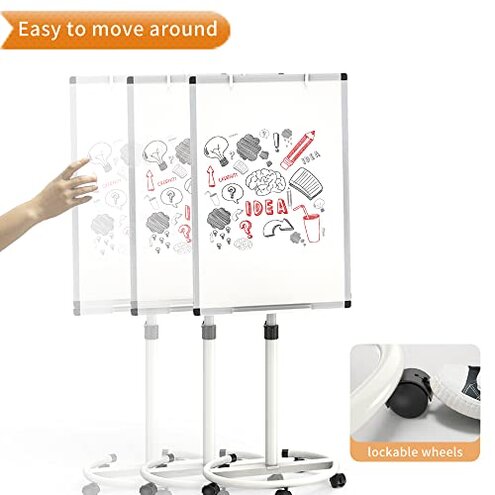
- Expectation: Reasonable for this category to expect solid caster locks on a rolling board.
- Reality: Locks may drift, requiring retightening or workarounds, which is worse than expected.
- Expectation: Reasonable to expect easy wipe-clean surfaces on mid-range boards.
- Reality: Surface can ghost and need stronger cleaners than typical products.
Safer alternatives

- Choose thicker frames: Buy boards with reinforced frames to neutralize the wobble failure.
- Look for ceramic surfaces: Prefer ceramic-coated boards to avoid persistent ghosting.
- Prefer full hardware kits: Pick products advertised with complete fasteners and clear guides to avoid extra assembly time.
- Test caster locks in reviews: Seek buyer reports that confirm stable casters before purchase.
The bottom line

Main regret: The combined issues of wobble and surface staining are the clearest trigger for buyer regret.
Why it matters: These problems exceed normal mid-range risks because they interrupt sessions and demand extra maintenance.
Verdict: Avoid this board if you need sturdy, low-maintenance performance for frequent or collaborative use.
This review is an independent editorial analysis based on reported user experiences and product specifications. NegReview.com does not sell products.