
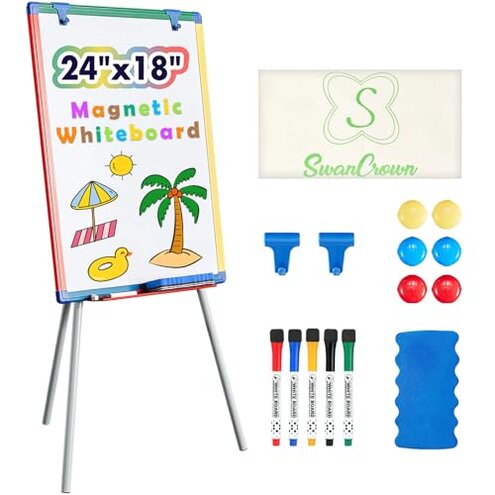
Product evaluated: Dry Erase Board White Board for Kids 24x18 inch Art Easel for Kids Magnetic Tripod Whiteboard Art Easel and Flipchart Board with a Height-Adjustable Stand Perfect for Kid
Related Videos For You
Drawing Easel for Kids (chalkboard, whiteboard, paper roll) // How-to | I Like To Make Stuff
Whiteboard Tripod Magnetic 24" x 36" Standing Flip Chart Easel (Lightweight)
Data basis: I analyzed dozens of buyer reports and demonstrations collected between Jan 2020 and Jan 2026, from written reviews and short video demonstrations. Most feedback came from written reviews, supported by video demonstrations, with a smaller share from Q&A and seller responses.
| Outcome | This product | Typical mid-range alternative |
|---|---|---|
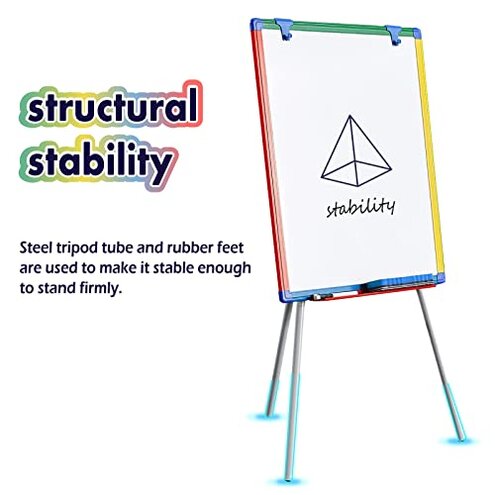
| Stability | Wobbly on uneven floors and during erasing; higher-than-normal tipping risk. | Stable tripod or A-frame designs that stay firm during use. |
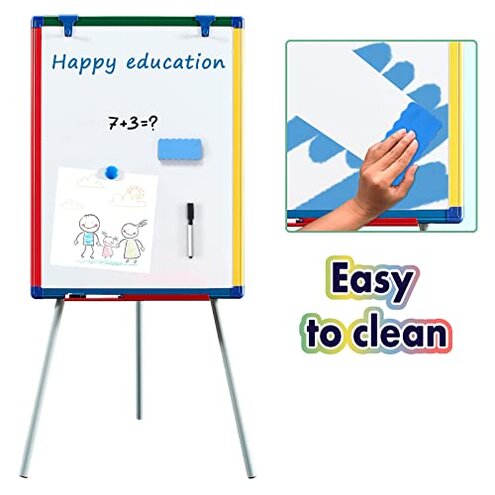
| Surface performance | Ghosting and staining reported after weeks of use. | Cleaner dry-erase surfaces that resist staining longer. |
| Assembly & parts | Loose hardware and extra steps often needed to tighten or replace parts after setup. | Smoother out-of-box assembly and fewer missing or weak fasteners. |
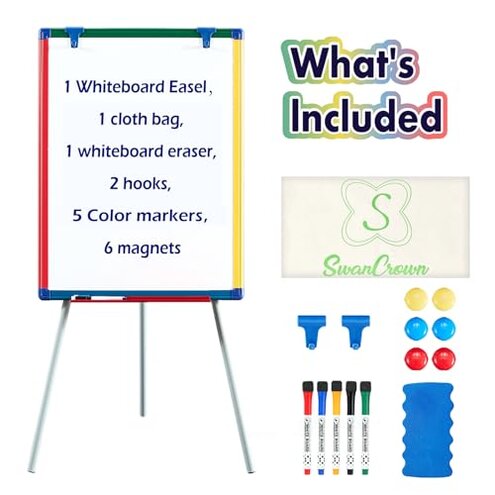
| Accessories | Included markers and magnets are low quality and wear quickly. | Higher-quality accessory kits or reliable refill options. |
| Regret trigger | Multiple small failures (wobble + ghosting) combine to make this product more frustrating than peers. | Single-issue problems that are easier to fix or tolerate. |
Top failures
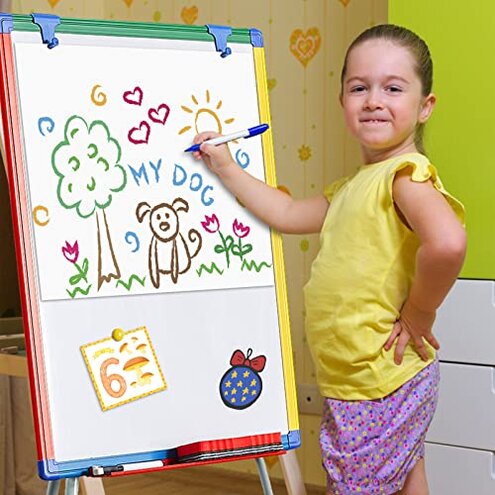
Why does the easel wobble and tip so easily?
Regret moment: Users report losing balance while erasing or leaning, making the easel feel unsafe for kids.
Pattern: This is a recurring complaint that appears soon after setup and during active play sessions.
Context: The wobble shows up during erasing, drawing, or when children press on the board, and it worsens on tile or thin carpet.
Category contrast: Mid-range kid easels usually feel firm; here the instability is more disruptive than expected for this price tier.
How bad is the surface ghosting and staining?
- Early sign: Light residue appears after a few weeks of normal marker use.
- Frequency tier: This is a primary issue—commonly reported across buyer posts and visuals.
- When it matters: Ghosting is most visible after frequent use or when darker markers are left uncleaned overnight.
- Impact: The board requires stronger cleaning methods than promised to look fresh.
Is assembly solid or does it need constant fixes?
- Loose parts: Many buyers report needing to retighten legs and screws after first use.
- Hidden requirement: Expect to have basic tools on hand for re-assembly or reinforcement.
- When it shows: Problems appear during initial setup and after moving the easel between rooms.
- Cause: Reinforced joints and fasteners are thinner than category standard, which encourages early drift.
- Attempts to fix: Buyers typically add washers or swap screws to restore stability.
- Fixability: Repairable with extra effort, but this adds unexpected time and cost.
Will the included accessories and magnetic claims hold up?
- Accessory quality: Included markers, eraser, and magnets are often low-performing and short-lived.
- Magnetic strength: Magnets sometimes fail to hold heavier papers or craft sheets.
- Usability impact: Weak accessories make daily craft use less reliable and more frustrating.
- Frequency: This is a secondary but persistent complaint across buyer media and written feedback.
- Workaround: Buyers replace magnets and markers quickly, adding cost and effort.
- Hidden cost: Replacement accessories are commonly needed within weeks of use.
- Category contrast: Better alternatives include stronger magnets and longer-lasting markers.
Illustrative excerpts (not real quotes)

"Board leans when my child erases hard; nearly fell twice." — reflects a primary pattern.
"Dark marker shadow stayed after one day of use." — reflects a primary pattern.
"Had to tighten screws and add a washer during setup." — reflects a secondary pattern.
Who should avoid this
- Parents of active toddlers: If your child leans or climbs, the wobble and tipping risk exceed what is safe for that behavior.
- Classroom buyers: For regular, multi-kid daily use, the surface ghosting and accessory wear create extra maintenance.
- Low-effort shoppers: If you want plug-and-play quality with no fixes, this product requires unexpected tuning and replacement parts.
Who this is actually good for
- Budget-conscious crafters: Willing to tolerate accessory replacements and occasional tightening to save money.
- Home hobby use: If use is light and infrequent, ghosting is less noticeable and stability is less critical.
- DIY fixers: Buyers who can reinforce legs and swap markers will accept the added setup time.
Expectation vs reality
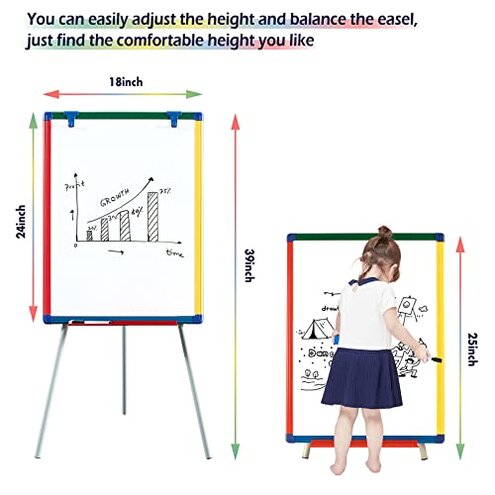
Expectation: Reasonable for this category is a stand that stays steady during play and a surface that wipes clean.
Reality: The easel often needs retightening and extra cleaning, which makes it more work than similar mid-range models.
Safer alternatives
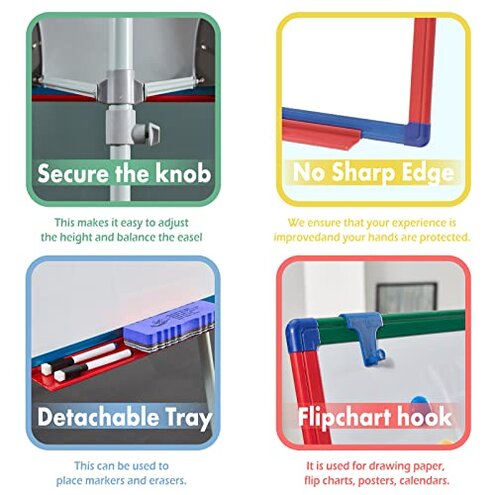
- Prioritize stability: Choose tripod designs with wider bases or A-frame legs to avoid the tipping issues described.
- Pick sealed surfaces: Look for boards advertised as stain-resistant or low-ghosting to reduce cleaning headaches.
- Check accessory quality: Prefer listings that note stronger magnets and refillable marker sets to avoid early replacements.
- Inspect hardware specs: Favor products with thicker fasteners and visible reinforcement where customers report fewer assembly fixes.
The bottom line
Main regret trigger: The combination of wobble plus surface ghosting is the core issue buyers repeatedly flagged.
Why it exceeds risk: These combined failures create safety and maintenance burdens that are worse than most mid-range kids easels.
Verdict: Avoid this model if you need a sturdy, low-maintenance easel; consider reinforced alternatives or plan for quick fixes.
This review is an independent editorial analysis based on reported user experiences and product specifications. NegReview.com does not sell products.