
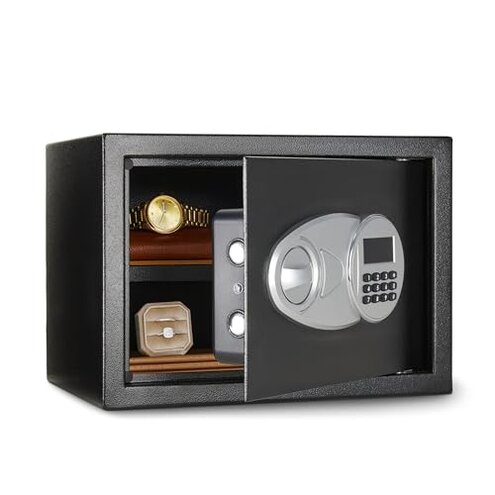
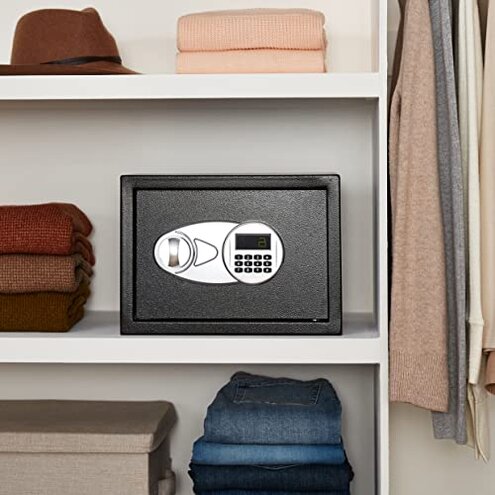
Product evaluated: Amazon Basics Steel Security Safe and Lock Box with Electronic Keypad, for Cash, Jewelry, Documents, Black, 0.5 Cubic Feet, 13.8" W x 9.8" D x 9.8" H
Related Videos For You
Where to Hide a Safe - Best & Worst Places to Hide a Safe in Your House
How to open digital safe when battery is flat and key not working
Data basis: This report aggregates feedback from dozens of written reviews and video demonstrations collected through January 2026, with most feedback coming from written reviews and supported by videos showing setup and failures.
| Outcome | Amazon Basics 0.5 cu ft | Typical mid-range safe |
|---|---|---|
| Security reliability | Higher lockout risk due to keypad and battery reports that appear repeatedly. | Lower lockout risk with more robust electronic modules in mid-range units. |
| Build durability | Average steel construction but several buyers report door and hinge concerns. | Above average thicker doors and reinforced hinges are common at this tier. |
| Installation fit | Mounting hassles from supplied expansion bolts and small interior sizing complaints. | Smoother installation with clearer hardware or bolt quality common in alternatives. |
| User convenience | Extra steps for battery replacement and emergency-key reliance reported after setup. | More forgiving power designs and clearer override procedures in mid-range models. |
| Regret trigger | Lockout during use (battery or keypad failure) is a practical regret that appears repeatedly. | Regret less likely because comparable models use more reliable keypads and power solutions. |
Top failures
What if the keypad suddenly stops responding?

Regret moment: Many buyers describe being unable to open the safe when the keypad fails.
Pattern: This is commonly reported and often happens during first months of ownership or after battery replacement.
Usage anchor: The failure appears during daily use or right after changing batteries, making access unpredictable.
Category contrast: Compared with typical mid-range safes, this product shows a higher-than-normal risk of electronic lock problems that make the unit less reliable for frequent-access items.
Do the emergency override keys actually save you?
- Early sign - Some buyers report the override keys require extra force or slight jiggles to work after a keypad issue.
- Frequency tier - This is a secondary issue that appears repeatedly when lockouts occur.
- Cause - Problems link to dead batteries or internal keypad faults that push users to the override keys.
- Impact - Relying on the keys adds hidden steps like finding and using the keys under stress.
- Fixability - Workarounds exist but they require pre-planning and storing keys securely.
Will the mounting hardware hold up over time?
- Hardware quality - Several reports call the supplied expansion bolts and anchors insufficient for long-term security on some surfaces.
- Usage context - Problems surface during installation onto drywall or thin shelving where anchors slip or strip.
- Frequency tier - This is a primary installation complaint for buyers who tried mounting to non-solid surfaces.
- Cause - The supplied bolts fit many surfaces but are not robust for high-stress or theft-resistance setups.
- Impact - Poor mounting increases the risk that the safe can be pried or moved by determined thieves.
- Hidden requirement - Effective security often needs better anchors or professional mounting, which adds cost.
- Attempted fixes - Buyers who upgraded to heavier anchors or concrete bolts reported better results.
Does the interior size meet real storage needs?
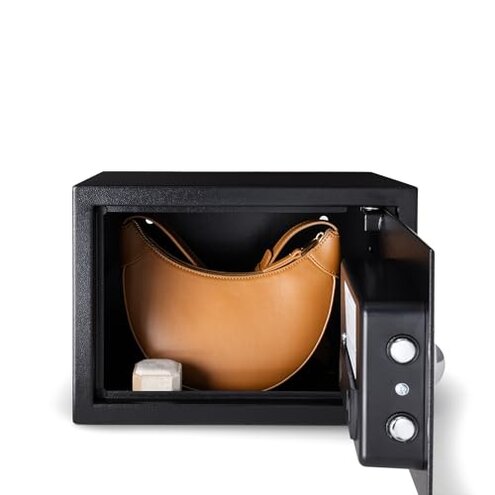
- Expectation gap - The half-cubic-foot interior feels smaller than images suggest once shelving and door thickness are considered.
- Early sign - Bulky items like passports in folders or thick wallets may not sit flat.
- Frequency tier - This is a common usability complaint for buyers storing multiple small valuables.
- Cause - Internal shelf and carpet reduce usable vertical space.
- Impact - Users end up removing the shelf or rearranging items every time they access the safe.
- Attempts - Some remove the shelf entirely or store only very small items to reduce frustration.
- Comparison - Many mid-range safes offer clearer interior dimensions or removable shelving that feels more usable.
- Fixability - Workarounds exist but they reduce organization and convenience.
Illustrative excerpts (not actual quotes)
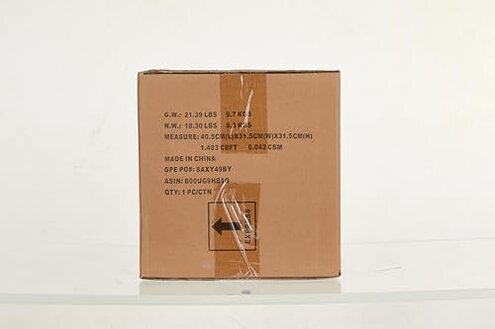
"Keypad went dead mid-use; emergency key stuck and I couldn't open it." — reflects a primary pattern where keypad failures lead to access problems.
"Bolts stripped in drywall, had to buy stronger anchors to secure it." — reflects a secondary pattern around mounting hardware quality.
"Interior is tinier than photos show; my documents don't lie flat." — reflects a common usability complaint about capacity.
Who should avoid this
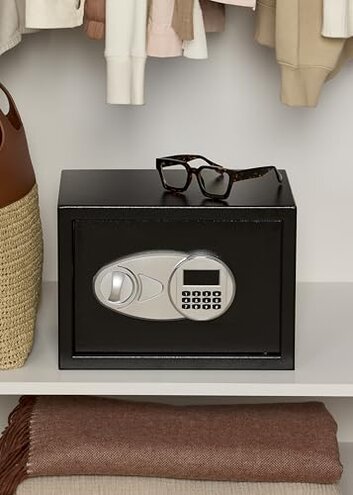
- Frequent-access users - Avoid if you open the safe daily; keypad failures are more disruptive than expected.
- High-security needs - Avoid if you need professional-grade anchoring; supplied hardware may be insufficient.
- Store bulky documents - Avoid if you need flat storage for many documents; interior space is limited by the shelf.
Who this is actually good for
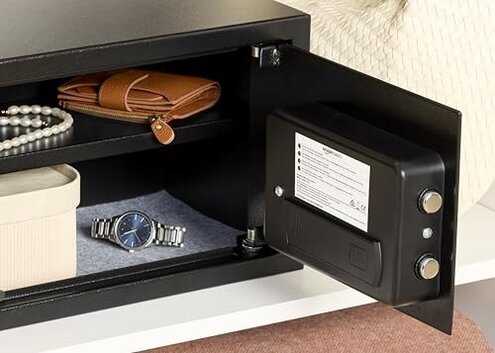
- Infrequent access - Good for users who store items they rarely open and can tolerate occasional battery checks.
- Budget buyers - Good for shoppers wanting basic theft-deterrence at low cost and who accept upgrades for anchors.
- Small-item storage - Good for storing a few small valuables where size and heavy-duty mounting are not priorities.
Expectation vs reality
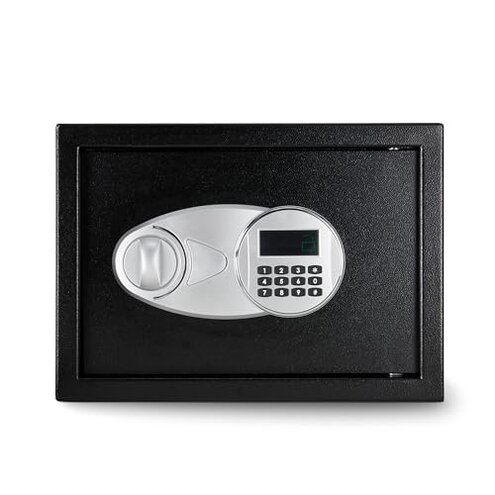
- Expectation - A mid-range home safe should open reliably under normal battery maintenance.
- Reality - The keypad shows a higher lockout risk than expected, requiring extra steps or emergency-key use.
- Expectation - Supplied mounting hardware will secure the safe to household surfaces.
- Reality - Anchors may be insufficient for drywall or thin shelving and often need upgrading.
Safer alternatives
- Power design - Choose models with backup power input or internal battery compartments that preserve access during replacement to avoid lockouts.
- Key override - Prefer safes with clearly documented and easily accessible override procedures and stronger key housings.
- Mounting - Look for safes that include heavy-duty concrete bolts or seller guidance for professional installation to neutralize bolt failures.
- Interior planning - Pick a size with explicit usable internal dimensions or configurable shelving if you need flat document storage.
The bottom line
Main regret: The most common trigger is keypad or battery-related lockouts that force emergency-key reliance.
Why it matters: This product shows a higher-than-normal risk of access failure versus typical mid-range safes, which raises practical regret for frequent users.
Verdict: Avoid if reliable daily access or strong mounting is important; consider a model with better power design and heavier anchors.
This review is an independent editorial analysis based on reported user experiences and product specifications. NegReview.com does not sell products.