
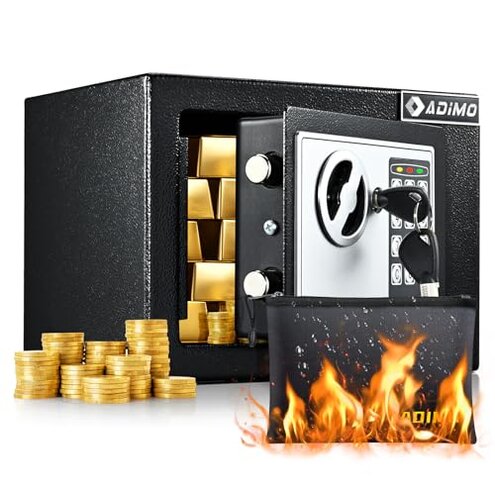
Product evaluated: ADIMO Safe Box, Small Safe for College Dorm Room with Fireproof Waterproof Money Bag for Cash or Document, Keys &Pass Code, Home Money Box with Kits, 0.23CuFt Hidden Lockbox for Home Office Hotel
Related Videos For You
How to setup a password ( Security Safe Box )
How to open digital safe when battery is flat and key not working
Data basis: I reviewed dozens of buyer reports and video demonstrations collected between March 2024 and January 2026, with most feedback from written reviews and support from hands-on videos.
| Outcome | ADIMO small safe | Typical mid-range safe |
|---|---|---|
| Security | Basic locked code plus knob, vulnerable to user error during access. | Moderate keypad or heavier boltwork with clearer opening steps. |
| Build & durability | Lightweight feel and thin walls; corrosion-resistant coating claimed. | Heavier metal and firmer fit common in mid-range alternatives. |
| Access reliability | Higher risk of failed openings or confusing emergency-key steps during first uses. | Lower risk of lock confusion; more consistent open rates out of box. |
| Fit & capacity | Tight interior space suited for small documents and cash only. | Roomier interiors are common in mid-range, fitting more paperwork and bulk. |
| Regret trigger | Access failures during urgent moments cause most buyer regret. | Missing fit or minor setup friction are the usual regrets. |
Why does the safe sometimes refuse to open when I need it?
Immediate regret: Buyers repeatedly report the safe fails to open on the first try, creating panic when accessing cash or documents.
Pattern signal: This is among the most common complaints and appears repeatedly in first-use and early weeks of ownership.
Is the keypad and key access confusing or unreliable?
- Primary problem: users see inconsistent openings after entering codes, a recurring pattern across many reports.
- When it happens: usually during first setup or when switching batteries, not only after months of use.
- Why it hurts: mid-range safes usually open reliably; this one adds extra steps and uncertainty.
- Attempted fixes: buyers tried reprogramming codes and using emergency keys, with mixed success in many accounts.
How fragile or inconvenient is the build and size for daily use?
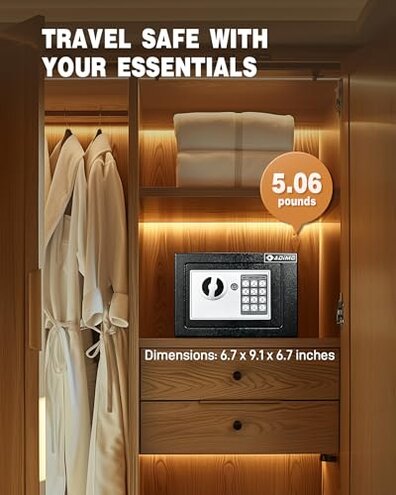
- Early signs: the interior is tight and fits thin envelopes but not bulkier wallets or stacked documents for many buyers.
- Frequency tier: this is a secondary issue seen across many written reports and photos.
- Cause: compact design trades capacity for portability, which surprises some buyers expecting roomier storage.
- Impact: frequent need to reorganize valuables adds daily friction compared with typical small safes.
- Attempts: users placed items diagonally or removed packaging, adding time each access.
- Fixability: only by choosing smaller contents or upgrading to a larger safe.
Does setup, keys, or mounting hide important requirements?
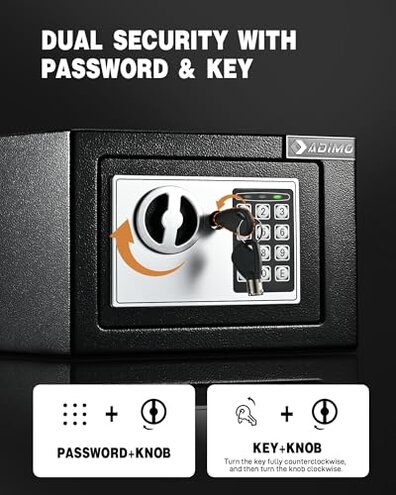
- Hidden requirement: the emergency key sequence is specific: turn key counterclockwise then knob clockwise, a step many buyers miss on first tries.
- Context this shows up during emergency access or when batteries fail, not just casual use.
- Why worse: typical safes have clearer, fewer steps for emergency opening.
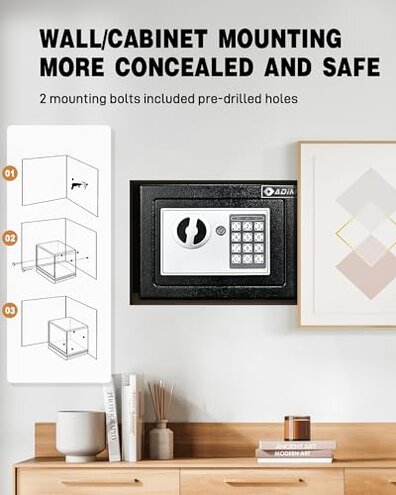
- Mounting issue: included screws are minimal and several buyers reported weak anchoring when fixed to drywall.
- Wear signal: persistent reports of chipped coating and loose knobs appear after repeated use in some accounts.
- Support burden: resolving access or mounting frustrations commonly required extra DIY time or third-party help.
- Net effect: these hidden steps and light mounting hardware make ownership more hands-on than category norm.
Illustrative buyer phrasing (not actual quotes)
Illustrative: "Code accepted but safe stayed locked during urgent access." — identifies a primary pattern.
Illustrative: "Key turn felt loose; had to jiggle knob to open." — shows a secondary pattern.
Illustrative: "Bag didn't fit when documents were in folders." — reflects an edge-case.
Who should avoid this
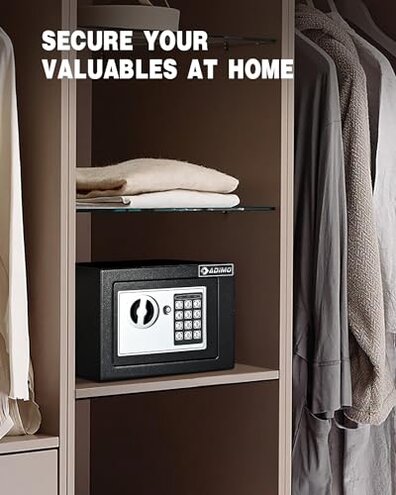
- Frequent-access users who need guaranteed, immediate opening during daily use should avoid this product.
- Those needing large capacity for stacked documents or bulky wallets will face repeated reorganizing and regret.
- Buyers expecting plug-and-play emergency access will be frustrated by the required key sequence and setup steps.
Who this is actually good for
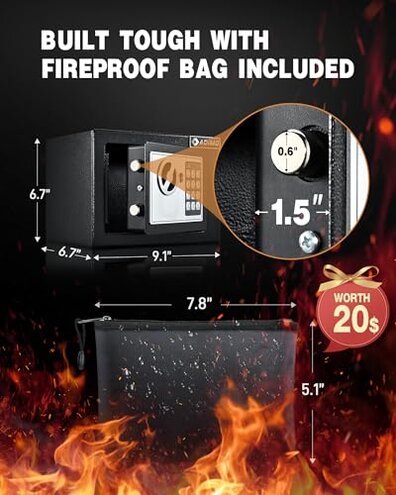
- Low-frequency stowers who open the safe rarely and keep only small cash or single documents can accept the trade-offs.
- Temporary users such as short-term renters who want basic theft deterrence and portability may tolerate the limits.
- Budget-conscious buyers willing to trade reliability and capacity for a lower price point will find it usable.
Expectation vs reality
- Expectation (reasonable): small safes sometimes require careful setup.
- Reality: this model often requires repeated code re-entries and a precise emergency-key sequence, which is worse than typical entry-level safes.
- Expectation: a fireproof bag increases protection for documents.
- Reality: buyers note the bag helps water resistance but does not remove access or capacity problems.
Safer alternatives
- Choose a model with proven keypad reliability to neutralize the access-failure risk.
- Pick a larger interior to avoid capacity and reorganization friction if you store folders or bulkier items.
- Prefer heavier mounting kits or buy separate anchors to fix the anchoring weakness seen here.
- Look for clear emergency instructions printed on the unit or manual to avoid hidden sequence traps.
The bottom line
Main regret: the product's core issue is access reliability, which causes the most customer frustration.
Why it matters: this risk is higher than expected for small safes and leads to real inconvenience and worry.
Verdict: avoid this safe if you need dependable, quick access or room for bulkier items; consider alternatives with clearer emergency access and stronger mounting.
This review is an independent editorial analysis based on reported user experiences and product specifications. NegReview.com does not sell products.