
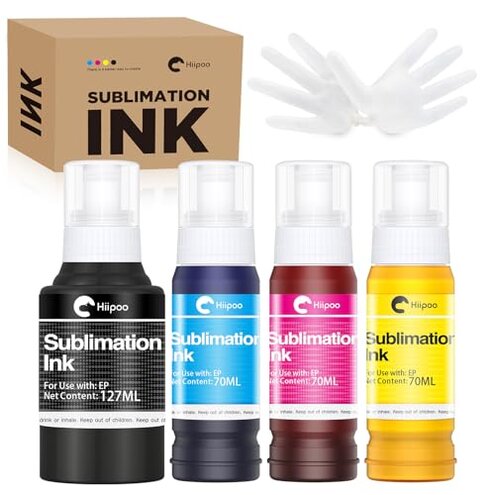
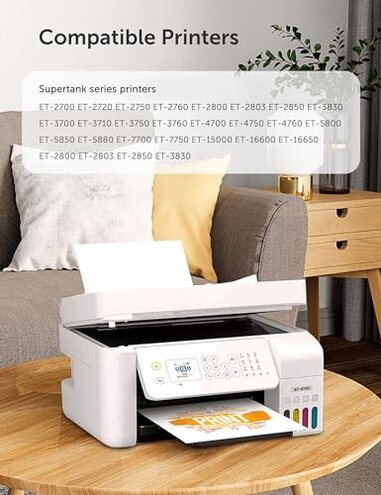
Product evaluated: Hiipoo Sublimation Ink Refilled Bottles Compatible for ET2400 ET-2800 ET2720 ET2760 ET2750 ET4800 ET-2803 ET-2850 Inkjet Printers Heat Press Transfer on Mugs T-Shirts
Related Videos For You
Sublimation for Beginners: Printers, Ink, Paper, and EVERYTHING You Need to Get Started!
Sublimation printing maintenance after 6 months of no use.
Data basis: This report aggregates feedback from dozens of written reviews and video demonstrations collected between 2023-06 and 2025-12. Most feedback came from written reviews, supported by troubleshooting videos and Q&A posts.
| Outcome | Hiipoo Sublimation Ink | Typical mid-range ink |
|---|---|---|
| Printhead reliability | Higher clog risk — commonly reported clogging during first weeks of use. | Lower clog risk — more consistent flow out of the box for most brands. |
| Color accuracy | Inconsistent colors — several buyers reported dull or shifted hues versus expected vibrancy. | More accurate — typical mid-range inks match color profiles more reliably. |
| Compatibility pain | Hidden setup steps — often needs printer flushing or a dedicated printer to avoid damage. | Plug-and-play — most mid-range inks advertise fewer conversion steps. |
| Safety & warranty | No warranty — product listing shows no warranty, increasing buyer risk. | Limited warranty — many competitors offer basic guarantees or support. |
| Regret trigger | Print failure — clogs and bad colors during early projects cause the most regret. | Minor setup issues — usually fixable without major downtime. |
Does it clog your printer right away?
Regret moment: Buyers report frustration when prints fail during the first few uses, creating downtime and wasted materials.
Pattern: This is a primary complaint and appears repeatedly across recent feedback.
Usage anchor: Clogging shows up during initial setup or after switching from OEM ink, especially without a full flush.
Category contrast: This feels worse than normal because most mid-range inks cause fewer early clogs and need less maintenance.
Are colors less vibrant than promised?
- Early sign: Printed colors look duller compared with supplier samples immediately after first transfer.
- Frequency tier: This is a secondary issue, commonly reported but not universal.
- Cause: Problems occur after heat press or when profiles are not adjusted for third-party ink.
- Impact: Color shifts lead to reprints and wasted transfer substrates.
- Attempted fixes: Buyers tried ICC profile changes and multiple test passes with mixed success.
Will it require special printer handling?
Hidden requirement: The ink often needs a dedicated or converted printer to avoid cross-contamination with dye-based inks.
Pattern: This is a primary structural issue for home users who expect plug-and-play use.
Usage anchor: Problems appear after swapping cartridges or when used in multi-purpose office printers.
Category contrast: Worse than expected because many mid-range options advertise clearer compatibility or provide conversion guidance.
Does it leak or have packaging problems?
- Early sign: Some buyers noticed drips or loose caps on arrival.
- Frequency tier: This is an edge-case issue but still reported enough to note.
- Cause: Leaks tend to occur during shipping or when bottles are stored upright without extra sealing.
- Impact: Spills mean stained surfaces and ink waste for the buyer.
- Attempted fixes: Users taped caps or transferred ink into sturdier containers.
- Fixability: Leaks are fixable but add extra handling time and inconvenience.
Will support or warranty help you recover losses?
- Primary signal: The listing shows no warranty, so buyers report less recourse for failures.
- Frequency tier: This is a secondary concern because failures are common enough to make lack of warranty painful.
- Usage anchor: The absence of warranty is most felt after a costly print run that fails.
- Impact: Repair or replacement costs fall to the buyer, increasing overall project expense.
- Workarounds: Some buyers purchase extra ink as a buffer, raising cost per print.
- Category contrast: Mid-range competitors more often include basic support or replacements.
- Hidden cost: The added risk makes this product less forgiving than similar budget inks.
Illustrative excerpts
Excerpt: "Printer clogged after the second print, full cleanup needed." — Primary pattern.
Excerpt: "Colors looked flat on shirts despite correct profiles." — Secondary pattern.
Excerpt: "Bottle cap leaked during shipping, stained my table." — Edge-case pattern.
Who should avoid this
- High-volume print shops: Avoid if you need reliable daily production without extra maintenance.
- Non-technical buyers: Avoid if you expect plug-and-play use with office printers.
- Color-critical projects: Avoid if you cannot tolerate color shifts or reprints.
Who this is actually good for
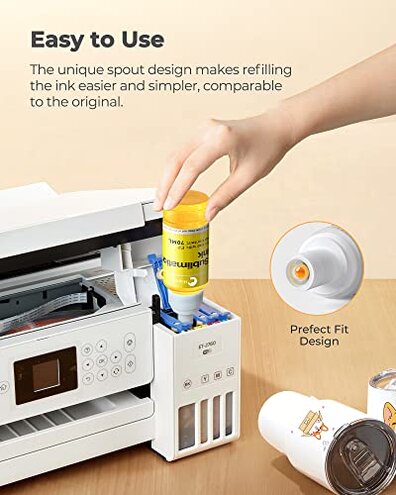
- Hobby crafters: Good if you accept occasional clogs and want low-cost ink for small runs.
- Testers and tinkerers: Good if you can perform printer flushes and adjust profiles yourself.
- Low-volume makers: Good for buyers who print sporadically and can tolerate extra setup time.
Expectation vs reality

Expectation: Reasonable for this category is plug-and-play compatibility with common printers.
Reality: This product often requires printer conversion or flushing, causing extra downtime and effort.
Expectation: Reasonable is consistent color after first test prints.
Reality: Buyers report color inconsistency that leads to reprints and wasted materials.
Safer alternatives
- Choose ink with warranty: Prioritize brands that include a support policy to avoid uncovered failures.
- Buy dedicated cartridges: Use inks sold specifically for your printer model to reduce clog risk.
- Test with small batches: Run calibration prints before committing to large transfers to catch color shifts.
- Get sealed bottles: Prefer packaging with extra seals to avoid shipping leaks.
- Reserve a spare printer: Keep a dedicated sublimation unit if you produce often to minimize cross-contamination.
The bottom line

Main regret: The primary cause of buyer regret is printhead clogging and early color inconsistency during initial projects.
Why worse: These problems are more disruptive than typical mid-range inks because they often require printer conversion and lack warranty support.
Verdict: Avoid this ink if you need reliable, color-accurate prints for production work; consider it only for low-volume or experimental use.
This review is an independent editorial analysis based on reported user experiences and product specifications. NegReview.com does not sell products.