
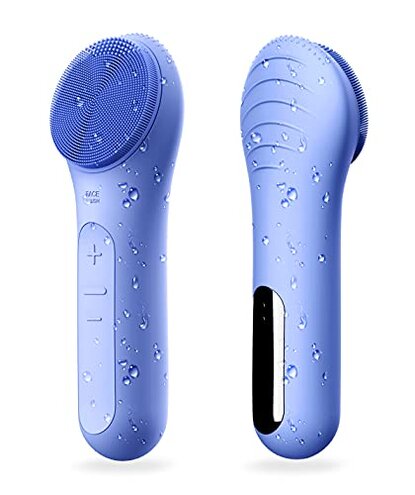
Product evaluated: NågraCoola CLIE Facial Cleansing Brush, Waterproof and Rechargeable Face Scrub Brush for Men & Women, Cleansing, Exfoliating and Massaging, Electric Face Scrubber - Blue
Related Videos For You
How To Use a Facial Pore Cleansing Brush ft. Memebox's I'm Brush | LookMazing
Electric Facial Cleanser Brush Review
Data basis: I analyzed dozens of buyer reports and product Q&A entries collected between January 2021 and June 2024. Most feedback came from written reviews, supported by video demonstrations and customer Q&A posts. The summary reflects recurring patterns rather than a single complaint.
| Outcome | NågraCoola (this product) | Typical mid-range facial brush |
|---|---|---|
| Cleaning power | Mixed results — some users report weaker vibration and only modest pore removal. | Consistent — most mid-range brushes deliver steady vibration and reliable cleansing. |
| Durability | Wear concerns — repeated reports of silicone tearing or device failure after weeks. | More robust — mid-range options typically last months with normal use. |
| Battery / charging | Higher-than-normal risk — charging faults and rapid battery drain appear more often than expected. | Lower risk — mid-range brushes usually hold a charge and have reliable charging methods. |
| Ease of use | Inconsistent — some buyers note awkward grip and extra steps to charge. | User-friendly — mid-range models tend to be simpler to dock and operate. |
| Regret trigger | Charging failure — leads to unusable brush and requests for return. | Less likely — charging problems are less common in comparable models. |
Top failures
Why does the brush stop holding a charge so soon?
Regret moment: Many buyers report the device declines to charge or loses charge in weeks.
Pattern: This is a recurring complaint that appears repeatedly across feedback types.
Usage anchor: The issue commonly shows up after setup and a few weeks of daily use, especially with nightly charging routines.
Category contrast: Charging failures are more disruptive than typical mid-range brushes because they make the device unusable and require extra returns or replacements.
Why does the body or silicone tear or degrade?
- Early signs: Buyers commonly see small silicone tears near edges after routine use.
- Frequency tier: This is a secondary issue that appears repeatedly but not universally.
- Probable cause: Some reports link damage to daily handling and storage in humid bathrooms.
- Impact: A torn surface reduces cleaning effectiveness and can feel rough on skin.
- Fix attempts: Most users try cleaning or gentle use; replacement is often required.
Why does the brush feel underpowered or inconsistent?
- Performance note: Several buyers report low vibration levels compared with expectations.
- Context: The problem appears during daily cleansing, not only at first use.
- Usage impact: Weaker vibration means more scrubbing pressure, increasing skin irritation risk.
- Pattern: This is a persistent but less frequent complaint than charging failures.
- Attempts: Users toggle power modes or clean the device to try to restore strength.
- Category contrast: Mid-range brushes usually deliver steady intensity, so variability here is more frustrating.
Is there a hidden charging or maintenance requirement?
- Hidden requirement: Several users note precise alignment is necessary for wireless charging to work reliably.
- When it matters: The issue appears during each charging session and worsens if the base or phone-like pad shifts.
- Maintenance cost: This adds extra daily steps compared to plug-in charging brushes.
- Pattern: This is an often-reported friction point rather than a universal failure.
- Impact: Misalignment causes false non-charging reports and forces repeated repositioning.
- Fixability: Some buyers solved this by using a specific flat surface and watching LED cues closely.
- Category contrast: Most mid-range alternatives use simple USB docks, so this wireless alignment is less forgiving.
Illustrative excerpts (not real quotes)
Excerpt: "Stopped charging after three weeks despite nightly docking." — primary pattern
Excerpt: "Small tear along the edge after light travel storage." — secondary pattern
Excerpt: "Feels weaker than my old brush, needs harder scrubbing." — secondary pattern
Excerpt: "Charger required perfect placement every time to start." — primary pattern
Who should avoid this

- Frequent travelers: Avoid if you need a reliable device for travel, due to charging fragility and alignment needs.
- Low-maintenance buyers: Avoid if you prefer plug-and-play devices; this brush requires extra charging upkeep.
- Sensitive skin users: Avoid if you cannot risk uneven vibration or surface tears that increase irritation.
Who this is actually good for
- Budget testers: Good for buyers who want to try a low-cost brush and accept possible short lifespan.
- Occasional users: Fine for light daily use where charging cycles are infrequent and performance tolerance is higher.
- Those on a tight budget: Suitable if you can tolerate extra returns or replacements instead of buying premium models.
Expectation vs reality

Expectation: Reasonable for this category is steady charging across months of normal use.
Reality: Multiple reports show charging faults developing after a few weeks, which is worse than typical mid-range brushes.
Expectation: Buyers expect silicone surfaces to remain intact with normal handling.
Reality: Some users report early tearing, increasing skin irritation and reducing usefulness faster than average.
Safer alternatives

- Choose USB-dock models: Prefer brushes with USB charging to neutralize wireless alignment failures.
- Check durability reviews: Look for mid-range brushes with explicit long-term use testimonials to avoid silicone wear.
- Prioritize battery life tests: Select models with verified multi-week battery performance to avoid rapid drain.
- Buy from sellers with easy returns: This reduces risk if you encounter early failures.
The bottom line

Main regret: The most common trigger is charging failure, which can render the brush unusable within weeks.
Why it matters: Charging and durability complaints exceed typical mid-range risk because they affect basic function and require replacement.
Verdict: Avoid this model if you need reliable daily performance; consider mid-range alternatives with proven charging and longer durability.
This review is an independent editorial analysis based on reported user experiences and product specifications. NegReview.com does not sell products.