
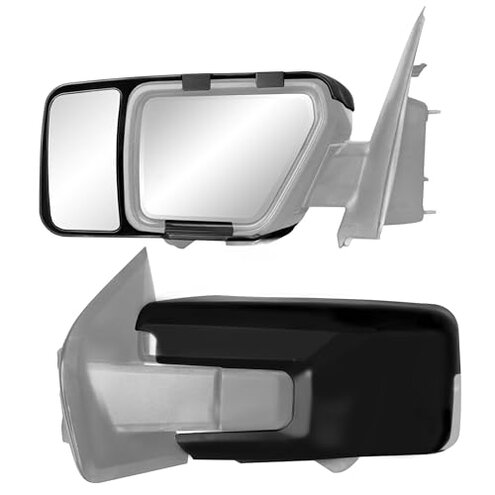
Product evaluated: K Source Snap & Zap Custom Towing Mirror Pair for Ford F150, Black
Related Videos For You
Product Review: K-Source Snap-On Towing Mirrors
How to Install Upgraded Tow Mirrors 14-19 Chevy Silverado LT
Data basis: This report uses dozens of buyer comments gathered from written feedback and video-style demonstrations collected from 2021 to 2026. Most feedback came from written experiences, with added support from install and towing-use walkthroughs, which helps separate first-impression fit issues from problems that show up during actual road use.
| Buyer outcome | K Source pair | Typical mid-range alternative |
| Initial fit confidence | More variable when mirror shape or trim differs slightly | Usually steadier across listed fitments |
| Install effort | Easy start, but exact seating can take extra retry time | Moderate, often with a more secure feel once mounted |
| Highway stability | Higher-than-normal risk of movement complaints during towing use | Typically lower shake risk in daily towing conditions |
| Daily convenience | Mixed because folding works, but fit checking may become routine | More predictable once installed correctly |
| Regret trigger | Looks compatible but feels less secure on the road than expected | More often matches buyer expectations for clip-on towing mirrors |
Does the “easy clip-on” setup turn into trial and error?
This is a primary issue. The regret moment usually happens on first install, when the mirror seems close to fitting but not quite seated the way buyers expect. That trade-off feels worse because this category is supposed to save time, not add repeated mounting attempts.
The pattern appears repeatedly. It is not universal, but it shows up often enough in fit-related feedback to matter for truck owners who expected a simple snap-on job. Compared with a typical mid-range towing mirror, this one seems less forgiving of small trim or mirror-shape differences.
- Early sign: Buyers commonly report the extension attaching, then needing repositioning before it feels fully seated.
- When it shows up: The issue appears during setup, especially the first time trying to align both sides evenly.
- Why it frustrates: A product sold on no-tools convenience feels more disruptive than expected when “quick install” still needs retries.
- Hidden requirement: You may need very exact mirror matching, not just a broad vehicle match, for the fit to feel right.
- Real impact: Extra install time matters more when you only mount towing mirrors before trips, not every day.
Illustrative excerpt: “It snaps on, but getting it to sit right took longer than expected.” Primary pattern.
Will it stay steady once you’re actually towing?
- Frequency tier: This is another primary complaint, and it is more frustrating than setup trouble because it shows up during actual driving.
- Usage moment: The problem tends to appear after setup, once the truck is at speed and the added mirror is doing real work.
- Common pattern: Feedback repeatedly points to movement or vibration concerns rather than complete failure for every buyer.
- Why it feels worse: Some shake is category-normal, but buyers describe this as more distracting than typical for a mid-range towing mirror.
- Road impact: A less stable view can make lane changes and trailer checks feel less confident, which defeats the point of adding extensions.
- What buyers try: Reinstalling and pressing for a tighter seat can help some, but that adds another pre-trip step.
- Fixability: This looks partly fixable when caused by fit alignment, but not always if the base fit already feels marginal.
Illustrative excerpt: “Fine in the driveway, then the view got shaky on the highway.” Primary pattern.
Is the vehicle-specific promise narrower than it sounds?
This is a secondary issue. The frustration starts when buyers assume the listed fit means a clean match across trims and mirror variations. The problem becomes obvious during first use, especially if the truck has a mirror shape buyers thought was standard.
The pattern is persistent. It is less frequent than stability complaints, but more annoying when it happens because it creates instant uncertainty about keeping the product. Compared with many mid-range alternatives, the fit seems more sensitive to small differences buyers may not notice before ordering.
Why that matters: Clip-on towing mirrors already depend on good matching, but this feels worse than normal when the listing creates stronger confidence than the real-world fit delivers. That gap is what drives regret, not just the fit issue itself.
Illustrative excerpt: “My truck was listed, but the mirror shape still made the fit questionable.” Secondary pattern.
Does convenience drop if you remove and reinstall them often?
- Frequency tier: This is a secondary issue rather than the main complaint, but it shows up in real ownership use.
- When it appears: It tends to matter after repeated use, especially for owners who only tow on weekends or trips.
- Main friction: A mirror that was merely “acceptable” on first install can become annoying when you must repeat the same alignment routine.
- Why it exceeds baseline: Typical mid-range options are not effortless, but they often become more routine once buyers learn the fit.
- Practical cost: This pair can add extra pre-trip time, which feels bigger than expected for a no-tools accessory.
- Buyer workaround: Some owners may choose to leave them on longer to avoid reinstall hassle, which is not ideal for everyone.
Illustrative excerpt: “I wanted quick on-and-off, but every trip felt like a reset.” Secondary pattern.
Who should avoid this
- Avoid it if you want a true one-try install, because fit sensitivity is among the most common regret triggers.
- Avoid it if highway mirror shake will bother you, since that risk appears repeatedly during towing use.
- Avoid it if your truck has any mirror variation you are unsure about, because the hidden requirement is a very exact shape match.
- Avoid it if you only tow occasionally and hate setup chores, since repeated install effort can feel worse than expected.
Who this is actually good for
- Good fit for buyers willing to test and adjust carefully before a trip, because some setup frustration can be managed.
- Good fit for owners whose factory mirrors match the molded shape closely and who value a no-tools design.
- Good fit for drivers who tow short distances and can tolerate some category-normal movement if the mirror stays usable.
- Good fit for buyers who prioritize foldability and accept that secure setup may still take extra attention.
Expectation vs reality
- Expectation: “Vehicle-specific” should mean a straightforward, confidence-inspiring fit.
- Reality: Fit confidence can still vary with mirror shape details buyers may not anticipate.
- Expectation: A clip-on towing mirror should install fast and stay calm enough for regular towing.
- Reality: Road shake is a recurring complaint, which makes the convenience trade-off feel less favorable.
- Reasonable for this category: Some vibration is normal with add-on towing mirrors.
- Worse than expected: Buyers commonly describe this model as more distracting than a typical mid-range alternative when the fit is not perfect.
Safer alternatives
- Choose secure-fit designs that use more than a simple snap-on hold if highway stability is your top concern.
- Look for trim-specific confirmation instead of broad vehicle matching to reduce the hidden fit-variation risk.
- Prioritize repeatable mounting if you remove mirrors between trips, since this directly avoids the reinstall frustration noted above.
- Watch real towing footage before buying, because movement at speed is easier to judge than parked install photos.
The bottom line
Main regret comes from the gap between easy clip-on expectations and a fit that can feel less secure during real towing use. That exceeds normal category risk because instability and fit sensitivity matter more here than with many mid-range alternatives. Verdict: avoid it if you need predictable fit and steady highway visibility without trial and error.
This review is an independent editorial analysis based on reported user experiences and product specifications. NegReview.com does not sell products.