
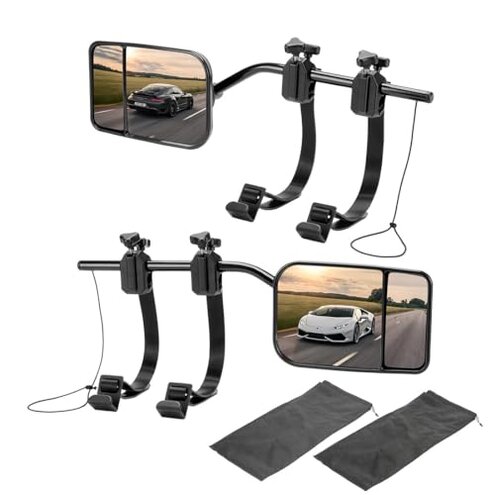
Product evaluated: Universal Clip on Towing Mirrors Extensions for Towing, 360 Degree Adjustable Rotation Side Mirror Extenders for Towing, Convex Rearview Mirror, Tow Mirrors for Car Truck Trailer RV SUV, 2 Pack
Related Videos For You
Clip-On Tow Mirrors
How to Install Upgraded Tow Mirrors 14-19 Chevy Silverado LT
Data basis: This report summarizes dozens of buyer comments gathered from written feedback and video-style demonstrations collected between 2024 and 2026. Most usable signals came from written reviews, with added context from visual setup and road-use impressions, so the clearest patterns center on fit, stability, and real towing visibility.
| Buyer outcome | NOVCAPAR | Typical mid-range alternative |
|---|---|---|
| Initial fit | Higher risk of trial-and-error clamping on differently shaped factory mirrors | More forgiving fit if the clamp shape is better matched |
| Highway view | Less predictable because clip-on position can shift the useful angle | Usually steadier once adjusted for towing width |
| Setup effort | Extra steps to tighten, test, and recheck after driving | Moderate effort but often fewer readjustments |
| Daily convenience | More upkeep if you remove and reinstall between trips | Lower hassle for occasional towing use |
| Regret trigger | Looks universal but still may not feel secure on your mirror housing | Lower mismatch risk when sizing is more specific |
Do you want a quick clamp-on fix, but end up fighting the fit?
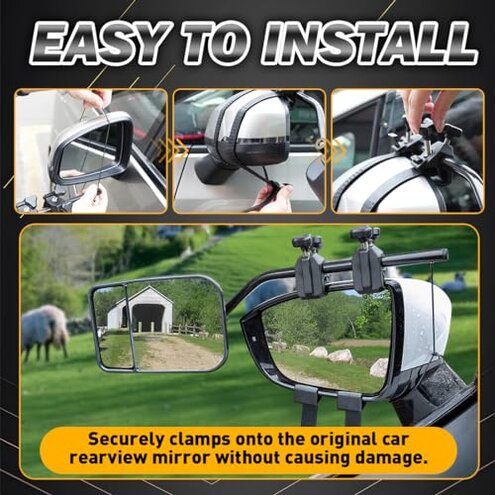
Primary issue: fit frustration is among the most common complaints for universal towing mirrors. The regret moment usually happens on first setup, when the clamps attach but do not inspire much confidence on a specific mirror shape.
Recurring pattern: this is not universal, but it appears repeatedly across buyer feedback because “universal” still depends on the size and contour of your existing mirrors. Compared with a typical mid-range clip-on option, this feels less forgiving than expected.
- Early sign: if the mirror body has a rounded or bulky shape, buyers commonly report more repositioning before it even feels usable.
- When it hits: the problem shows up during installation, especially when trying to line up both stability and a useful viewing angle.
- Why it stings: a towing mirror should save time, but this can add extra setup time before every trip.
- Scope: fit complaints appear repeatedly across different vehicle types, which suggests the issue is broader than one isolated mismatch.
- Hidden requirement: you may need a factory mirror shape that gives the clamp enough flat contact area, which is a stricter requirement than the listing language suggests.
- Fixability: careful tightening can help, but it does not fully solve a basic shape mismatch.
Are you expecting a stable highway view, but get motion instead?
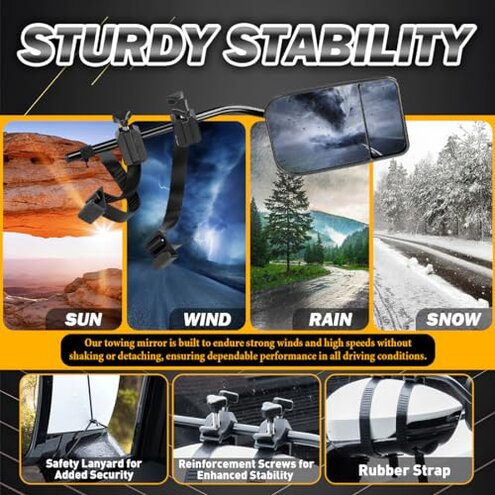
Primary issue: movement and view disturbance are more disruptive than expected for this category. The problem usually appears after setup, once you are driving at speed or dealing with wind from passing traffic.
Persistent pattern: buyers commonly describe the mirrors as usable in theory but less confidence-inspiring in real road conditions. A typical mid-range towing extender may still show some vibration, but this type of complaint feels more frequent here because the whole point is safe rear visibility.
Illustrative excerpt: “It looked fine parked, then the image started dancing on the road.”
Pattern note: This reflects a primary pattern tied to real driving use.
Illustrative excerpt: “I kept checking the mirror instead of traffic because it never felt settled.”
Pattern note: This reflects a primary pattern because the distraction matters more than minor inconvenience.
- Trigger point: the issue tends to show up at highway speeds or in windy conditions, not just in the driveway.
- Buyer impact: even mild shake makes distance judgment harder when backing, merging, or watching trailer edges.
- Frequency tier: this is a primary issue, appearing more often than cosmetic complaints.
- Why worse: some vibration is normal for clip-ons, but repeated reports suggest this can be more distracting than the category baseline.
- Common attempt: users try retightening and changing the angle, which may reduce movement but can create a worse view.
- Trade-off: securing the mirror more firmly can still leave the reflection too narrow or oddly positioned.
- Real regret: the product may technically stay attached while still failing the bigger job of giving a calm, trustworthy view.
Do the extra convex sections help, or just make aiming fussier?
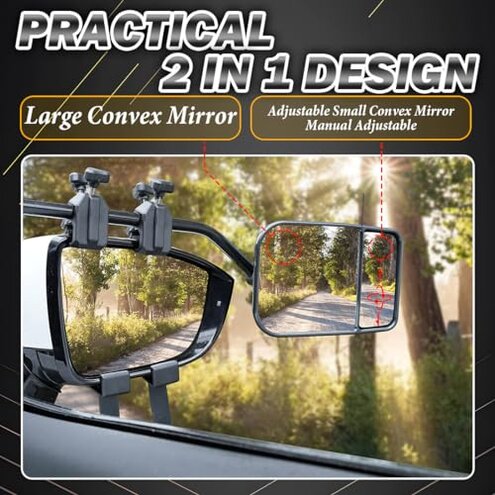
Secondary issue: the dual-view idea sounds helpful, but adjustment frustration appears repeatedly in buyer feedback. The problem usually shows up after mounting, when you try to fine-tune both mirrors for actual lane and trailer coverage.
- What happens: buyers can spend extra time chasing an angle that shows the trailer edge without losing normal traffic visibility.
- Frequency tier: this is a secondary issue, less common than fit complaints but still persistent.
- Usage moment: the annoyance grows before departure and during the first miles, when you realize one small change affects the whole view.
- Why worse: towing mirrors are expected to need adjustment, but these can feel more finicky than typical mid-range alternatives.
- Learning curve: the extra mirror can add information, but it also adds another thing to align and recheck.
- Impact: if the mini mirror is not aimed well, it can become a distraction instead of a confidence boost.
- Fixability: patient setup helps, but it may still require repeated stops to get both sides dialed in.
- Illustrative excerpt: “I could see more, but not the part I actually needed.”
Pattern note: This reflects a secondary pattern tied to angle usefulness, not total failure.
Will this stay convenient if you tow more than once in a while?
Secondary issue: convenience drops when buyers need to remove, store, and reinstall the mirrors often. The regret usually builds over repeated use, not necessarily on day one.
Less frequent but persistent: this complaint is less common than fit or shake, yet more frustrating when it happens because it adds routine hassle every trip. Compared with a typical mid-range set, this can mean more upkeep than buyers expect from a simple clip-on accessory.
- Daily friction: if you only tow occasionally, repeated mounting and alignment can feel like more work than the product category promises.
- Storage issue: the included bag helps, but buyers still report the need to keep track of extra parts between trips.
- When it worsens: the hassle becomes more obvious for people who switch frequently between normal driving and towing.
- Practical impact: more handling means more chances to misalign one side and start setup again.
- Category contrast: removable mirrors always add a step, but this setup can feel more repetitive than expected for a mid-range universal pair.
- Illustrative excerpt: “Every trip started with another round of tightening and tweaking.”
Pattern note: This reflects a secondary pattern tied to repeat-use inconvenience.
Who should avoid this
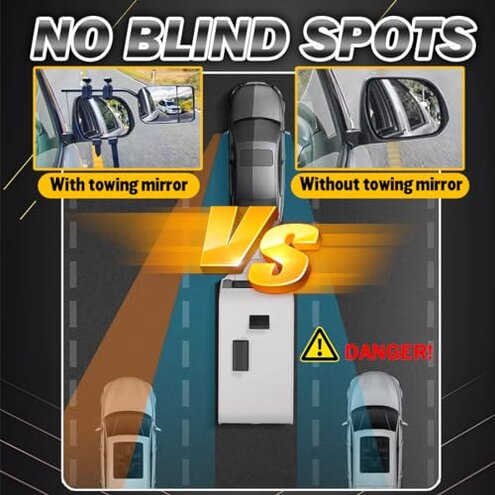
- Avoid it if you need a confident fit on the first try, because universal clamp systems are the biggest regret trigger here.
- Avoid it if you do long highway towing, where mirror shake becomes more noticeable and more stressful than expected.
- Avoid it if you switch vehicles often, since fit and adjustment can vary enough to add setup time every trip.
- Avoid it if you want a low-fuss add-on, because repeated tightening and re-aiming can exceed normal category patience.
Who this is actually good for
- Good fit for buyers who tow only occasionally and are willing to spend extra time dialing in the angle before driving.
- Good fit for users with large, flatter factory mirrors that give universal clamps a better chance of feeling secure.
- Good fit for local or slower-speed towing, where mild movement matters less than on fast highways.
- Good fit for budget-minded shoppers who accept adjustment hassle in exchange for avoiding vehicle-specific tow mirrors.
Expectation vs reality
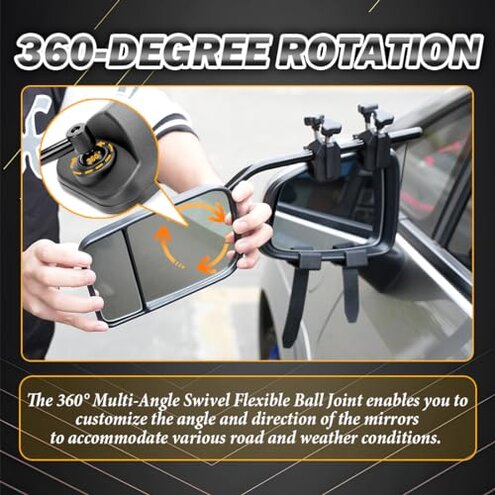
Expectation: universal towing mirrors should fit most mirror housings with only minor adjustment.
Reality: fit appears less universal in practice, and mirror shape can decide whether setup feels easy or annoying.
Expectation: some clip-on vibration is reasonable for this category.
Reality: the reported movement can be worse than expected because it affects confidence, not just comfort.
Expectation: dual-view mirrors should make towing simpler.
Reality: extra viewing options can also mean extra aiming work before the mirror becomes truly helpful.
Expectation: tool-free installation should save time.
Reality: tool-free does not always mean quick when repeated tightening and test driving are still needed.
Safer alternatives
- Choose fit-specific towing mirrors when possible, because they directly reduce the biggest risk here: universal clamp mismatch.
- Prioritize wider clamps or shape-matched supports if you tow at highway speed, since that helps reduce the motion problem buyers notice most.
- Look for simpler optics if you dislike setup fuss, because one clear mirror can be easier to aim than a dual-view layout.
- Check your mirror housing before buying any universal extender, especially if your factory mirror is rounded, textured, or unusually thick.
- Consider permanent-style or semi-permanent options if you tow often, because repeat install hassle is a persistent downside with removable clip-ons.
The bottom line
Main regret comes from the gap between “universal” marketing and real-world fit, followed closely by a view that can feel too unsettled at speed. Those two problems push this beyond normal category risk because towing mirrors are supposed to add confidence, not extra checking and readjustment. Verdict: avoid it if secure fit and steady highway visibility matter more than low-effort, universal convenience.
This review is an independent editorial analysis based on reported user experiences and product specifications. NegReview.com does not sell products.