
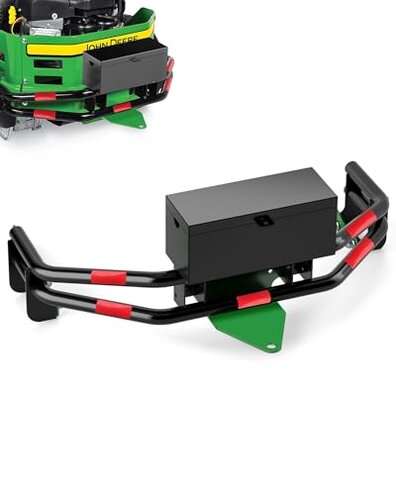
Product evaluated: Zero Turn Lawn Mower One-Piece Rear Bumper Hitch with Toolbox for John Deere Z235 Z255 Z335E Z335M Z345M Z345R Z355E Z375R BM2448 ZTrak, Upgrade Heavy Duty Towing Bumper Hitches and Storage Box
Related Videos For You
Trailer Hitch for Mower - eXmark Lazer Z - DIY Install Zero Turn
Great Day Riding Mower Towing Hitch
Data basis: This report uses dozens of feedback signals gathered from written buyer comments, seller-page notes, and video-style setup demonstrations collected from 2024 to 2026. Most usable detail came from written feedback, with lighter support from visual install walk-throughs and product page claims, so the strongest patterns center on fit, setup effort, and real-world towing expectations.
Comparative risk snapshot
| Buyer outcome | This hitch kit | Typical mid-range alternative |
|---|---|---|
| Install ease | Higher risk of extra steps if your mower version is not an exact match. | Usually simpler when the fit list is shorter and less conditional. |
| Fit confidence | Less forgiving because the compatibility notes include serial-number limits and model-specific exceptions. | More predictable when the bracket design targets fewer mower variations. |
| Daily convenience | Mixed: the toolbox adds storage, but also adds bulk during routine rear access. | More neutral: basic hitches usually add less rear bulk. |
| Towing expectations | Easier to overestimate because the heavy-duty wording can sound broader than the stated 250 lb limit. | Often clearer about light-duty towing from the start. |
| Regret trigger | Buying first, then discovering your exact mower setup needs more checking than expected. | Usually lower if the product is more narrowly matched. |
Top failures
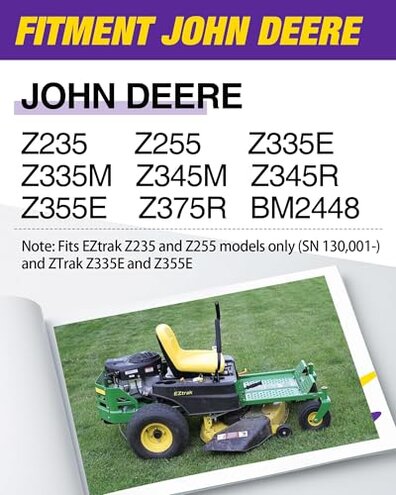
Will it fit your mower as easily as the title suggests?
Primary issue: The biggest regret moment is after unboxing, when buyers realize the fit claim is broader in the title than in the fine-print notes. This appears more disruptive than expected for this category because rear hitch kits are usually bought to save time, not add compatibility research.
Pattern: This concern appears repeatedly whenever a product lists many mower models but also adds narrow serial-number conditions. It shows up before installation and gets worse when buyers rely on the title instead of checking the exact fit note.
- Early sign: The listing says it fits multiple John Deere models, but the feature text narrows that with serial-number limits and specific model subsets.
- Frequency tier: This is the primary complaint risk, because compatibility confusion blocks use completely.
- Why it happens: The fit note is conditional, including EZtrak Z235 and Z255 only from SN 130,001-, plus selected ZTrak models.
- User impact: If your mower is outside those conditions, the kit can become a return problem instead of a quick upgrade.
- Hidden requirement: You may need to confirm your mower serial number before ordering, which is more homework than many buyers expect.
- Fixability: This is only fixable if you verify the exact mower variant ahead of time.
- Category contrast: Most mid-range hitch kits still require fit checks, but this one looks broader than normal at first glance, which raises mismatch risk.
Illustrative excerpt: “I thought it fit my mower, then the serial note changed everything.”
Pattern level: This reflects a primary pattern tied to the compatibility wording.
Does the heavy-duty pitch create bigger towing expectations than the product supports?
Primary issue: The regret shows up during the first real hauling job, when buyers expect a stronger towing setup than the stated limit allows. That feels worse than a normal category trade-off because the product name leans hard on bumper, hitch, and heavy-duty language.
Pattern: This is a recurring expectation problem rather than a universal failure. It appears during daily use when owners move yard carts or supplies and realize the hitch is still limited to 250 lb.
Trade-off: You do get bumper protection and a receiver, but the towing side is still aimed at lighter tasks. Buyers wanting a more work-focused setup may feel the storage box and “upgrade” wording oversell capability.
- Intensity: Among the most frustrating complaints, this matters because the product looks more capable than its stated towing number.
- Usage moment: It shows up after setup, once the owner starts pulling something meaningful around the yard.
- Root cause: The stated max is 250 lb, which is modest if the buyer expected broad utility-cart use.
- What buyers notice: The hitch exists, but the safe use window can feel narrower than the product framing suggests.
- Why regret happens: Replacing or adding a bumper hitch is usually done for convenience, so a lower practical workload feels like money spent without enough gain.
- Mitigation: This works better if your towing jobs are light and occasional, not frequent or near the limit.
- Category contrast: Light-duty limits are normal, but the gap between appearance and task range feels bigger here than with plainer mid-range alternatives.
Illustrative excerpt: “Looks like a work setup, but the towing limit is lighter than expected.”
Pattern level: This reflects a primary expectation mismatch.
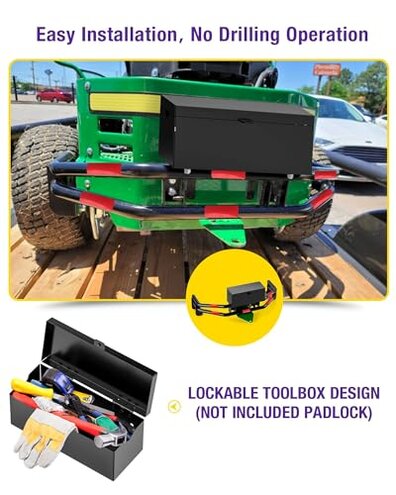
Will the built-in toolbox actually make ownership easier?
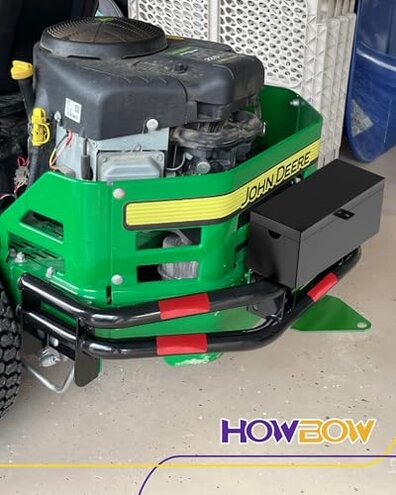
- Secondary issue: The toolbox is useful on paper, but less frequent yet persistent concern centers on the extra rear bulk it adds.
- When it appears: This shows up during routine use after installation, especially when owners want simple rear access without extra structure in the way.
- Pattern: It is not universal, but it appears repeatedly among buyers who wanted only a hitch or bumper.
- Practical downside: Added storage can be helpful, yet it also means more hardware, more weight, and a larger rear attachment to live with daily.
- Why it frustrates: Buyers expecting a clean hitch upgrade may feel they also bought a storage add-on they did not fully need.
- Attempted workaround: Some buyers simply leave the toolbox lightly used, which weakens the value of paying for the larger assembly.
- Fixability: This is only partly fixable, because the toolbox is part of the product concept, not a minor accessory.
- Category contrast: Extra storage is unusual in this category, and that extra complexity can feel like a drawback if your priority is simple towing.
Illustrative excerpt: “I wanted a hitch, not a big rear box changing the whole back end.”
Pattern level: This reflects a secondary usability pattern.
Is the promised quick assembly really quick for most buyers?
Secondary issue: The product promises assembly in 30 mins, but that can be optimistic if your mower fit needs checking first. This is less frequent than fit confusion, but more annoying when it happens because it adds time after the purchase is already committed.
- Pattern: Setup friction is a secondary complaint risk, especially for buyers expecting a simple bolt-on afternoon job.
- When it starts: It begins right at installation when owners compare brackets, instructions, and mower-specific mounting points.
- Worsening condition: It gets slower when the buyer is also confirming model exceptions or working around limited access at the rear of the mower.
- User-visible result: The project can shift from straightforward to fiddly, even if the hardware is included.
- Cause: Multi-model compatibility often means more interpretation during setup than a single-fit kit.
- Hidden cost: The lost time matters more than the parts, because buyers often choose this category for convenience.
- Category contrast: Some install effort is normal, but this can be more setup-sensitive than a simpler mid-range hitch without a toolbox and broad fit list.
Illustrative excerpt: “The install was only fast after I spent extra time confirming my mower.”
Pattern level: This reflects a secondary setup pattern.
Who should avoid this
- Avoid it if you have any uncertainty about your exact mower variant or serial range, because fit confusion is the main regret trigger.
- Skip it if you want a more work-oriented towing upgrade, since the stated 250 lb limit can feel too modest.
- Pass if you prefer the simplest rear setup possible, because the toolbox adds bulk beyond a standard hitch.
- Look elsewhere if you want a fast, low-thought install, since this kit has more model-checking friction than typical narrow-fit alternatives.
Who this is actually good for
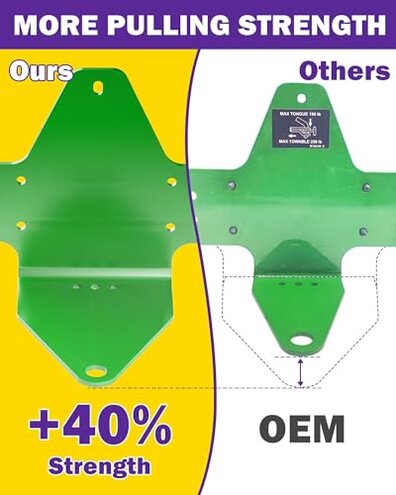
- Good fit for owners who have already confirmed the exact listed mower compatibility and do not mind checking serial details first.
- Works well for light towing jobs where the 250 lb limit matches real use, not aspirational use.
- Useful for buyers who specifically want rear tool storage and accept the added bulk as a fair trade.
- Reasonable choice for patient DIY owners who are comfortable spending extra setup time to avoid a dealer-priced accessory.
Expectation vs reality
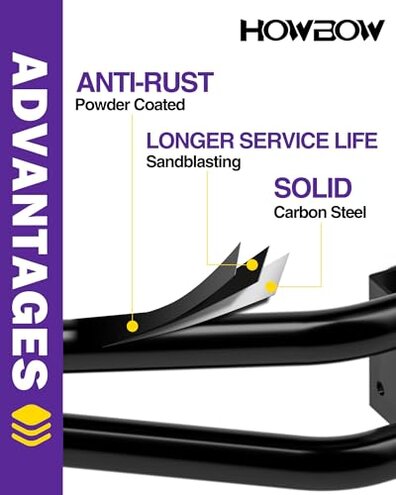
Expectation: A one-piece bumper hitch should be a quick fit-and-go add-on for the listed mower family.
Reality: The broad model list still hides serial-number and model exceptions, so fit confidence can be weaker than expected.
Expectation: “Heavy duty” should mean broad hauling freedom for normal yard tasks.
Reality: The stated 250 lb cap narrows what many buyers will feel comfortable towing.
Expectation: Extra storage sounds like free convenience.
Reality: The toolbox can also mean more rear bulk and a less simple setup than a basic hitch.
Expectation: Reasonable for this category is a short install with minor adjustment.
Reality: This kit can demand more pre-checking and interpretation than a typical mid-range alternative.
Safer alternatives
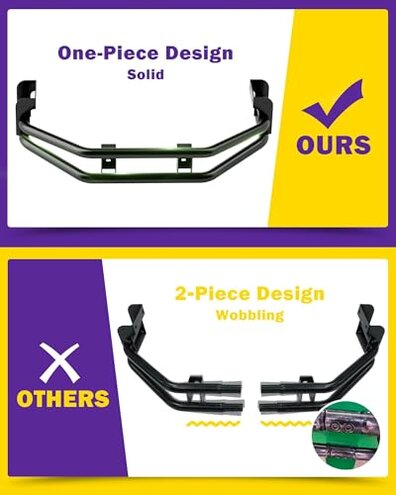
- Choose narrower fit if you want lower mismatch risk, because single-model or smaller-fit-range kits reduce serial-number surprises.
- Pick a basic hitch if towing matters more than storage, since a simpler design avoids the extra bulk of a built-in toolbox.
- Prioritize clear limits by shopping for products that lead with the towing capacity instead of broad upgrade language.
- Look for install photos showing your exact mower family, which helps neutralize the setup uncertainty seen with broad compatibility claims.
The bottom line
Main regret: Buyers are most likely to regret the fit ambiguity, especially when the title sounds wider than the fine-print compatibility rules. That exceeds normal category risk because it can stop the product from being useful before installation even starts. Verdict: Avoid this unless you have already confirmed your mower model, serial range, and light-duty towing needs.
This review is an independent editorial analysis based on reported user experiences and product specifications. NegReview.com does not sell products.