
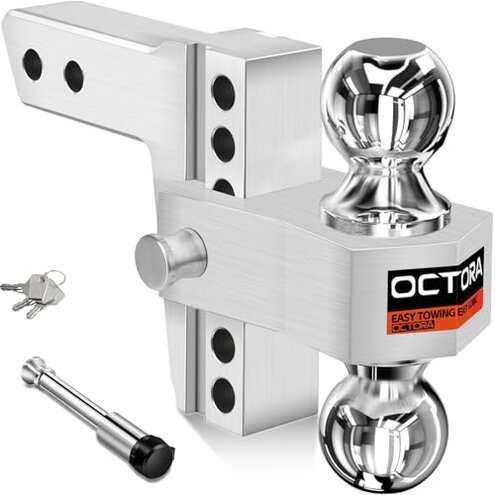
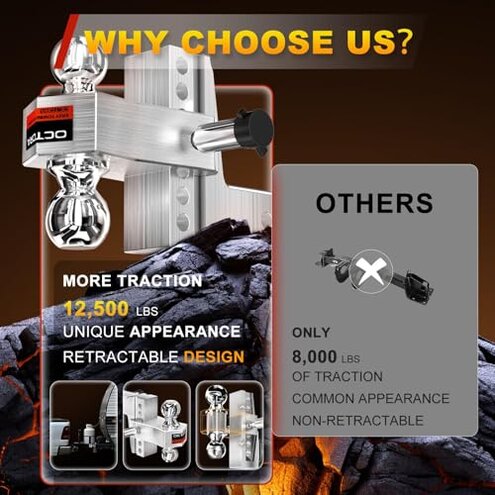
Product evaluated: Adjustable Trailer Hitch Fits 2-inch Receiver, Heavy Duty Aluminum Tow Hitches,6-inch Drop/Rise, Solid Tube Hitch,for Truck(12,500 LBS GTW), Double Anti-Theft Locking Hitch Pins (Silver)
Related Videos For You
I Tested Rhino USA's Adjustable Trailer Hitch - Is this Best? | Link in Description 🔗👇
Hitch Clamp
Data basis: This report is based on dozens of buyer feedback items collected from written reviews and star ratings, supported by a smaller set of customer Q&A style notes. The collection window covers 2024-01 through 2026-02. The source mix is skewed toward written complaints, with shorter “works / doesn’t work” ratings used to confirm which problems appear repeatedly.
| Buyer outcome | This adjustable hitch | Typical mid-range alternative |
|---|---|---|
| Receiver fit | Higher risk of tight or sloppy fit that adds extra steps at install. | Lower risk; usually fits with minor wiggle and standard pin insertion. |
| Noise / rattle | More frequent rattle reports when driving without extra anti-rattle help. | Moderate; some play is normal, but less often called out as annoying. |
| Locking pins | Higher friction complaints about alignment and day-to-day use. | Simpler; many use standard pins or better-aligned locks. |
| Finish longevity | Faster wear shows up sooner, especially with frequent height changes. | Slower wear; scuffs still happen, but less often viewed as “too soon.” |
| Regret trigger | Doesn’t fit right or won’t pin smoothly right before a tow. | Minor hassle that rarely blocks you from towing the same day. |
“Why is this so hard to fit into my 2-inch receiver?”
Regret moment hits when you’re ready to tow and the shank either won’t slide in, or it slides in but feels loose. This is a primary issue in the feedback mix, and it’s more disruptive than it sounds because it can stop the trip.
Pattern is recurring but not universal, and it most often shows up on first install and again after removing and reinstalling. In this category, some play is normal, but buyers describe this as less forgiving than many mid-range hitches.
Early sign is needing extra force or repeated repositioning to line up the pin hole. That extra wrestling tends to feel worse when you’re doing it in a driveway, in the dark, or under time pressure.
Hidden requirement shows up here: some owners end up needing extra time and extra add-ons to get a “normal” fit. That’s a bigger deal at this price because many shoppers expect drop-in compatibility from a 2-inch receiver claim.
- Frequency tier: Fit complaints appear repeatedly across buyer notes, making it a primary risk.
- When it happens: Problems show up at first use, and again after you remove and reinstall the hitch.
- Worst conditions: It feels worse with cold hands, low light, or when you are trying to leave quickly.
- Impact: The hassle is not just annoyance; it can delay towing and turn hookup into a chore.
- Category contrast: Some receiver slop is normal, but buyers describe this as more finicky than typical mid-range adjustable hitches.
“Why does it rattle so much when I drive?”
- Regret trigger: The noise becomes obvious on the first drive, especially over bumps or rough pavement.
- Pattern: Rattle is commonly reported and tends to show up during daily use, not just rare edge cases.
- Worsens with: It’s more noticeable with no load or lighter trailers where the hitch play is easier to hear.
- Root cause cue: Buyer notes often tie it to play in the receiver or at adjustment points.
- Category contrast: Some clunk is expected, but complaints suggest it’s more annoying than many mid-range setups.
- Mitigation: Owners often resort to an anti-rattle clamp or added tightening steps to quiet it.
- Time cost: The “fix” can add extra steps every time you install or adjust height.
“Do the locking pins actually make this easier?”
- Setup friction: Pin insertion and alignment issues show up repeatedly right after you mount the hitch.
- When it appears: The problem tends to hit during height changes and when swapping between ball sizes.
- Worsens with: It’s more frustrating when you change configurations often, like switching between trailers each weekend.
- Buyer impact: The “anti-theft” benefit can come with slower hookups than a basic pin.
- Not universal: Some users report it works fine, but the complaints are persistent enough to plan for.
- Category contrast: Mid-range hitches often accept standard pins easily, so a finicky lock feels worse than expected.
- Fixability: Many work around it by leaving parts assembled, but that can reduce convenience and storage ease.
- Hidden requirement: You may need more patience and careful alignment than the listing implies.
“Why does it look worn so quickly?”
- Visible wear: Finish scuffs and cosmetic wear show up less frequently than fit and rattle, but still persistently.
- When it starts: Complaints tend to appear after repeated adjustments and regular in-and-out receiver use.
- Worst conditions: It’s more noticeable if you tow in wet conditions or store it in the vehicle where it rubs other gear.
- Why it matters: Cosmetic wear can hint at faster aging and can affect resale confidence.
- Category contrast: Scuffs are normal, but buyers describe the timeline as sooner than expected for mid-range pricing.
- Mitigation: Protective sleeves and careful handling reduce it, but that adds extra effort to basic ownership.
Illustrative excerpt: “It said 2-inch, but it won’t slide in cleanly.”
Explanation: This reflects a primary pattern around receiver fit during first install.
Illustrative excerpt: “The clunking drove me crazy until I added an anti-rattle clamp.”
Explanation: This reflects a primary pattern where noise shows up during driving.
Illustrative excerpt: “The lock pin works, but lining it up takes forever.”
Explanation: This reflects a secondary pattern tied to adjustment and alignment.
Illustrative excerpt: “After a few swaps, it already looks beat up.”
Explanation: This reflects a secondary pattern around early wear with frequent handling.
Who should avoid this
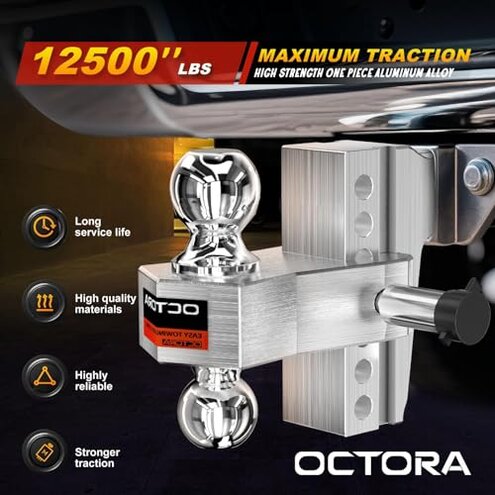
- Time-crunched towers who need a hitch to work smoothly on the first try, because fit and pin alignment issues are a primary complaint.
- Noise-sensitive drivers, because rattle reports are commonly reported and can require extra anti-rattle steps.
- Frequent swappers who change drop height or ball size often, because lock and adjustment friction becomes more painful with repetition.
- “No-add-ons” buyers who expect full compatibility without extra clamps or shims, due to the hidden requirement some owners hit.
Who this is actually good for
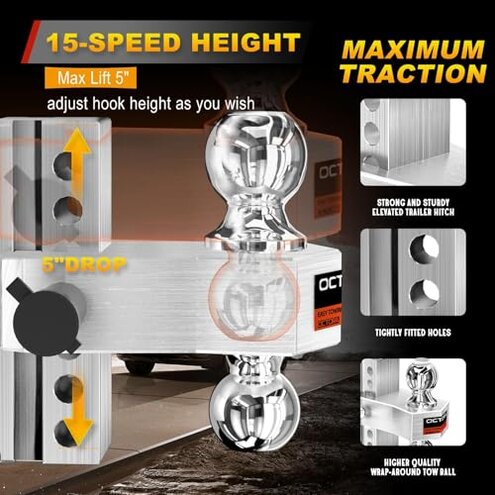
- Set-and-forget owners who install once and rarely adjust, because they can tolerate the setup friction if it stabilizes after.
- DIY fixers comfortable adding an anti-rattle clamp, because it directly targets the most common noise complaint.
- Value chasers who want the rated 6-inch drop/rise range and accept more tinkering than a mid-range baseline.
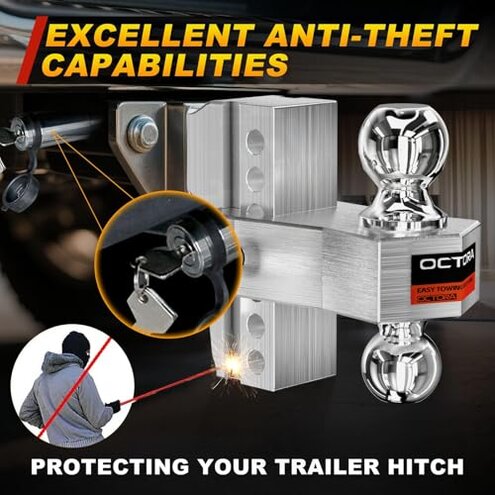
- Secure-storage shoppers who prefer a locking approach and can live with slower day-to-day pin handling.
Expectation vs reality
| Expectation | Reality buyers hit |
|---|---|
| Reasonable for this category: minor play, but easy install. | Worse-than-expected fit friction for some, including hard insertion or sloppy feel during first use. |
| Quick swaps between drop positions. | Slower changes when pin alignment becomes a recurring hassle. |
| Quiet enough for daily driving. | More noise than typical unless you add anti-rattle help. |
| Normal scuffs over time. | Earlier wear complaints after repeated handling and adjustments. |
Safer alternatives
- Prioritize fit: Choose a hitch known for consistent 2-inch receiver tolerances to reduce the first-install “won’t slide in” risk.
- Plan for quiet: If you buy any adjustable hitch, budget for an anti-rattle clamp, and pick models where buyers report less clunk.
- Keep it simple: If you swap setups often, consider a design with a standard pin option to avoid locking-pin alignment frustration.
- Reduce handling: If wear bothers you, pick a hitch you won’t need to adjust often, or store it in a protective sleeve.
- Match your use: If you rarely need dual balls, consider a simpler single-ball setup to avoid extra adjustment points that can loosen and rattle.
The bottom line
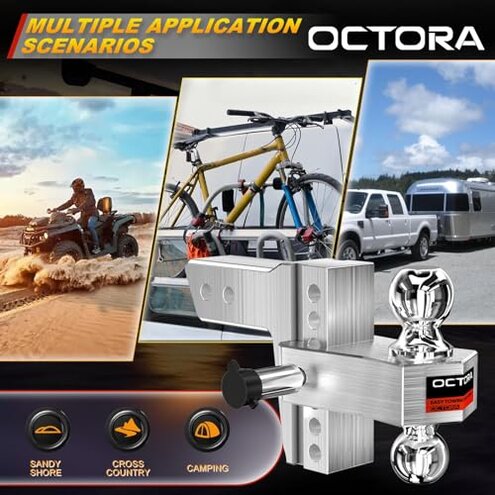
Main regret is a “doesn’t fit or won’t pin smoothly” moment right when you need to tow. That risk feels higher than normal for a mid-range adjustable hitch because it can create delays and add extra hardware steps. If you want drop-in compatibility and quiet driving without tinkering, this is a product to avoid.
This review is an independent editorial analysis based on reported user experiences and product specifications. NegReview.com does not sell products.