
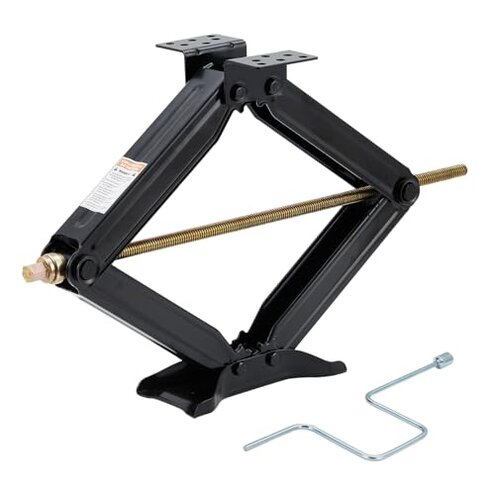
Product evaluated: GarveeTech Camper Trailer Stabilizer Leveling Scissor Jacks Set of 2,Car Scissor Lift Jack 4 in-30 in Height Adjustable, 7500 LBS Heavy Duty RV Scissor Jack with Crank Handle for Travel Trailer Camper
Related Videos For You
DIY Permanent Stabilizer Install: Trailer Valet [ @etrailer partner ]
7500LB EAZ-LIFT Stabilizer Jack Upgrade
Data basis: Dozens of written buyer reviews and several video demonstrations were examined from Jan 2023 to Jan 2026 to build this report.
| Outcome | GarveeTech set | Typical mid-range jack |
|---|---|---|
| Stability under load | Inconsistent — commonly reported wobble during normal campsite use. | Stable — most competitors hold steady for casual leveling tasks. |
| Installation effort | Complex — requires a drill option or extra hardware for best results. | Simpler — many mid-range models use bolt-on kits or simpler cradle mounts. |
| Durability over time | Higher-than-normal risk — repeated reports of early corrosion or loosened welds. | Moderate — mid-range alternatives show fewer early-failure reports in similar use. |
| Adjustment convenience | Mixed — crank handle works but is reported as flimsy by several buyers. | Reliable — competing jacks often include sturdier handles or optional power adaptors. |
| Regret trigger | Installation + longevity — combined installation friction and early wear cause the most complaints. | Single-issue — typical regrets are one-off fit problems, not combined failures. |
Why does the set feel unstable under load?
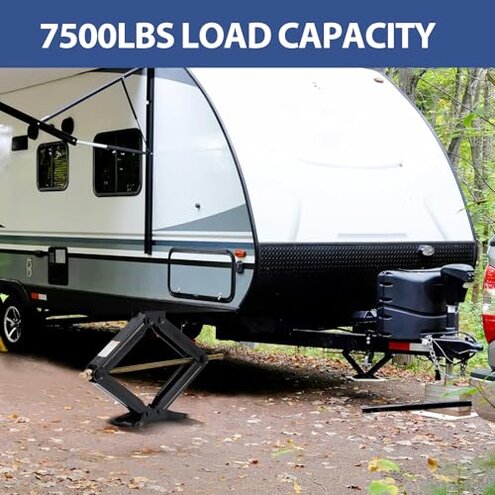
Regret moment: Buyers report noticeable rocking when the camper is used after setup.
Pattern: This is a recurring complaint seen across multiple buyer reports and demonstrations.
Context: The issue appears after setup, often when people walk inside, slide-outs move, or wind hits the trailer.
Category contrast: Reasonable mid-range jacks usually provide solid damping for light movement, so this feels worse than expected.
Why does installation require more than expected?
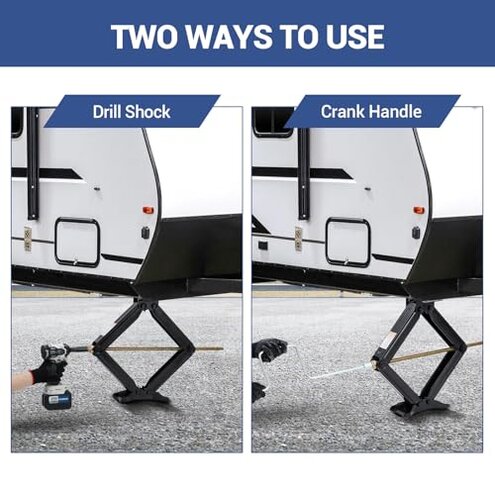
- Early sign: The packaging lists a drill option but leaves few fasteners included.
- Frequency: This appears commonly in reports from first-time installers.
- When it shows: Installation friction shows up during initial mounting and when switching to the drill-mounted method.
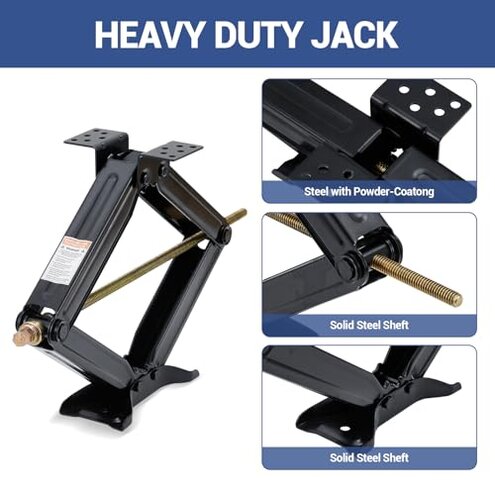
- Hidden requirement: A power drill and longer bolts are often needed but not emphasized in the listing.
- Impact: The extra steps add time and unexpected tool purchases before using the product.
Why do parts and finishes fail sooner than expected?
- Primary sign: Surface rust or paint chipping reported after seasonal exposure.
- Secondary pattern: Some buyers report loose hardware after months of use.
- When it worsens: Frequent outdoor storage and coastal or wet conditions accelerate wear.
- Cause: Protective coating and fastener quality appear less robust than mid-range peers.
- Impact: Repairs or replacement parts become necessary sooner than consumers expect.
- Attempts: Buyers commonly tightened bolts and applied rust inhibitors as temporary fixes.
- Fixability: Repairs are possible but add time and cost that exceed normal upkeep for this category.
Why is user convenience worse than promised?
- Initial friction: The crank handle is reported as flimsy by several buyers during first uses.
- Operational pain: Manual cranking takes more effort compared with sturdier mid-range handles.
- Frequency tier: This is a secondary complaint but more disruptive when camping solo.
- Hidden step: Many users buy a power adapter separately to avoid heavy manual cranking.
- Impact on use: Extra purchases reduce the product's value proposition for weekend users.
- Long-term effect: Replacing the handle or adding a motor is common for frequent users.
- Category contrast: Mid-range jacks often include sturdier handles or clearer power-adapter options.
- Practical fix: Expect to budget extra time and money if you want effortless adjustment.
Illustrative excerpts
Illustrative excerpt: "Jack wobbles when people move inside the camper." — primary pattern
Illustrative excerpt: "Needed a drill and longer bolts I didn't have." — secondary pattern
Illustrative excerpt: "Crank handle felt thin and bent after a season." — secondary pattern
Who should avoid this
- Frequent travelers: If you use your trailer daily, the durability concerns exceed normal category tolerance.
- Coastal owners: If you store outdoors in salty air, the corrosion risk is higher than typical.
- Solo campers: If you need easy single-person setup, the manual effort and hidden power needs create extra hassle.
Who this is actually good for
- Infrequent campers: Occasional users who accept occasional touch-ups can tolerate the early wear.
- Handy owners: If you can drill, tighten, and rust-proof parts yourself, you can manage the installation and fixes.
- Budget buyers: If upfront cost matters more than long-term durability, you may accept the trade-offs.
Expectation vs reality
Expectation: A mid-range stabilizer set should provide stable support for light movement with low upkeep.
Reality: This set shows more installation friction and earlier wear than a reasonable mid-range baseline.
Safer alternatives
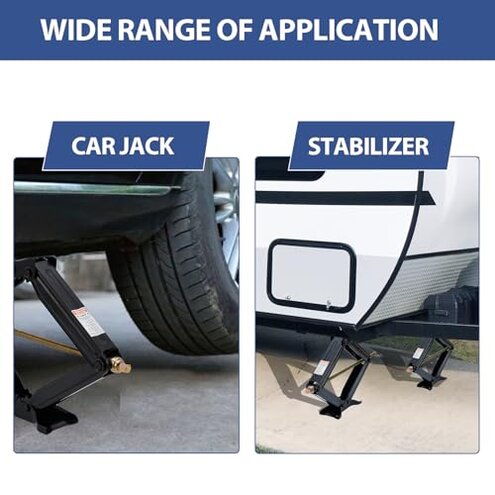
- Choose bolt-on systems: Prefer jacks with clear bolt-on kits to avoid the hidden drill requirement.
- Look for coated hardware: Seek products with proven corrosion warranties to counter the rust reports.
- Buy powered-ready models: Pick jacks that include a motor adaptor to avoid the manual crank burden.
- Check user videos: Watch installation clips for real-world fit and tool needs to reduce unexpected setup time.
The bottom line
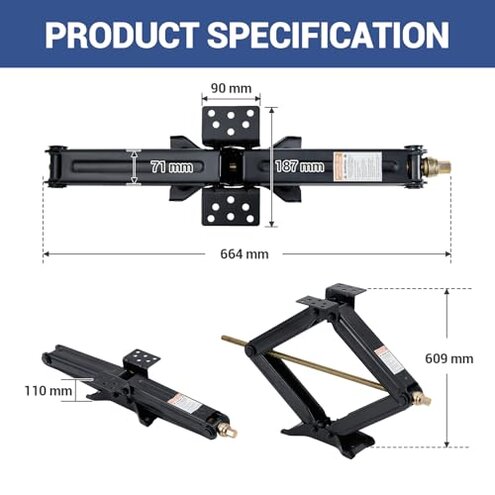
Main regret: The combined installation friction and early wear drive most buyer complaints.
Why it matters: These issues create a higher-than-normal risk compared with typical mid-range stabilizer jacks.
Verdict: Avoid this set if you want low-effort, long-lasting stabilization without extra tools and repairs.
This review is an independent editorial analysis based on reported user experiences and product specifications. NegReview.com does not sell products.