
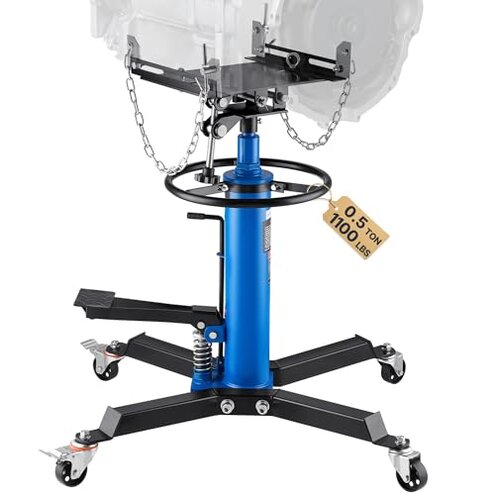
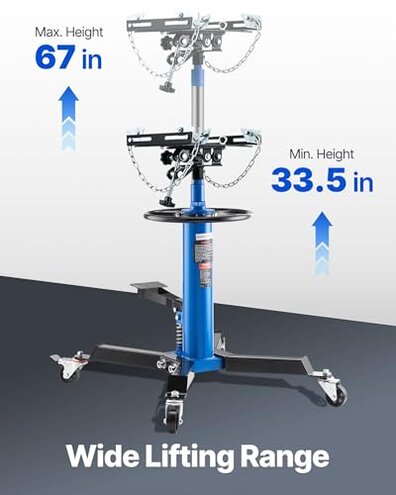
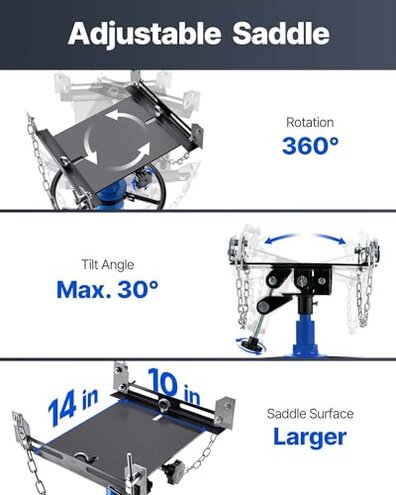
Product evaluated: VEVOR Transmission Jack, 33"-67" High Lift, 1100 lbs Hydraulic Telescoping Transmission Jack, 2-Stage Transmission Stand 1/2 Ton Capacity with Foot Pedal, 360° Swivel Wheel, Garage/Shop Lift Hoist
Related Videos For You
How to Use a Transmission Jack
Has Harbor Freight done it again? Transmission Jack review!
Data basis: This report is drawn from dozens of user reviews and video demonstrations collected between Jan 2023 and Jan 2026. Most feedback came from written reviews, supported by hands-on videos and buyer photos. The distribution shows primary written reports with video verification.
| Outcome | VEVOR Jack | Typical Mid-Range Jack |
|---|---|---|
| Lifting reliability | Variable — pressure loss or slow sinking reported after initial use. | Consistent — most mid-range models keep pressure over months. |
| Stability at height | Wobbly — more sway at top range than expected for the category. | Steadier — typical alternatives feel firmer at comparable heights. |
| Assembly & hardware | Incomplete — missing fasteners and unclear instructions commonly reported. | Clearer — mid-range often ships with full parts and better guides. |
| Mobility | Poor casters — wheels may bind or require replacement soon. | Smoother — standard alternatives use heavier casters for shop floors. |
| Regret trigger | Hydraulic failure — more likely to cause early replacement or patching. | Lower — catheter-style maintenance and fewer early failures. |
Why is the jack losing pressure or sinking unexpectedly?
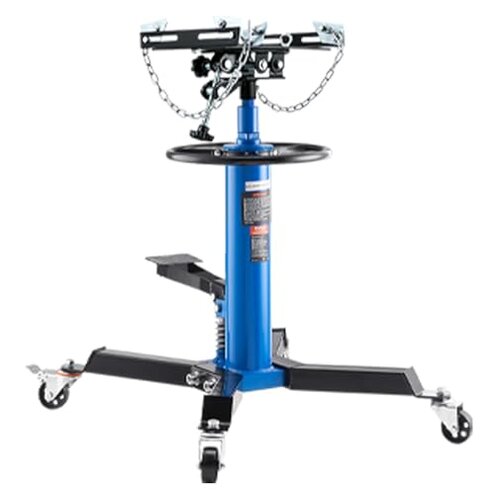
Hydraulic leaks are a commonly reported primary issue that creates the worst regret moment. The failure often appears after setup or a few uses, worsening under frequent heavy loads.
Usage context: The problem shows up when lifting transmissions near the jack's top range and during repeated shop use. This behavior is more disruptive than most mid-range jacks, because it interrupts repairs and demands extra time to re-lift.
Is it unstable or wobbly when raised high?
- Early signs: Sway or side-to-side play noticed at higher extensions, especially above the mid-lift point.
- Frequency tier: This is a secondary issue that appears repeatedly across buyer reports.
- Probable cause: Narrower base and lighter construction were flagged in multiple sources as a contributor.
- Impact: Wobble increases user effort and anxiety when aligning or lowering a transmission.
- Fixability: Some buyers add extra supports or use vehicle lift points to reduce risk, adding time and cost.
Why do buyers report assembly problems and missing parts?
- Missing hardware: Dozens of reports show absent bolts or fasteners on delivery, making initial assembly incomplete.
- Instructions: The manual is commonly described as sparse and unclear, increasing setup time and errors.
- Frequency tier: This is a primary pattern across written feedback and unboxing videos.
- Impact: Extra trips to hardware stores, delays before first use, and occasional rework are commonly needed.
- Attempts to fix: Buyers often sourced stronger bolts or washers, which reduces warranty simplicity.
- Category contrast: More effort required than most mid-range jacks, where complete fastener kits are standard.
Do the casters and mobility meet shop expectations?
- Wheel binding: Some users report wheels that bind or don’t swivel smoothly on textured shop floors.
- Durability: Caster failure or wear shows up after moderate use, which is an edge-case but persistent in some threads.
- Hidden requirement: Expect to buy upgraded casters or floor mats for heavy shop use to move the jack reliably.
- Impact on workflow: Poor mobility forces extra lifting and positioning steps, lengthening job time.
- Attempted workarounds: Users often replace casters or add lubricant; this adds cost and downtime.
- Scope signal: Seen across both photo reviews and hands-on videos, not confined to a single batch.
- Category contrast: Less convenient than mid-range options that use industrial-grade wheels.
Illustrative excerpts (not real quotes)
- Illustrative: "Pressure dropped after a few lifts, had to re-pump and lift again." — primary
- Illustrative: "Top height felt unstable when aligning the transmission mount." — secondary
- Illustrative: "Several bolts were missing; assembly stalled until I bought parts." — primary
- Illustrative: "Wheels stuck on my garage floor and needed swapping out." — edge-case
Who should avoid this
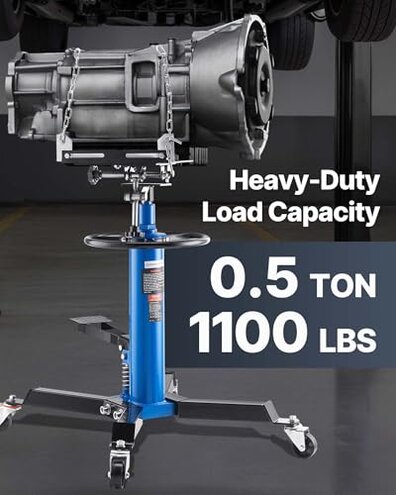
- Professional shops: Avoid if you rely on fast, reliable daily lifting where downtime hurts revenue.
- High-frequency users: Avoid if you lift heavy transmissions multiple times per day without room for maintenance.
- Buyers seeking plug-and-play: Avoid if you expect complete parts and clear instructions straight out of the box.
Who this is actually good for
- Occasional DIYers: Good if you use a jack rarely and can tolerate extra setup time and simple fixes.
- Budget-minded hobbyists: Good if you can accept replacing casters and sourcing a few bolts cheaply.
- Mechanically comfortable users: Good if you can diagnose leaks and perform minor hydraulic maintenance yourself.
Expectation vs reality
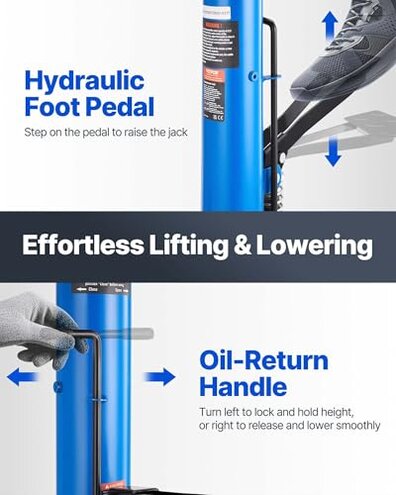
Expectation: Reasonable for this category is a stable lift that holds pressure through many uses.
Reality: This model shows pressure loss and wobble more often than typical mid-range jacks, raising downtime and repair effort.
Safer alternatives
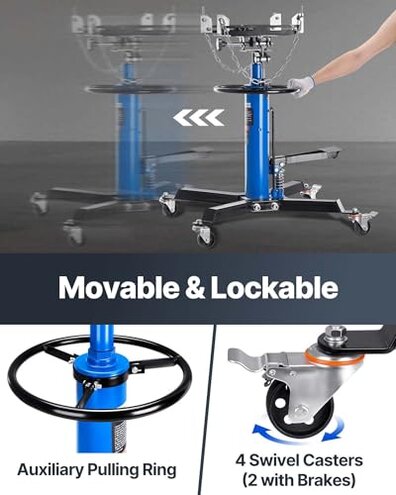
- Choose stronger hydraulics: Look for jacks with verified long-term pressure stability to avoid early leaks.
- Prefer wider bases: Select models with heavier, wider bases to reduce wobble at high extension.
- Check parts completeness: Buy from sellers guaranteeing full hardware kits or with clear unboxing policies.
- Upgrade casters: If mobility matters, pick jacks with industrial casters or plan to replace wheels immediately.
- Warranty & support: Favor brands with easy-return policies and responsive replacement-part support to limit downtime.
The bottom line
Main regret: The most frequent trigger is hydraulic pressure loss, causing unexpected sinking and rework.
Why worse: This exceeds normal category risk because it interrupts jobs and commonly appears after first use.
Verdict: Avoid if you need a reliable, daily-use transmission jack; consider only if you expect to do upgrades and maintenance yourself.
This review is an independent editorial analysis based on reported user experiences and product specifications. NegReview.com does not sell products.