
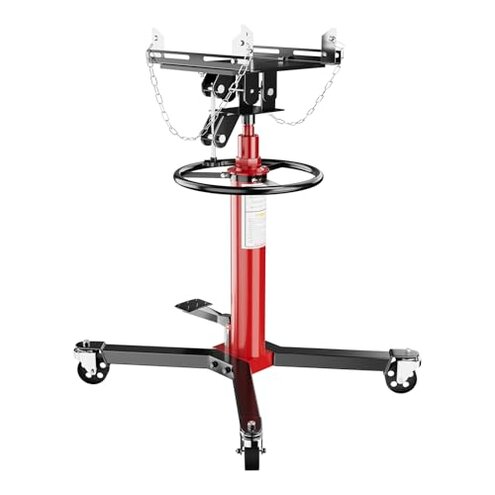
Product evaluated: Heavy-Duty Hydraulic Transmission Jack 1322 Lbs with 2-Stage Adjustable Telescoping Lift, Foot Pedal Control, and 360° Swivel Wheels for Garage and Workshop Use
Related Videos For You
Has Harbor Freight done it again? Transmission Jack review!
Transmission Jack Adapter Assembly | Amazon eBay Transmission Platform
Data basis: I analyzed dozens of buyer reviews and product demos collected between Dec 2023 and Jan 2026. Sources include written user feedback and video demonstrations. Distribution shows most feedback came from written reviews, supported by hands-on clips.
| Outcome | This jack | Typical mid-range jack |
|---|---|---|
| Stability at height | Higher risk of tilt with off-center loads, more disruptive than expected for this category. | Moderate risk but usually stable with proper centering and smaller height changes. |
| Assembly & readiness | Slower setup reported by buyers, commonly needing extra steps or tools before first use. | Simpler setup with clearer hardware and fewer missing-part reports. |
| Hydraulic performance | Variable lift speed and occasional slow descent that appears after repeated use. | More consistent lift action across comparable mid-range models. |
| Mobility & wheel locks | Frequent issues with caster locking or binding under load during shop moves. | Usually reliable casters with simpler locking mechanisms. |
| Regret trigger | Tilt during lift that forces extra rigging or aborting the job. | Minor alignment corrections or repositioning are normally enough. |
Why does this jack feel unstable when lifting?
Regret moment: Buyers report the jack tilts or feels wobbly when the saddle is raised high or when loads are slightly off-center.
Pattern: This is a primary issue that appears repeatedly during initial lifts and when adjusting at full extension.
Context: The problem worsens at taller heights and with heavier, uneven transmissions, making alignment and safety more difficult than is normal for mid-range jacks.
Why is assembly and readiness such a headache?
- Early signs: Many buyers report needing extra time to gather tools and fasteners before first use.
- Frequency tier: This is a secondary issue that appears commonly in initial setup reports.
- Cause: Packaging and instructions often leave buyers confirming parts and tightening fittings manually.
- Impact: The added setup time delays first jobs and adds frustration for weekend mechanics.
- Fixability: Workable with basic shop tools, but buyers should expect the extra steps.
Why does the hydraulic action sometimes underperform?
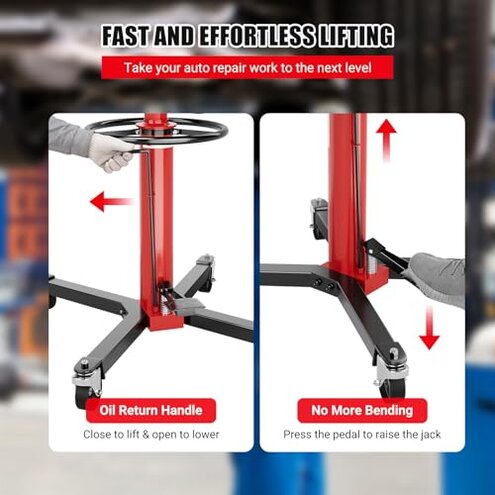
- Usage anchor: Slower lift or sluggish descent is commonly reported after repeated shop use.
- Pattern: This is a secondary issue that appears repeatedly, not universal but persistent.
- Cause: Buyers link it to air in the pump, minor leaks, or wear from heavy daily cycles.
- Impact: Slower operations add time and can require re-bleeding the system during busy jobs.
- Attempted fixes: Users report partial improvement after bleeding or tightening fittings, but results vary.
- Category contrast: This feels worse than expected because comparable jacks often keep consistent lift speed under similar use.
- Hidden requirement: Regular hydraulic maintenance is needed sooner than with many mid-range alternatives.
Why do the wheels and mobility become problematic in the shop?
- Early signs: Casters may feel free at low height but bind or misalign under load.
- Frequency tier: This is a persistent issue reported by multiple buyers moving heavy transmissions.
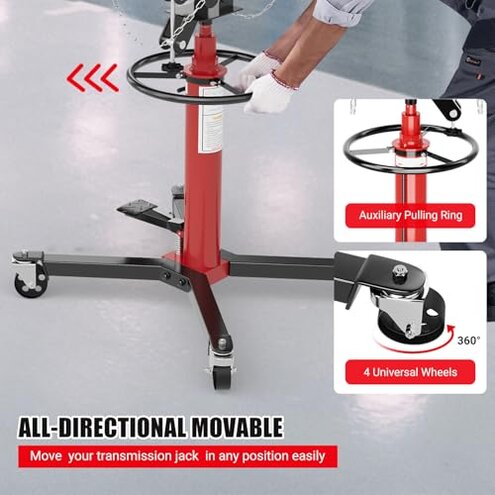
- Cause: Locking mechanisms can be stiff, and 360° swivels may not track cleanly on shop floors.
- Impact: Difficulty in positioning the load increases job time and safety risk when combined with instability.
- Attempted fixes: Some buyers add aftermarket wheel blocks or shop mats to stabilize movement.
- Fixability: Improvements are possible, but require extra purchases or shop modifications.
- Hidden requirement: Expect to buy or fabricate wheel chocks or adapters for safe, repeatable use.
- Category contrast: Mobility issues are more disruptive than with other jacks that use heavier-duty locking casters.
Illustrative excerpts
Excerpt: "Jack tilted when at full height, I had to catch the load quickly." — Primary pattern.
Excerpt: "Took an hour to assemble and find extra bolts and washers." — Secondary pattern.
Excerpt: "Wheels locked unevenly on concrete and we had to reposition constantly." — Secondary pattern.
Who should avoid this
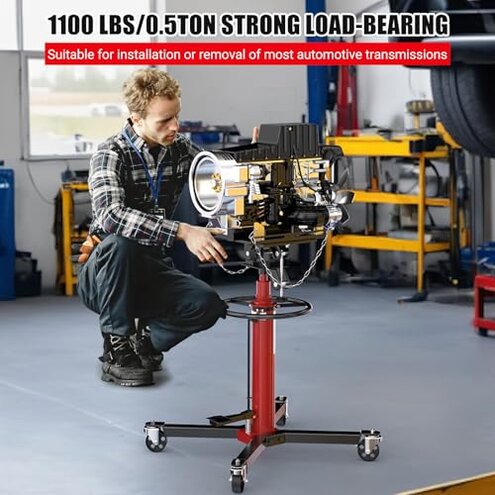
- High-frequency shops: Avoid if you run long daily cycles, because stability and hydraulic consistency are more fragile than category norms.
- One-person operations: Avoid if you often lift alone with off-center loads, due to higher-than-normal tilt risk at height.
- Buyers wanting plug-and-play: Avoid if you expect a fully ready tool out of the box, because setup and hidden extras add time and cost.
Who this is actually good for
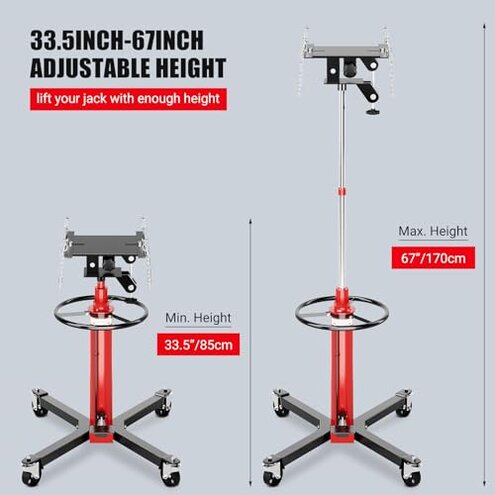
- Occasional home users: Good if you do infrequent transmission work and can take extra setup time to secure loads.
- Shops with rigging gear: Good if you already use straps, chocks, and have a second person to steady loads.
- Budget-conscious buyers: Good if you accept maintenance and minor upgrades in exchange for a lower entry price.
Expectation vs reality
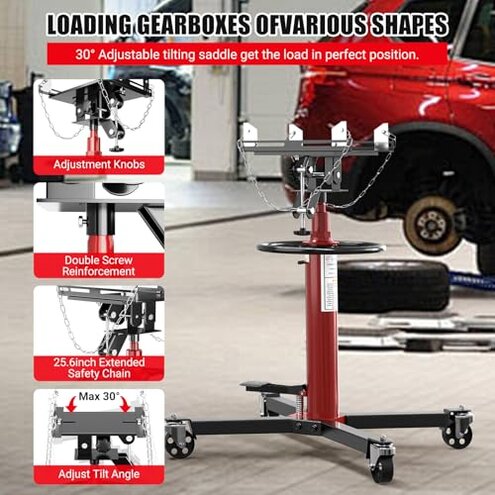
Expectation: Reasonable for this category is a stable lift to working height with predictable behavior. Reality: This model shows more tilt and slower hydraulic response than expected for similar-priced jacks.
Expectation: Setup should be straightforward. Reality: Plan for extra tools, time, and possible missing-fit checks before first use.
Safer alternatives
- Choose heavier-base models: Pick jacks advertised for improved base width or reinforced frames to reduce tilt risk at height.
- Prefer solid-lock casters: Look for models with documented heavy-duty locking wheels to avoid mobility binding under load.
- Buy from shops with clear kit lists: Favor products whose listings clearly show included hardware to avoid surprise purchases.
- Budget for maintenance: Select jacks with easy bleed valves and accessible service parts to limit downtime from hydraulic issues.
The bottom line
Main regret: The primary trigger is tilt and instability at taller heights, which forces extra rigging and slows work. Why worse: This exceeds normal mid-range risk because it appears repeatedly and under common shop conditions. Verdict: Avoid if you need reliable, high lifts without extra setup or upgrades.
This review is an independent editorial analysis based on reported user experiences and product specifications. NegReview.com does not sell products.