
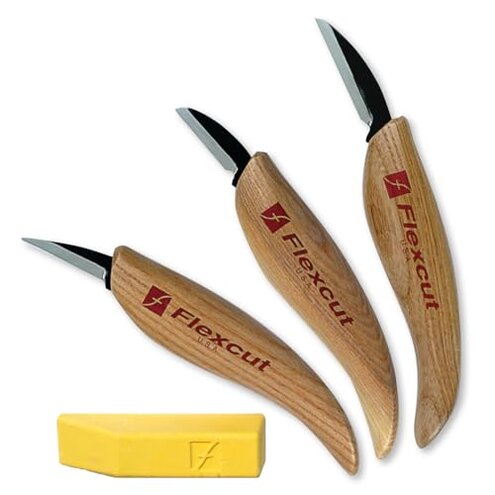
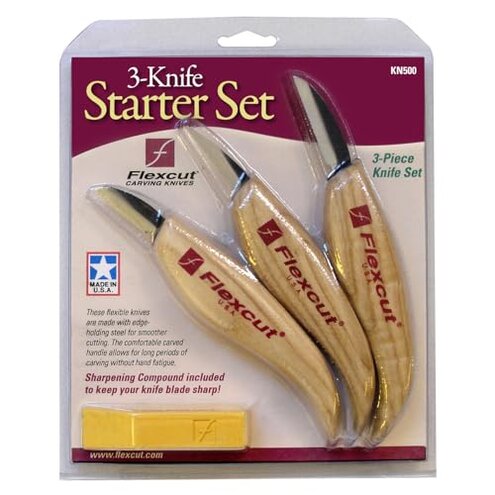
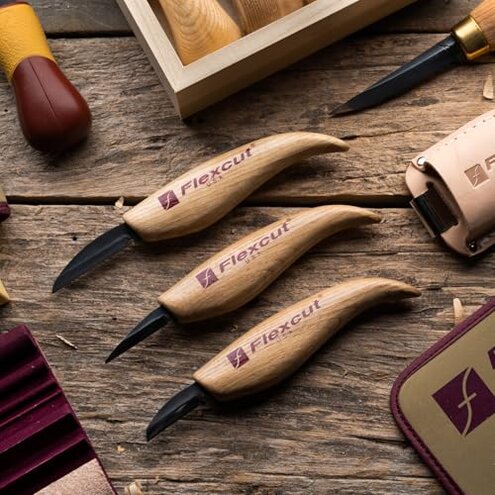
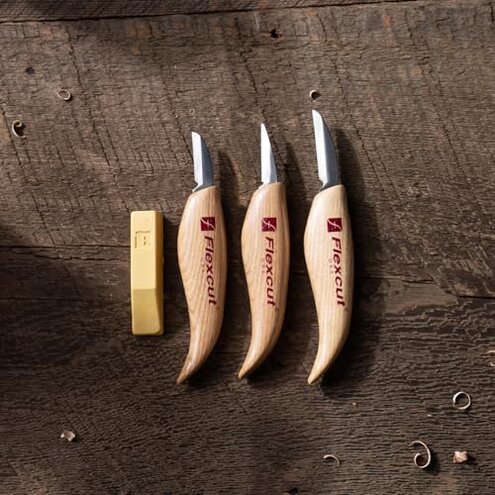
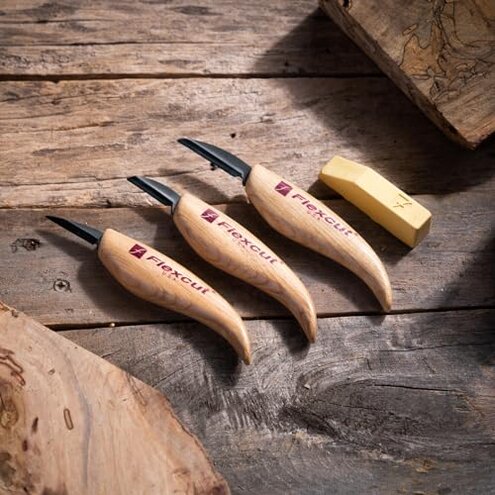
Product evaluated: FLEXCUT Wood Carving Knives | Starter Set of 3 Woodcarving Knives | 1095 High Carbon Steel Blades | Ergonomic Ash Wood Handles for Beginners and Hobbyists | KN500 | Made in the U.S.A
Related Videos For You
How to Sharpen Your Whittling and Wood Carving Knives (Stones, Leather Strops, and Sandpaper)
Top 5 Safety Tips for Whittling and Wood Carving! | Beginners Basics Series
Data basis: This report used dozens of written reviews and several video demonstrations collected between 2016 and 2025, with most feedback coming from written reviews and supported by short tool-test videos.
| Outcome | FLEXCUT KN500 | Typical mid-range knife kit |
|---|---|---|
| Edge retention | Poor — blades commonly reported to dull faster during routine carving. | Moderate — most mid-range kits keep a usable edge longer before resharpening. |
| Rust risk | High — carbon-steel surfaces often show discoloration unless actively oiled. | Lower — many competitors use rust-resistant finishes or stainless options. |
| Ergonomics | Mixed — handles are comfortable for short sessions but some report fit issues. | Consistent — typical kits offer more consistent handle finishing out of the box. |
| Maintenance burden | Higher-than-normal — requires frequent sharpening and rust prevention compared with peers. | Average — periodic sharpening and basic care expected for the category. |
| Regret trigger | Blade care — buyers often regret the extra maintenance time and costs. | Lower — fewer buyers report maintenance regret with stainless or treated blades. |
Top failures
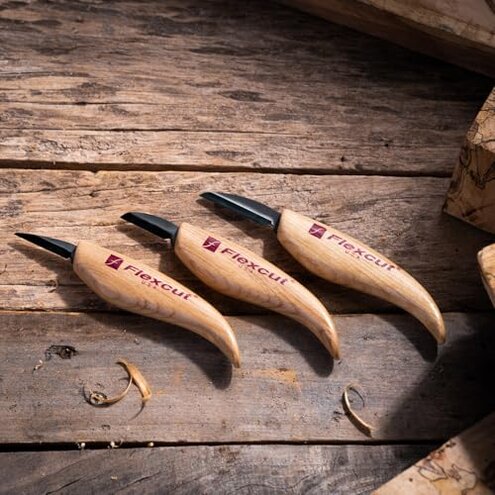
Why does the blade rust or discolor so quickly?
Visible rust appears for many users after routine use and storage without active oiling.
Pattern: this is a primary complaint and commonly reported across feedback types.
When: the issue shows up after first few uses or after humid storage, worsening over weeks.
Category contrast: more upkeep than most mid-range carving kits, because buyers expect basic corrosion resistance.
Why does the edge dull faster than expected?
- Early sign — carving softer woods leaves burrs or rough cuts sooner than expected.
- Frequency tier — this is a primary issue for frequent users and a secondary issue for hobbyists.
- Cause — high-carbon blades hold an initial sharpness but need frequent stropping or honing.
- Impact — dull edges make fine detail work take longer and require more passes.
- Fix attempts — users commonly sharpen more often, adding time and sharpening costs.
Why do handles feel inconsistent or loose?
- Early sign — slight wobble or uneven finish noticed out of the box.
- Scope — a persistent complaint seen across written reports and video reviews.
- When it shows — issues appear during regular use, especially long carving sessions.
- Cause — variable assembly tolerances and finish quality are likely contributors.
- Impact — reduced control during detailed cuts, increasing slip risk for novices.
- Repairability — some buyers re-seat or sand handles, adding extra work and time.
- Category contrast — less consistent than other mid-range kits where fit is usually reliable.
Why is ongoing sharpening and oiling a hidden requirement?
- Hidden need — regular oiling and honing is needed to prevent rust and maintain edge.
- When — maintenance is required after each use in humid climates or after resinous woods.
- Frequency — this is a primary maintenance burden compared with treated blades in the same price class.
- Impact — adds extra time and potential expense for stones, strops, and oil.
- Attempts — many buyers accept the chore, but some report regret when maintenance is neglected.
- Why worse — the kit’s initial finish doesn’t protect buyers who expect low-effort tools.
- Hidden cost — replacement or frequent professional sharpening raises total ownership cost.
- Category contrast — more upkeep than most mid-range alternatives that use rust-resistant blades.
Illustrative excerpts

Illustrative: "Blade darkened after two uses; needed oiling immediately." — primary
Illustrative: "Edge lost bite during a single detailed session, had to sharpen." — primary
Illustrative: "Handle felt slightly loose after a month of light use." — secondary
Illustrative: "Bought stones after first week; extra expense I didn't expect." — secondary
Who should avoid this
- Novice carvers who want low-maintenance tools and minimal sharpening chores.
- Occasional users who store tools in humid areas and won't do routine oiling.
- Detail workers who need long-lasting edges without frequent resharpening interruptions.
Who this is actually good for
- Experienced carvers who already own sharpening gear and can manage rust prevention.
- Budget hobbyists willing to trade maintenance for a lower initial cost and simpler blades.
- Collectors who like carbon-steel patina and don't mind planned upkeep.
Expectation vs reality
Expectation (reasonable for category): buyers expect occasional sharpening for mid-range carving knives.
Reality: FLEXCUT often requires more frequent honing and oiling than typical mid-range kits.
Expectation: handles should be consistent and comfortable out of the box.
Reality: buyers report variable handle fit and occasional loosening during use.
Safer alternatives
- Choose stainless or treated blades to reduce the rust risk and cut maintenance time.
- Buy a kit with finished handles to avoid the variable handle fit and sanding or reseating work.
- Prioritize edge-holding steel to minimize the frequent sharpening burden during long carving sessions.
- Invest in a basic sharpening kit if you keep this product, to neutralize the hidden maintenance requirement quickly.
The bottom line
Main regret: the combination of rust susceptibility and fast dulling creates a higher maintenance burden than most mid-range carving kits.
Verdict: avoid this kit if you want low-maintenance tools; keep it only if you accept frequent sharpening and oiling.
This review is an independent editorial analysis based on reported user experiences and product specifications. NegReview.com does not sell products.