
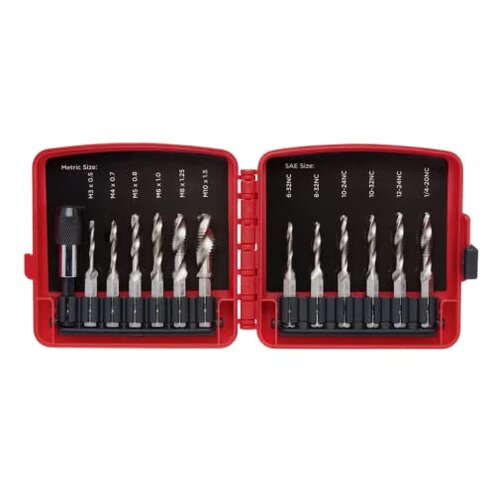
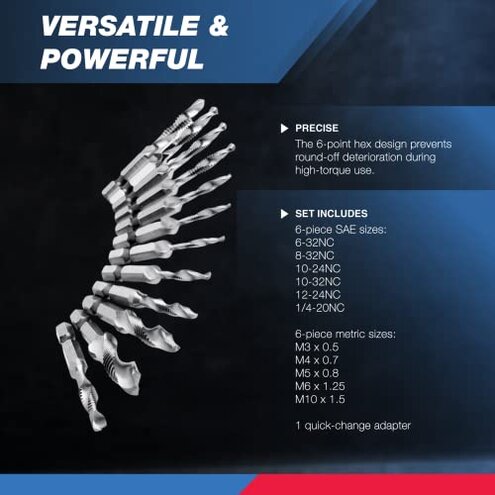
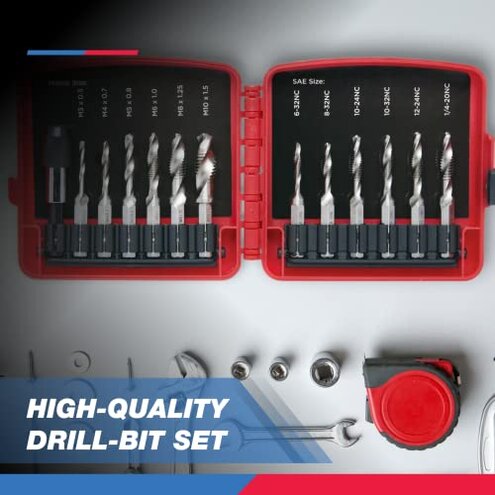
Product evaluated: NEIKO 10059A Combination Drill and Tap Bit Set with Quick Change Adapter, 13 Piece, SAE (6-32NC to 1/4-20NC) and Metric Drill Bit Set (M3 to M10), Metric Tap Set
Related Videos For You
How to tap threads using a drill
Screw tapping drill bits
Data basis: This report draws on dozens of written reviews and several video demonstrations collected between Jan 2018 and Jan 2026, with most feedback from written reviews and supported by a smaller set of hands-on videos.
| Outcome | NEIKO 10059A | Typical mid-range set |
|---|---|---|
| Durability | Lower — bits and taps reported to dull or break sooner than expected. | Moderate — most mid-range kits last through routine projects. |
| Size accuracy | Inconsistent — several buyers note oversized holes or loose threads. | Reliable — mid-range kits usually keep hole/tap tolerances. |
| Adapter reliability | Unstable — quick-change adapter and shank fit issues appear repeatedly. | Stable — standard quick-change adapters are more secure. |
| Ease of use | Tricky — extra fiddling reported during tapping and alignment. | Smoother — comparable kits need fewer corrective steps. |
| Regret trigger | High — broken taps and misfit holes create scrap parts and rework. | Lower — failures are usually minor and fixable without wasted parts. |
Top failures
Do taps break when you actually use them?
Regret moment: Buyers frequently describe taps snapping during the first or early uses while threading metal, leaving a stuck fragment and ruined workpieces.
Pattern notes: This is a commonly reported primary issue, appearing repeatedly in hands-on feedback rather than as isolated cases.
When it happens: Breakage typically occurs during first use or when tapping harder materials, and it worsens with harder metals or aggressive feed.
Category contrast: Taps that break this easily are more fragile than typical mid-range kits, which usually tolerate normal tapping with basic care.
Why are drilled holes too big or threads loose?
- Early sign: Oversized holes noticed right after drilling make fasteners feel loose rather than tight.
- Frequency tier: This is a secondary but noticeable complaint across reviews, not universal but repeated often enough to matter.
- Cause clue: Problems start at the drilling step, suggesting fit or bit geometry issues rather than user-only error.
- Impact: Loose threads force rework, inserts, or scrapping of thin or precision parts.
- Fixability: Some buyers bypass the issue by using a dedicated drill bit or reaming, which adds time and cost.
Does the quick-change adapter actually hold securely?
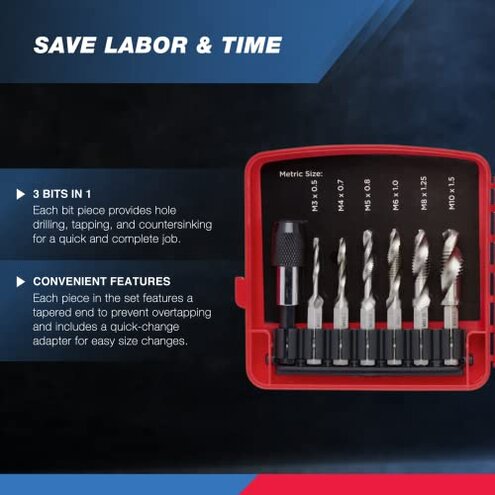
- Adapter slips: Reports show the adapter can slip or wobble under torque, especially during tapping.
- Alignment issues: Misalignment appears repeatedly when switching bits quickly, making clean threads harder.
- When it worsens: The problem shows up under long sessions or when using higher torque drills/drivers.
- User attempts: Buyers tried tightening, using different drivers, or removing the adapter to reduce wobble.
- Repairability: The adapter is often non-serviceable; replacement is the only practical fix.
- Category contrast: This is less reliable than typical quick-change fittings in mid-range toolsets, which hold better under torque.
How fast do the bits dull or fail to cut cleanly?
- Initial sign: Bits may cut well once, then show ruffled edges or slow cutting after minimal use.
- Frequency tier: This is a secondary but persistent theme, reported across several hands-on checks.
- Usage anchor: Dulling becomes obvious after a few holes in sheet metal or harder plastics.
- Cause: Wear appears quicker than expected for mid-range HSS-style bits, affecting performance.
- Impact: Slower drilling leads to more heat, torn edges, and poor tap starts.
- Attempts: Buyers attempted sharpening or switching to coated bits, which adds extra cost and time.
- Hidden requirement: Expect a need for sharpening or replacement sooner than usual for similar kits.
- Category contrast: More upkeep is required compared with similar mid-range alternatives that maintain cutting edge longer.
Illustrative excerpts (not verbatim)
"Tap snapped inside piece, ruined job instantly." — reflects a primary pattern.
"Drilled hole too large, bolt wobbles loose." — reflects a secondary pattern.
"Adapter started wobbling after a few changes." — reflects an edge-case but recurring pattern.
Who should avoid this
- Precision users: Avoid if you need accurate hole tolerances or repeatable threads for safety-critical parts.
- Frequent metalworkers: Avoid if you tap metal daily, since broken taps and dulling add rework time.
- High-torque tool owners: Avoid if you use powerful drivers, because the adapter and shank risk slipping under torque.
Who this is actually good for
- Occasional DIYers: Suited for light home tasks where you can accept some extra fiddling and occasional rework.
- Non-critical projects: Good for working with soft materials where tap breakage is less likely and tight tolerances aren’t needed.
- Budget-conscious buyers: Acceptable if you plan to replace or sharpen bits and can tolerate shorter lifespan.
Expectation vs reality
Expectation: Reasonable for this category is that a mid-range tap set will let you thread common metals without breaking taps.
Reality: This set shows a higher breakage risk and needs more upkeep, which causes wasted parts and extra steps.
Expectation: Reasonable is that quick-change adapters hold securely during normal use.
Reality: Adapter wobble and fit issues force manual alignment or adapter removal to finish jobs cleanly.
Safer alternatives
- Buy hardened taps: Choose kits that advertise durable taps or include replacement taps to avoid breakage.
- Use dedicated drill bits: Use proper-sized, high-quality drill bits to eliminate oversized hole problems before tapping.
- Avoid the adapter: For threading, use a chuck or collet that offers better alignment than a quick-change adapter.
- Prefer coated bits: Select coated or higher-grade bits to reduce dulling in metal work.
- Check return policy: Buy from sellers with easy returns and tested replacement tap availability to limit scrap risk.
The bottom line
Main regret: The set’s most damaging problem is broken taps and inconsistent hole sizes that create scrap and rework.
Why it matters: These failures are more disruptive than expected for a mid-range kit and raise the practical cost of projects.
Verdict: Avoid this set if you need reliable tapping, frequent metal work, or tight tolerances; consider higher-grade or replacement-focused options instead.
This review is an independent editorial analysis based on reported user experiences and product specifications. NegReview.com does not sell products.