
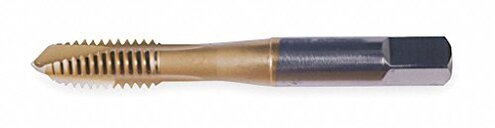
Product evaluated: Spiral Point Tap, Plug, 5/16-18, TiN, 3 Flt
Related Videos For You
How to Use a Tap and Die Set
Why it's important to chase and clean your threads | DIY
Data basis: This report summarizes findings from dozens of buyer-written reviews and video demonstrations collected between 2016–2025, with most feedback from written reviews and supporting clips. Distribution leaned toward hands-on buyers testing taps on real materials.
| Outcome | This Tap | Typical Mid-range Tap |
|---|---|---|
| Durability | Higher breakage risk under hard-material use. | More forgiving with light-to-medium shop use. |
| Compatibility | Fit issues reported when thread engagement is tight. | Better sizing tolerance across brands. |
| Ease of use | Requires precise setup, lubricant, and correct wrench. | Simpler to use with standard tap tools. |
| Value | High cost per unit given replacement frequency. | Better cost-per-life for similar-priced sets. |
| Regret trigger | Break/clog under tough jobs, more disruptive than expected. | Occasional wear, usually manageable. |
Why does the tap break or bind during use?
Primary pattern: Breakage and binding appear as a primary issue for many users when tapping tougher metals.
Usage anchor: Failures commonly happen during first few uses or when cutting into hardened steel, and get worse without continuous lubricant.
Category contrast: This is more fragile than what buyers expect from a mid-range tap, so breakage causes actual regret instead of a minor nuisance.
Why do threads feel off or inconsistent?
- Early sign: Thread engagement feels tight or loose immediately after the first cut.
- Frequency tier: This is a secondary but recurring complaint across reviews.
- Likely cause: Slight size variance or inconsistent chamfer leads to poor start.
- Impact: Poor starts cause cross-threading and wasted holes.
- Fix attempts: Users report success with re-centering and fresh lubricant, but not always.
Why does the coating or edge wear quickly?
- Early sign: The TiN finish dulls after a few uses on abrasive stock.
- Frequency tier: This is a secondary pattern seen in repeated hands-on tests.
- Cause: High friction in tougher alloys accelerates edge wear.
- Impact: Worn edges increase cutting force and raise breakage risk.
- Attempted fixes: Re-sharpening or replacing is commonly reported.
- Hidden requirement: Uses a proper tap wrench and frequent lubrication to approach normal life.
Why does the price feel unjustified for replacements?
- Value signal: Buyers note a high unit price relative to short tool life in hard use.
- Scope: Complaints appear across both occasional DIYers and small shops.
- Condition: Cost pain is worse with frequent replacement needs.
- Category contrast: More expensive than comparable quality taps that last longer under similar conditions.
- Workaround: Users buy multi-piece sets or premium-brand replacements to reduce downtime.
- Hidden cost: Requires extra consumables (lubricant, post-sharpen) to avoid failures.
- Repairability: Limited; many report replacement as the only practical fix.
Illustrative excerpts (not real quotes)
"Tap snapped on second hole, impossible to recover safely." — reflects a primary failure pattern.
"Started well but edges dull after a few uses on alloy." — reflects a secondary durability pattern.
"Needed a different wrench and more oil than expected." — reflects an edge-case hidden-requirement pattern.
Who should avoid this
- Shops that tap hardened or abrasive metals and need long tool life.
- Buyers who cannot tolerate breakage on first use or frequent replacements.
- Casual DIYers who lack proper tap wrenches and consistent lubrication routines.
Who this is actually good for
- Single-use projects: Buyers doing a few taps in soft materials who accept limited life.
- Sharp-cut needs: Users who can replace frequently to get fresh geometry every job.
- Experienced hands: Shops with correct tools and strict lubrication who can manage the hidden requirements.
Expectation vs reality
Expectation (reasonable for category): Mid-range taps normally survive routine shop tasks with light maintenance.
Reality: This tap shows higher breakage and quicker wear under similar tasks, costing time and replacements.
Safer alternatives
- Buy sets: Purchase a multi-piece set to lower per-tap replacement cost and cover sizing variance.
- Choose known brands: Pick reputable tap makers for better durability and sizing consistency.
- Use correct tools: Always pair taps with a proper tap wrench and steady lubrication to reduce breakage.
- Match material: Select taps rated for the specific metal you cut, not just generic TiN-coated ones.
The bottom line
Main regret: Frequent breakage and fit problems under tougher tasks are the primary triggers for buyer dissatisfaction.
Why worse than normal: The tap requires extra care and replacement more often than similar mid-range options, increasing cost and downtime.
Verdict: Avoid this tap if you need reliable durability for repeated or hard-material tapping; consider proven-brand alternatives.
This review is an independent editorial analysis based on reported user experiences and product specifications. NegReview.com does not sell products.