
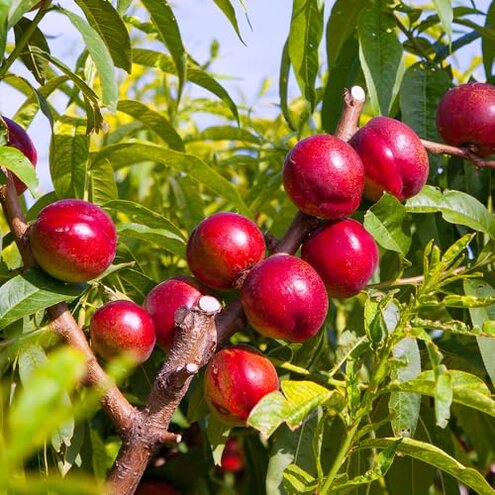
Product evaluated: Mericrest Nectarine, Cold-Hardy, Sweet, and Juicy Red-Skinned Nectarine, 5 gal. Nursery Pot, 2-3 ft Tree Height (Due to Agricultural Laws, we Cannot Ship to CA, AZ, AK, or HI)
Related Videos For You
Pruning Nectarines, Peaches, and Plums
Potted Fruit Trees Are a Ripoff.
Data draws on dozens of buyer reports and a mix of written reviews and buyer-shared videos collected between January and December 2025. Most feedback came from written reviews, supported by video demonstrations and photo posts.
| Outcome | Mericrest Nectarine | Typical Mid-Range Tree |
|---|---|---|
| Survival on arrival | At risk — arrival stress and damaged foliage reported more often than expected. | More reliable — mid-range trees usually arrive with clear live growth and less shock. |
| Establishment | Slow — some buyers saw extended transplant shock during the first season. | Faster — comparable trees usually establish within a single growing season. |
| Fruiting reliability | Variable — fruiting was inconsistent for several buyers in cooler spots. | Steadier — mid-range varieties generally fruit predictably in matching zones. |
| Shipping limits | Restricted — cannot ship to CA, AZ, AK, or HI, which alters buyer options. | Typically available across most states from other nurseries. |
| Regret trigger | High — arrival damage plus slow establishment creates a stronger regret signal than peers. | Lower — fewer early-life failures reduce buyer remorse. |
Top failures
Why did my tree arrive looking damaged or stressed?
Primary regret moment is seeing limp or brown foliage right after unboxing.
Pattern appears repeatedly and is the most common early complaint in aggregated feedback.
Usage shows up at first use, during unboxing and the first week after planting, and often worsens when shipping takes several days.
Category contrast: this is worse than typical nursery standards where healthy live growth on arrival is expected.
Why does the tree struggle to establish after planting?
- Early signs — leaves yellowing and slow bud break within two to four weeks after transplant.
- Frequency tier — a primary to secondary pattern; commonly reported across different buyers.
- Cause — transplant shock combined with cooler-site sensitivity reported in many accounts.
- Impact — delays fruiting and can require extra watering, shading, or replanting efforts.
- Fixability — salvageable if buyers add root care and monitor closely for months.
Why is fruit production inconsistent or delayed?
- Expectation — buyers expected sweet, steady fruit in year two to three.
- Reality — several reports show minimal or uneven fruiting the first bearing season.
- When it appears — most obvious during the first two growing seasons after purchase.
- Worsens under cooler climates or when the tree is slow to establish.
- Attempts — extra feeding and pruning helped some buyers but not all.
- Category contrast — more variable than similar cold-hardy mid-range nectarines.
Why are shipping rules and hidden climate needs a problem?
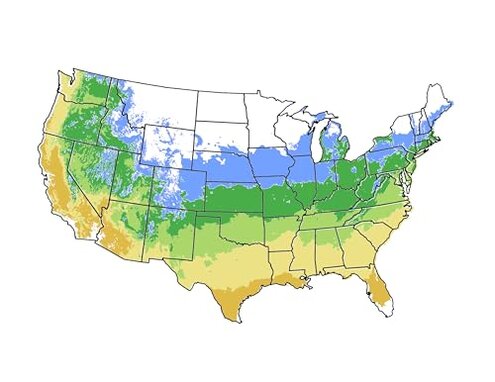
- Hidden requirement — the seller restricts shipments to CA, AZ, AK, and HI, which surprises buyers planning cross-state moves.
- When you notice — at checkout or after ordering when a cancellation or delay occurs.
- Scope — this is a recurring administrative barrier for buyers in restricted states.
- Impact — forces buyers to find local sellers or accept long waits for suitable replacements.
- Why worse — many buyers expected broader availability from a common nursery listing.
- Workaround — arrange local pickup or buy from a nearby nursery to avoid cancellations.
- Edge-case — regulatory limits can mean extra paperwork or refund delays for some buyers.
Illustrative excerpts
Illustrative: "Tree arrived with most leaves brown and few live buds remaining." — primary pattern.
Illustrative: "It took the whole season to show any new growth after planting." — secondary pattern.
Illustrative: "Order cancelled because of state shipping restriction, very frustrating." — edge-case pattern.
Who should avoid this
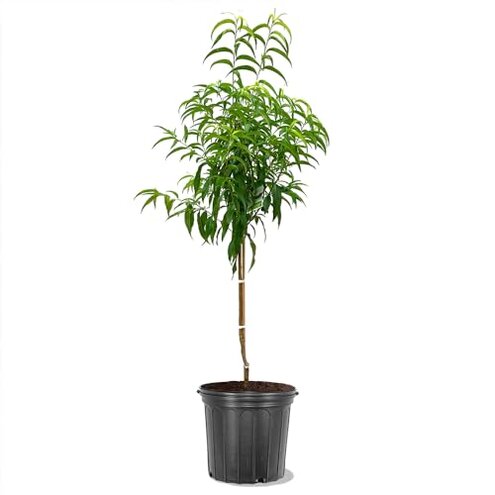
- Buyers who need a reliably live, ready-to-plant tree on arrival should avoid it due to higher arrival stress risk.
- Low-effort gardeners who want minimal hands-on recovery work should avoid this because it often needs follow-up care.
- Buyers in restricted states or those who cannot secure local pickup should avoid it due to shipping cancellations.
Who this is actually good for
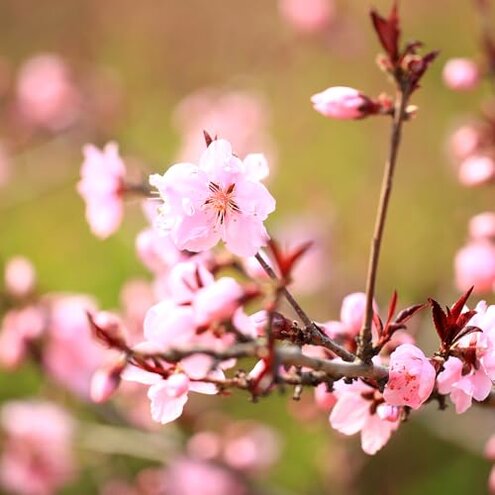
- Experienced gardeners willing to nurse a stressed tree through transplant shock with extra care.
- Cold-climate buyers in allowed states who accept slower establishment in exchange for a cold-hardy variety.
- Local pickup customers who can avoid shipping stress and inspect the tree before leaving the nursery.
Expectation vs reality
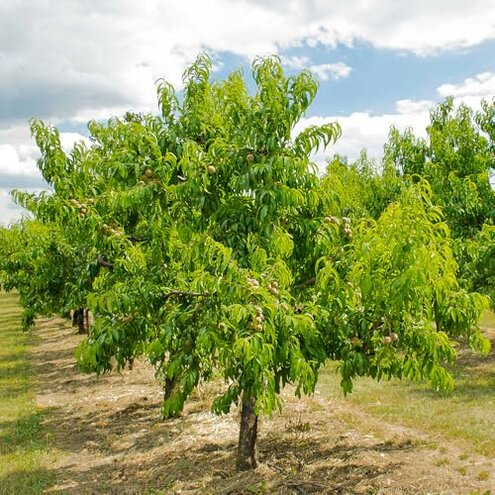
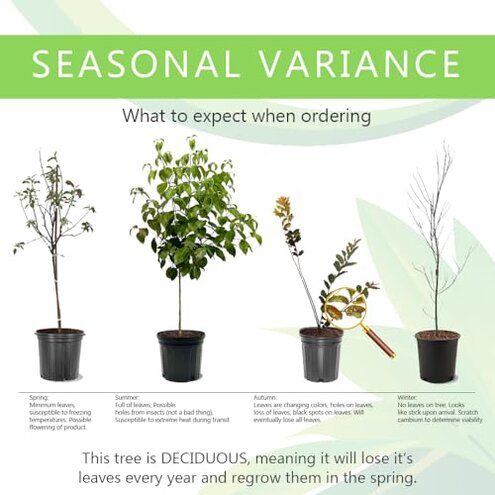
Expectation for the category: a small nursery tree arrives visibly healthy and establishes within months.
Reality here: arrival stress and slow establishment are more frequent, causing delayed fruiting and extra upkeep.
Safer alternatives
- Buy locally — choose a nearby nursery to inspect tree health and avoid shipping damage.
- Ask for photos before shipping to confirm live growth and minimize surprises at arrival.
- Choose established stock — prefer larger root-balled or field-grown trees for faster establishment.
- Confirm shipping with the seller first if you live in a restricted state to prevent cancellations.
- Plan care — budget time and supplies for extra watering, root stimulants, and frost protection.
The bottom line
Regret trigger centers on arrival damage and slow survival, which is more disruptive than typical nursery buys.
Verdict — avoid this tree if you need a low-risk, ready-to-establish nectarine; consider local alternatives or be prepared for hands-on recovery.
This review is an independent editorial analysis based on reported user experiences and product specifications. NegReview.com does not sell products.