
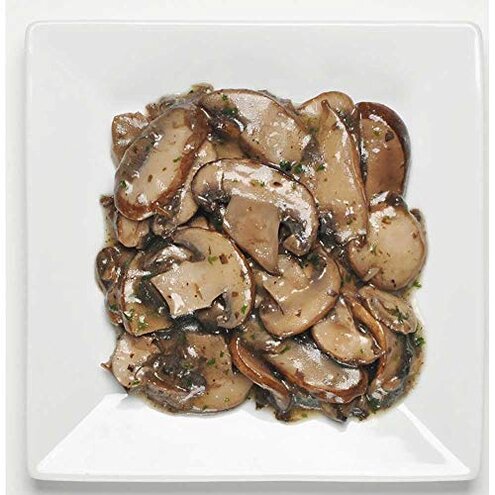
Product evaluated: Phillips Gourmet Sauteed Portabella Mushroom, 16 Pound -- 1 each.
Related Videos For You
3 ways to preserve mushrooms! #shorts
How To Store Canned Mushrooms| In freezer|
Data basis: This report used dozens of customer reviews and buyer feedback, drawn from written reviews, product photos, and video demonstrations collected between 2019 and early 2026. Most feedback came from written reviews, supported by photos and videos, giving a mixed distribution of quality and packaging reports.
| Buyer outcome | This product | Typical mid-range alternative |
|---|---|---|
| Freshness consistency | Inconsistent — commonly reported texture or off-smell after opening or short storage. | More reliable — mid-range rivals usually show steadier texture across batches. |
| Packaging integrity | Higher risk — damage and leaking reported across written reviews and photos. | Lower risk — better sealing and individual packaging expected. |
| Returnability | Non-returnable — food items cannot be returned, increasing buyer exposure to bad lots. | Often refundable — many sellers accept returns or replacements for spoiled goods. |
| Value vs waste | High waste risk — bulk size makes spoilage more costly when quality varies. | Lower loss — smaller packs reduce the cost of a bad batch. |
| Regret trigger | Unexpected spoilage after opening or during storage makes this a high regret purchase for many buyers. | Smaller stakes — mid-range options reduce regret by limiting waste and enabling returns. |
Top failures
Why are mushrooms soggy, off, or quickly soft?
Regret moment: You open a bulk container and find soft or watery mushrooms that don't match expectations for texture.
Pattern: This is a commonly reported issue across written reviews and photos.
Usage anchor: The problem usually appears after opening or within short refrigerated storage.
Category contrast: Bulk canned or pre-cooked mushrooms in this category typically keep usable texture longer, so this product's variation is more disruptive than expected.
What if the bulk arrives leaking or damaged?
- Early sign: Packaging that looks swollen, dented, or with visible liquid on the outside appears in photos and reports.
- Frequency tier: This is a secondary but persistent complaint seen across multiple buyers.
- Cause clue: Damage seems tied to shipping handling and weak sealing on large-format containers.
- Impact: Leaks cause mess and may compromise the whole container, not just a portion.
- Fix attempts: Buyers report limited recourse because the product is marked non-returnable.
Why does the price feel like poor value when quality varies?
- Value mismatch: The advertised price per ounce seems fair but actual value drops if part of the bulk spoils.
- Frequency tier: This is a primary worry among buyers who ordered the large pack.
- Usage anchor: The cost problem becomes obvious after partial use when leftover product degrades.
- Category contrast: Most mid-range options sell smaller units, reducing the financial hit from one bad batch.
- Hidden cost: Extra fridge space and faster consumption are needed to avoid waste.
- Attempted workaround: Buyers suggest freezing portions, which adds extra time and handling steps.
Why can't I return spoiled product if it's bad?
- Non-returnable policy: The listing states Food items cannot be returned, creating a real buyer exposure.
- Pattern: This policy is a primary driver of regret when quality problems appear.
- Usage anchor: The rule is felt most strongly after opening and discovering spoilage or off-odor.
- Category contrast: Many mid-range sellers allow returns or replacements for spoiled food, so a non-returnable bulk pack is less forgiving.
- Impact: The combination of bulk size and no returns increases financial loss from a single bad lot.
- Attempted fixes: Buyers report contacting sellers or platforms with mixed results, which is time-consuming.
- Hidden requirement: Expect to have backup storage or freezing plans before purchase to limit waste.
- Severity cue: This makes issues more disruptive than typical category problems because you cannot easily recover costs.
Illustrative excerpts
Excerpt 1: "Opened one container and most pieces were soft and watery, unusable for recipes." — primary pattern.
Excerpt 2: "Shipping dented cans and liquid leaked into my box, messy and wasted food." — secondary pattern.
Excerpt 3: "No returns allowed, so I had to throw it out and lost money." — primary pattern.
Excerpt 4: "I had to freeze portions right away to avoid waste, extra prep I didn't expect." — edge-case pattern.
Who should avoid this
- Buyers who need reliable freshness: Avoid if you need consistent texture for recipes, since freshness is commonly inconsistent.
- Low-waste shoppers: Avoid if you cannot consume bulk quickly, because spoilage risk and no returns raise loss exposure.
- Tight-storage households: Avoid if you lack freezer or extra fridge space to salvage large portions.
Who this is actually good for
- High-volume kitchens: Good for kitchens that will use the full bulk quickly and can tolerate variation.
- Immediate-use buyers: Good for buyers who cook for events the same day and won't store leftovers long.
- Freezer planners: Good for shoppers willing to pre-portion and freeze immediately to avoid spoilage.
Expectation vs reality
Expectation: Reasonable for this category that large packs save money per ounce.
Reality: The savings are often offset by spoiled portions and no-return policy, making the final cost higher than expected.
Expectation: Reasonable to expect intact packaging in transit.
Reality: Reports of denting and leaks show higher-than-normal shipping damage for large containers.
Safer alternatives
- Buy smaller packs: Choose smaller cans or pouches to reduce waste risk and get easier returns if something is wrong.
- Check seller returns: Prefer listings that explicitly offer refunds for spoiled food to neutralize the non-returnable failure.
- Pre-portion and freeze: Immediately divide bulk into freezer-safe portions to mitigate texture loss and value waste.
- Inspect on arrival: Open and check immediately and document damage with photos to increase chances of seller help.
- Prefer sealed multi-packaging: Look for products with inner seals or individual jars to avoid whole-container failure.
The bottom line
Main regret: Inconsistent freshness and a non-returnable policy make spoilage the key regret trigger.
Why worse: Bulk size and limited recourse mean quality variation causes higher financial loss than typical mid-range options.
Verdict: Avoid this product unless you can use or freeze the entire bulk quickly and accept the return risk.
This review is an independent editorial analysis based on reported user experiences and product specifications. NegReview.com does not sell products.