
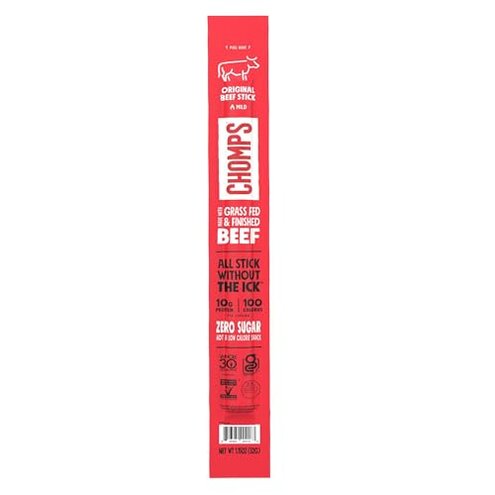
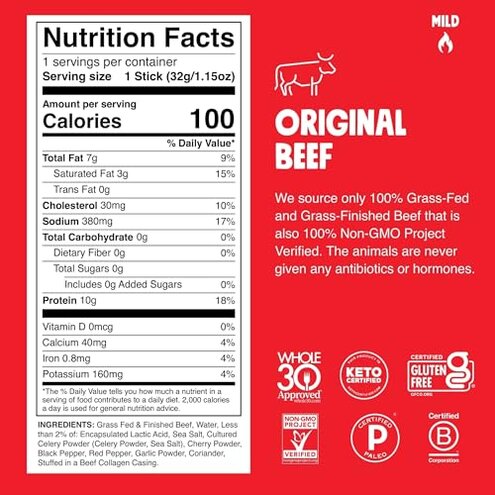
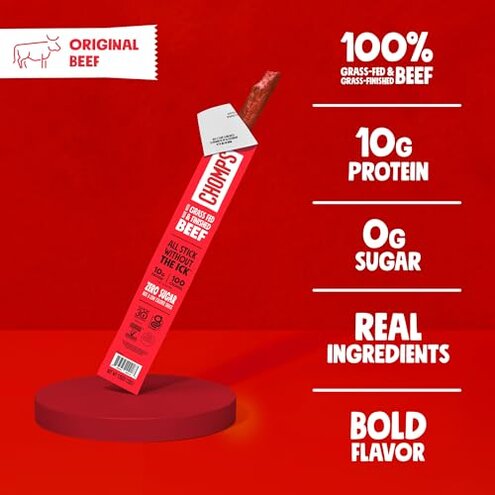
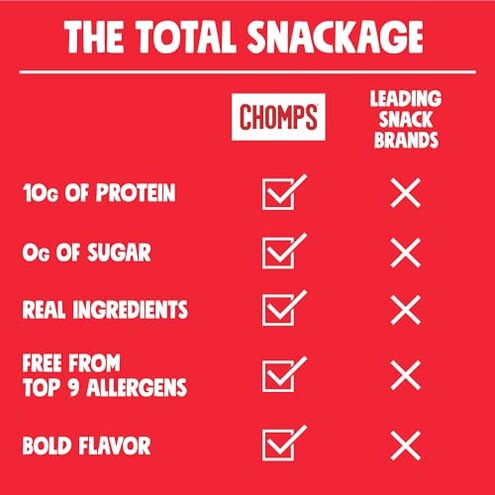
Product evaluated: Chomps Grass-Fed and Finished Original Beef Jerky Snack Sticks 24-Pack, Keto, Paleo, Whole30, 10g Protein, Gluten-Free
Related Videos For You
Jerky for Survival Preps: Shelf Life, Storage and Uses.
Data basis: This report uses feedback from dozens of written reviews and supported by video demonstrations, collected between 2018 and 2025. Most feedback came from written reviews, supported by occasional videos and seller Q&A.
| Outcome | Chomps 24-pack | Typical mid-range jerky |
|---|---|---|
| Freshness & texture | Inconsistent — commonly reported staleness within days of opening. | More reliable chew for weeks when stored normally. |
| Packaging integrity | Higher risk — broken seals and swollen sticks appear repeatedly. | Lower risk — resealable pouches and sturdier seals expected. |
| Price/value | Higher cost per ounce than many mid-range brands. | Better value options exist with similar protein claims. |
| Portion consistency | Variable — stick sizes and flavor intensity vary across packs. | More consistent weight and taste per stick. |
| Regret trigger | Staleness & packaging together cause the majority of buyer complaints. | Moderate — fewer combined freshness and seal failures normally. |
Top failures
Why does the jerky feel stale so fast?
Regret moment: Buyers report stale texture within days after opening, turning chew into dry cardboard.
Pattern: This is among the most common complaints and appears repeatedly across written feedback.
When it happens: Staleness shows up during daily carry or within the first week after opening, especially in warm or humid conditions.
Category contrast: That is worse than typical mid-range jerky, which usually keeps chewiness longer under the same storage.
Are package seals and individual wrappers reliable?
- Seal failures: Broken or loose seals are a frequently reported issue.
- Early signs: Buyers notice weak seals or tiny punctures right out of the box.
- Usage anchor: Problems appear on first inspection and worsen during shipment or rough handling.
- Cause: Thin single-use bags and lack of robust reseal make exposure more likely.
- Impact: Seal breaks accelerate staleness and occasionally cause visible swelling in sticks.
Is this pack a poor value for the price?
- Price pressure: Buyers note the higher cost per ounce compared to similar keto/paleo sticks.
- Expectation: Price implies premium consistency, but feedback shows variable quality.
- Frequency tier: This is a secondary issue but cited often alongside freshness complaints.
- Portion variance: Stick weight and flavor intensity vary, reducing perceived value.
- Attempts to fix: Some buyers separate sticks into airtight containers, adding time and expense.
- Hidden cost: Extra storage or replacement purchases offset any convenience of the bulk pack.
Do flavors and portions match expectations?
- Flavor swings: Taste intensity ranges from mild to overly salty across the same pack.
- Early sign: First few sticks often set your expectation; later sticks can differ noticeably.
- Usage anchor: Variance is most obvious when eating multiple sticks in one sitting.
- Cause: Batch inconsistency and uneven seasoning appear to be the culprits.
- Impact: Inconsistent flavor reduces reliability as a daily snack or trail food.
- Attempts to fix: Buyers often mix sticks with other food to mask extremes, which reduces convenience.
- Category contrast: More consistent mid-range brands avoid such swingy seasoning and portion sizes.
- Hidden requirement: Proper storage and selective packing are needed to reduce variance, adding effort buyers did not expect.
Illustrative excerpts (not real quotes)
"First few sticks were dry, became like cardboard after three days." — reflects a primary pattern.
"Several packets had loose seals right out of the box." — reflects a primary pattern.
"Tastes strong in one stick, bland in the next; uneven batch." — reflects a secondary pattern.
"Expensive for what feels like hit-or-miss quality overall." — reflects a secondary pattern.
Who should avoid this
- Frequent travelers: If you need reliable, long-lasting chew on trips, avoid this pack due to staleness.
- Buyers on a budget: If price-per-ounce matters, avoid this product because of the higher cost.
- Those needing consistent flavor: If consistent taste matters for meal plans, avoid due to flavor variance.
Who this is actually good for
- Occasional snackers: If you eat a stick now and then and finish packs quickly, you can tolerate fast staleness.
- Supporters of brand values: If grass-fed and family-owned matters more than consistency, you may accept quality variance.
- Immediate-consumption buyers: If you consume many sticks right away, packaging defects matter less and you accept single-use convenience.
Expectation vs reality

- Expectation (reasonable for category): Jerky should stay chewable for weeks when unopened.
- Reality: For many buyers this product becomes stale within days after opening.
- Expectation: Bulk packs offer value without extra work.
- Reality: Buyers often add airtight storage, creating hidden effort and extra cost.
Safer alternatives
- Choose resealable packs: Look for brands with strong reseal pouches to neutralize seal failures.
- Smaller multipacks: Pick smaller servings to reduce exposure time and mitigate rapid staleness.
- Lower cost per ounce: Compare price per ounce to avoid the higher cost surprise.
- Consistent-batch brands: Prefer brands known for even seasoning to avoid flavor variance.
- Store airtight: Use vacuum or tight containers immediately to reduce the chance of quick texture loss.
The bottom line
Main regret: The core complaint is combined staleness and packaging failures, which creates visible product decline quickly.
Why it matters: These problems are more disruptive than typical jerky issues because they affect both freshness and value.
Verdict: Consider avoiding this product if you need consistent texture, reliable seals, or better value per ounce.
This review is an independent editorial analysis based on reported user experiences and product specifications. NegReview.com does not sell products.