
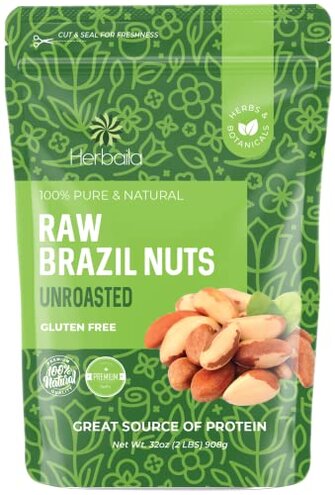
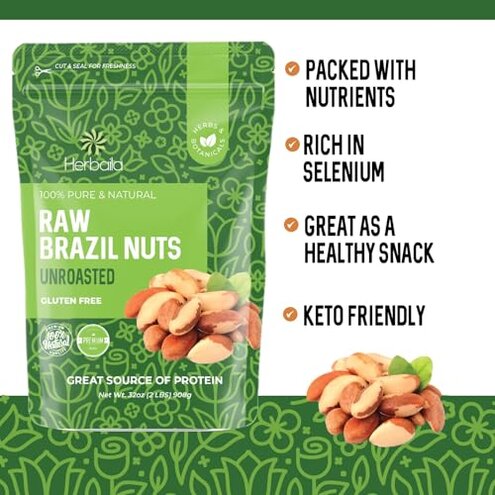
Product evaluated: Herbaila Brazil Nuts Raw, 2lb. Brazilian Nuts, Raw Brazil Nuts Unsalted, Shelled Brazil Nuts Whole, Fresh Brazil Nuts Brazilian, All Natural, Non-GMO, Vegan. Whole and Shelled, 32 oz.
Related Videos For You
How to store Brazil nuts (also known as Pará nuts or Amazon nuts)
Food Storage: How to Extend the Shelf Life of Nuts and Seeds
Data basis: This report aggregates feedback from dozens of reviews, combining written buyer reports and short video demonstrations collected January–December 2024. Most feedback came from written reviews, supported by video demonstrations, with additional seller Q&A notes informing patterns.
| Buyer outcome | Herbaila Brazil Nuts (2 lb) | Typical mid-range alternative |
|---|---|---|
| Freshness on arrival | Mixed — several reports of stale or rancid nuts on first opening, commonly reported. | Reliable — most mid-range competitors usually arrive fresh and sealed. |
| Packaging reliability | Resealable pouch but reports show broken seals or weak protection. | Stronger packaging — foil-lined or vacuum options keep nuts fresher longer. |
| Price vs freshness | $1.02/oz — price is mid-range but freshness issues reduce value. | Similar price with better shelf-life and fewer freshness complaints. |
| Health/regret trigger | Selenium overage risk — high selenium content plus inconsistent portioning raises user concern. | Lower risk — similar nuts but clearer serving guidance and consistent portion sizes. |
| Higher-than-normal risk | Freshness failure — more disruptive than expected for this category due to frequent first-use issues. | Category baseline — most mid-range nuts are shelf-stable out of the bag. |
Do the nuts arrive stale or rancid?
Regret moment: Opening the pouch and finding off or stale smell makes the purchase unusable for snacking. This is a primary issue that appears repeatedly in buyer feedback.
When it shows up: Commonly reported on first use or within days after opening, not weeks of storage.
Why worse than normal: Nuts are expected to be shelf-stable when sold in resealable bags, so early rancidity is more disruptive than typical in this category.
Are pieces inconsistent or full of shells?
- Early sign: Buyers commonly notice broken halves and occasional shell fragments on first serving.
- Frequency tier: This is a secondary issue that appears regularly but not universally across reports.
- Likely cause: Handling and bulk packing leads to size and integrity inconsistency.
- Impact: Worse eating experience and extra time picking fragments out of mixes.
Does the packaging actually keep them fresh?
- Primary complaint: The resealable pouch is described as ineffective by many reviewers.
- Usage anchor: Problems appear after first opening or when the pouch is left at room temperature.
- Hidden requirement: Buyers report needing cold storage or fast consumption to avoid rancidity.
- Attempts to mitigate: Users who vacuum-seal or refrigerate report better longevity.
- Fixability: The issue is partly fixable by extra steps but adds time and fridge space.
- Category contrast: More upkeep than most mid-range alternatives which use stronger barriers.
Is this good value at the advertised price?
- Price fact: The product lists at $32.78 or $1.02/oz.
- Value problem: Freshness complaints make the price feel high for risk compared with peers.
- Buyer impact: Wasted product due to rancidity increases effective cost.
- Common workaround: Some buyers cut servings and refrigerate to avoid waste.
- Frequency tier: This is a primary economic concern when freshness fails.
- Why worse than expected: Buyers expect bulk nuts to offer savings, not extra handling steps.
- Decision trade-off: Pay similar price for better-packaged options to avoid time and waste.
Illustrative excerpts
"Opened bag smelled stale and tasted slightly bitter, unusable for snacking." — primary pattern
"Many halves with tiny shell shards, adds time to sort before use." — secondary pattern
"Had to refrigerate after opening or they turned oily quickly." — secondary pattern
Who should avoid this
- Snackers who expect ready-to-eat quality: Avoid if you need reliable freshness out of the bag.
- Buyers without fridge space: Avoid if you can’t store opened nuts cold to prevent rancidity.
- Value shoppers wanting no waste: Avoid if you dislike extra handling or disposal from stale portions.
Who this is actually good for
- Immediate consumers: Good for people who eat quickly and finish the bag within days.
- Home bakers or blenders: Suitable if you process and roast or incorporate nuts immediately.
- Refrigeration-ready buyers: OK if you plan to refrigerate or freeze after opening to control freshness.
Expectation vs reality
Expectation (reasonable for this category): Bulk nuts arrive dry and ready to eat with a working resealable pouch.
Reality: Many buyers report early rancidity, inconsistent pieces, and a pouch that needs extra care to keep nuts usable.
Safer alternatives
- Choose foil-lined packs: Prioritize products with barrier packaging to reduce early rancidity.
- Smaller quantities: Buy smaller bags if you can’t finish a bulk pack quickly.
- Look for vacuum-sealed options: Vacuum seals neutralize the packaging failure risk.
- Check seller freshness notes: Prefer sellers with explicit harvest or pack dates to reduce arrival surprises.
The bottom line
Main regret trigger: Early freshness failures on first opening make this product riskier than typical mid-range nuts.
Why it exceeds category risk: Buyers commonly need extra storage or handling, which erases the bulk-price advantage.
Verdict: Avoid if you want grab-and-eat reliability; consider better-packaged alternatives or smaller quantities instead.
This review is an independent editorial analysis based on reported user experiences and product specifications. NegReview.com does not sell products.