
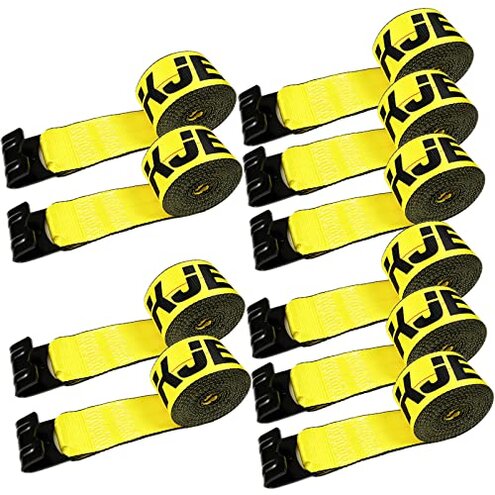
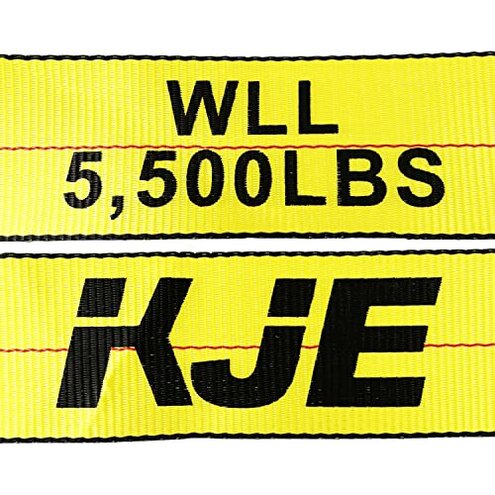
Product evaluated: KJE 10 Pack Winch Straps 4" x 30' Yellow Heavy Duty Tie Down w/Flat Hooks Flatbed Trailer Strap WLL# 5,500 lbs | 4 Inch Cargo Control for Flatbed Truck
Related Videos For You
How do you secure loads on a flatbed trailer?
Load securement with Officer Hoover and Steve with Speed binders
Data basis: This report summarizes dozens of feedback points collected from written buyer comments and short video-style demonstrations between 2023 and 2026. Most usable detail came from written feedback, with added context from visual use examples. The strongest patterns were consistency concerns during real tie-down use, not just first-impression comments.
| Buyer outcome | KJE 10-pack | Typical mid-range alternative |
|---|---|---|
| First-use confidence | Less certain if you need dependable consistency across all straps in one loadout. | More predictable across a batch for routine flatbed work. |
| Daily handling | More effort if you want quick grab-and-go use without checking each strap closely. | Usually easier to rotate into daily use with fewer extra checks. |
| Long-haul trust | Higher risk than normal if you rely on every strap to feel equally ready under repeated use. | Moderate risk is still normal, but consistency is usually better. |
| Hidden workload | Extra inspection becomes part of ownership sooner than many buyers expect. | Basic inspection is expected, but less often feels like a chore. |
| Regret trigger | Best avoided if your job depends on uniform reliability across a full 10-pack. | Safer pick for buyers who need fewer surprises per strap. |
Do you want a 10-pack, but not a 10-pack lottery?
Primary issue: The biggest regret point is batch consistency. This appears repeatedly in aggregated feedback, especially when buyers open the full pack and compare straps side by side before a haul.
Why it stings: In this category, some variation is normal. What feels worse here is that the multi-pack promise suggests uniform readiness, so any mismatch creates more work than expected.
- Pattern: This is a recurring complaint, not a one-off, and it is among the most disruptive concerns for work-use buyers.
- When it shows up: It often appears at first unpacking or first job assignment, when users expect all straps to feel ready in the same way.
- Buyer impact: A mismatch inside one pack can slow load prep because users start checking each strap instead of trusting the bundle.
- Why worse than normal: Most mid-range alternatives still need inspection, but they are often more uniform across a multi-pack.
- Fixability: You can sort the best straps for critical loads, but that creates a hidden requirement to grade your own set.
Illustrative: “I bought ten to save time, but ended up inspecting every single one.”
Pattern tier: This reflects a primary pattern.
Will these feel dependable once they are in regular rotation?
Secondary issue: Some buyers report concern about long-term confidence after repeated handling. The problem is less frequent than first-batch inconsistency, but more frustrating when it shows up during real cargo prep.
Context: This tends to matter after repeated use, especially for people loading often or relying on the same set across changing weather and workdays.
Category contrast: Tie-down straps always require inspection, but buyers expect a heavy-duty set to stay trustworthy enough that routine use does not feel second-guessed so quickly.
Trade-off: The low per-strap cost can make sense on paper, yet the value drops if owners feel pushed into more frequent checks or early replacement planning.
Illustrative: “They worked at first, but I started questioning them sooner than expected.”
Pattern tier: This reflects a secondary pattern.
Do you want simple cargo control, not extra setup steps?
- Hidden step: A persistent complaint is the need for closer inspection before use, which adds time during loading.
- When it matters: This shows up most during busy work prep, when buyers want to hook up and tension down quickly.
- Frequency tier: This is a primary issue because it connects multiple smaller complaints into one daily frustration.
- Real-world effect: Instead of acting like a ready-to-go bundle, the pack can feel like a set that needs manual screening.
- Why worse than typical: Mid-range alternatives usually still need checks, but they are often less demanding to sort before each use.
- Mitigation: Buyers who label, separate, and rotate straps carefully may reduce headaches, but that means more upkeep than many expect.
- Regret point: If your goal is speed, this extra inspection burden is often more disruptive than the purchase price suggests.
Illustrative: “These only feel okay if you have time to baby the set.”
Pattern tier: This reflects a primary pattern.
Are you buying for serious work where one weak link ruins the whole set?
- Scope: A less frequent but persistent concern is that one questionable strap can reduce trust in the whole bundle.
- When it hits: This becomes most obvious during mixed-load jobs, when buyers need all straps to perform like one matched system.
- Severity: It is an edge-case issue in frequency, but it can create outsized frustration when the set is bought for professional use.
- Buyer consequence: Once confidence drops in one strap, users often start downgrading the entire purchase from work gear to backup-only gear.
- Why worse than expected: In this category, one weak unit is always annoying. In a 10-pack, the problem feels costlier in time because batch buying was supposed to reduce decisions.
- Attempted workaround: Some buyers reserve suspect straps for lighter jobs, but that undercuts the heavy-duty purpose advertised in the listing.
- Bottom effect: The regret is not just the strap itself. It is the lost convenience of a bundle that no longer feels fully dependable.
Illustrative: “One bad strap made me wonder about the rest of them.”
Pattern tier: This reflects an edge-case pattern.
Who should avoid this
- Fleet users: Avoid it if you need uniform reliability across all straps with little time for sorting.
- Daily haulers: Avoid it if repeated loading means extra inspection will become a weekly hassle.
- First-time buyers: Avoid it if you want a set that feels simple and confidence-building right away.
- Jobsite users: Avoid it if one questionable strap would force you to rethink the whole pack.
Who this is actually good for
- Backup use: It may fit buyers who want spares and can tolerate checking each strap before use.
- Light rotation: It can suit users who do not haul daily and accept more hands-on inspection as part of ownership.
- Budget-focused buyers: It may work if lower cost matters more than multi-pack consistency.
- Experienced users: It fits people already used to grading and separating straps by best-use role.
Expectation vs reality
- Expectation: A 10-pack should feel uniform enough to use as one dependable set.
- Reality: The stronger complaint pattern suggests some buyers feel pushed into sorting and screening the pack first.
- Expectation: Heavy-duty labeling creates a reasonable expectation of steady confidence through regular use.
- Reality: Some buyers report that confidence drops earlier than expected, which is worse than a typical mid-range baseline.
- Expectation: Buying in bulk should save time during load prep.
- Reality: For some owners, the pack creates extra steps instead of fewer.
Safer alternatives
- Buy smaller packs: Choosing a smaller set first can reduce the risk of getting stuck with a full bundle that needs sorting.
- Look for consistency-focused listings: Prioritize products with strong buyer detail around batch uniformity, not just strength claims.
- Choose easier-to-audit sets: Straps sold with clearer identification or role-based rotation can reduce the hidden inspection burden.
- Match use level carefully: For daily work, look for options described as better for frequent handling, not just occasional hauling.
The bottom line
Main trigger: The biggest reason to skip this set is consistency doubt inside a product that is supposed to save time through quantity.
Why it matters: That risk feels higher than normal for this category because it turns a bulk purchase into more checking, more sorting, and less trust. If you need every strap in a 10-pack to feel equally ready for real work, this is a sensible one to avoid.
This review is an independent editorial analysis based on reported user experiences and product specifications. NegReview.com does not sell products.