
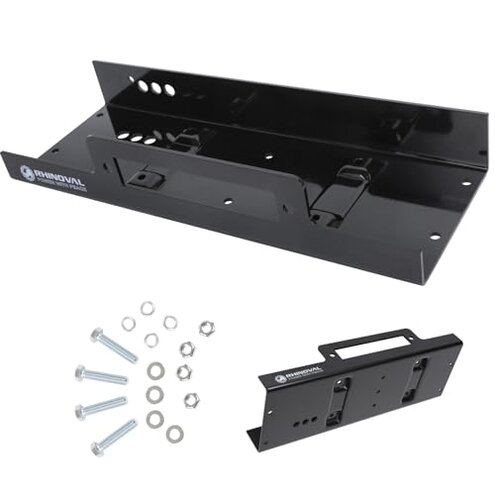
Product evaluated: RHINOVAL Universal Winch Mounting Plate, 10" x 4.5" Raised Bolt Pattern, 15,000 lbs, Heavy Duty Steel with Fairlead Flange & Hardware for Truck, SUV, Trailer
Related Videos For You
Carnivore Winch Mounting Plates for Jeep Wrangler JL & Gladiator JT Factory Plastic & Steel Bumpers
Harbor Freight - Badland Universal Winch Mount - Pro's and Con's
Data basis This report uses dozens of buyer feedback points collected from product listings, written comments, and video-style demonstrations between 2024 and 2026. Most feedback came from written reviews, with supporting signals from photo and installation-focused posts, so the strongest patterns center on fit, setup effort, and whether the plate works without extra fabrication.
| Buyer outcome | RHINOVAL plate | Typical mid-range alternative |
|---|---|---|
| First-fit confidence | Lower; universal design can still require custom drilling or adjustment. | Better; still not perfect, but usually more predictable when fit charts are clearer. |
| Install time | Higher; setup can turn into measuring, drilling, and checking clearances. | Moderate; some drilling is common, but less often a surprise. |
| Hidden requirements | Higher-than-normal risk; buyers may need tools, fabrication confidence, and base-specific planning. | Lower; many alternatives are less demanding for average owners. |
| Use-case flexibility | Mixed; broad compatibility helps, but exact vehicle or trailer fit can still fail. | More consistent; narrower fit focus usually means fewer guesswork problems. |
| Regret trigger | Strong; the part arrives, looks sturdy, then stalls the project during mounting. | Milder; regret usually comes from finish or hardware, not basic fit. |
Do you want a “universal” plate that still needs custom work?
This is the primary issue. The biggest regret moment comes during setup, when buyers expect broad compatibility but realize their base or vehicle still needs drilling or adaptation. That trade-off feels sharper here because the product openly targets many uses, which raises fit expectations.
This pattern appears repeatedly. It is not universal, but it is among the most common complaints for universal mounting parts because mismatch stops the whole recovery setup before first use.
- Pattern Compatibility frustration is a recurring complaint, especially when buyers assume “universal” means close to bolt-on.
- When it hits The problem shows up before first use, usually while matching hole locations and checking platform size.
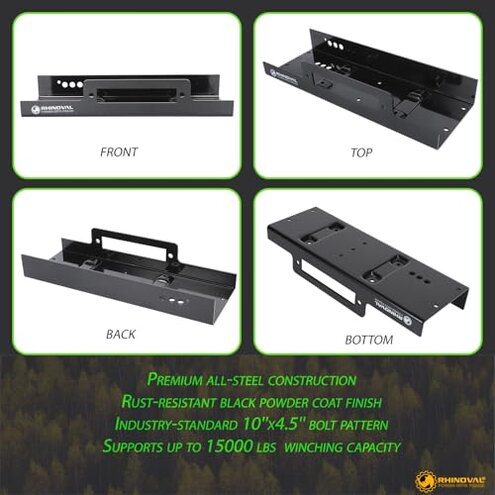
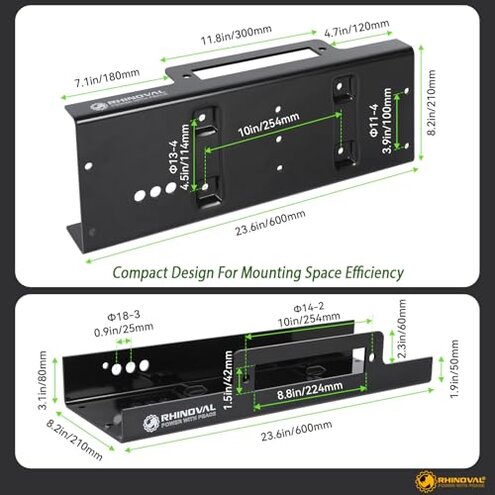
- Why it stings The plate uses a standard 10 x 4.5 winch pattern, but the mounting base still may not match without extra drilling.
- Buyer impact The project can stop mid-install if you do not already have tools, bits, and confidence to modify the base.
- Category contrast Some drilling is reasonable for this category, but this feels worse when the “universal” framing leads average buyers to expect less fabrication.
- Fixability It is sometimes fixable, but only if your setup has enough space and you are comfortable measuring carefully.
- Hidden requirement The real requirement is planning; you need to confirm both winch pattern and base dimensions before ordering.
Will the install take more effort than you planned?
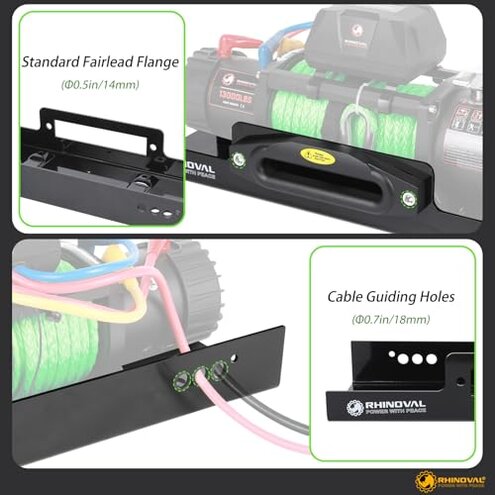
This is the secondary issue. The mounting plate may look straightforward on arrival, but the time cost grows after unpacking once alignment, drilling, and cable routing are checked. That makes the frustration more disruptive than expected for a part many buyers treat as a simple bracket.
- Early sign If you need to test-fit repeatedly, the install is already trending longer than expected.
- Frequency tier Setup effort is a persistent complaint, though less central than raw compatibility.
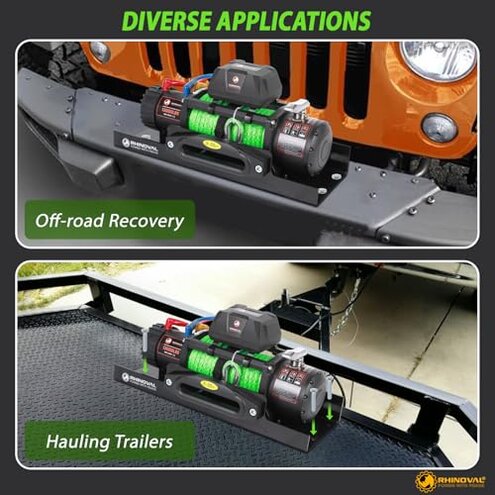
- Context It gets worse on trailers and mixed-use rigs where space is tight and mounting surfaces vary.
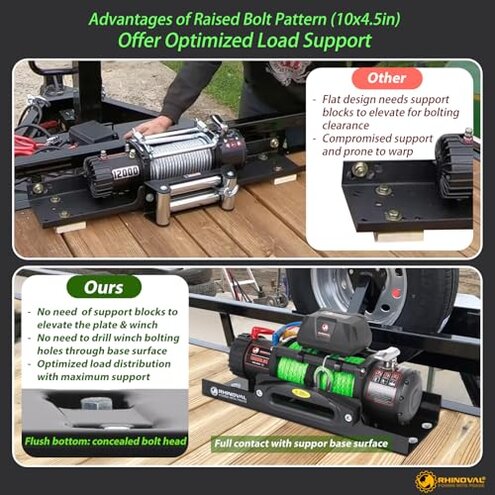
- Cause The design reduces some drilling in the center area, but buyers still have to handle plate-to-base holes and clearance checks.
- Impact What should feel like an evening project can turn into extra steps, extra tool use, and second-guessing measurements.
- Category contrast Basic hardware setup is normal, but this can be less forgiving than typical mid-range alternatives with clearer fit targeting.
Are you expecting truly easy hardware and no-surprise assembly?
This is a secondary concern. The kit includes hardware, which helps, but buyers still commonly run into assembly judgment calls during install. That is less frequent than fit mismatch, yet more frustrating when it happens because included hardware creates a strong expectation of plug-and-go simplicity.
The pattern is persistent. It tends to show up during final mounting, when users decide whether the supplied pieces suit their exact base thickness and layout.
- Expectation gap Included parts suggest complete readiness, but exact setups can still need extra thought.
- Where it appears The issue shows up late in assembly, when bolt length, washer stack, or base compatibility gets checked.
- Why buyers mind This is where a “complete kit” can feel less complete in real-world installs.
- Severity It is less frequent than drilling complaints, but more irritating because it appears after you thought the hard part was done.
- Workaround Buyers with a hardware stash or fabrication experience usually handle it more easily.
- Category contrast Mid-range alternatives often still need tweaks, but they are usually clearer upfront about fit limits or vehicle focus.
- Regret moment The regret is not poor strength on paper; it is the unexpected pause while solving mounting details yourself.
Do you need a no-guesswork fit for a Jeep or exact vehicle setup?
This is an edge-case issue, but it matters a lot for the wrong buyer. The listing itself signals that it is not a direct bolt-on for Jeeps, and customization may be needed.
That honesty helps, but the real problem is that many shoppers still buy universal parts hoping for an easy path. In that context, the fit risk is higher than normal if your project depends on a vehicle-specific install with little room for trial and error.
Illustrative: “I thought universal meant close enough, not break out the drill.” — Primary pattern
Illustrative: “The plate seems solid, but my install got complicated fast.” — Secondary pattern
Illustrative: “Hardware included did not remove the guesswork on my setup.” — Secondary pattern
Illustrative: “Fine if you fabricate, bad if you want direct fit.” — Primary pattern
Who should avoid this
- Avoid it if you want a near bolt-on solution and do not want to drill or modify a base.
- Avoid it if your setup is a Jeep-specific project where exact fit matters more than broad compatibility claims.
- Avoid it if you lack tools, measuring confidence, or time for repeated test-fitting.
- Avoid it if your tolerance for installation surprises is below normal for utility parts.
Who this is actually good for
- Good fit for buyers who already expect custom drilling and treat universal hardware as a starting point.
- Good fit for trailer or shop builds where exact appearance matters less than functional mounting space.
- Good fit for experienced owners willing to tolerate install friction in exchange for broad winch compatibility.
- Good fit if you can verify dimensions in advance and accept that included hardware may not solve every setup detail.
Expectation vs reality
- Expectation A universal plate should fit most setups with minor effort. Reality The fit can still require meaningful drilling and layout work.
- Expectation A complete kit should remove most assembly decisions. Reality You may still need to judge hardware suitability for your exact base.
- Expectation Reasonable for this category: some measuring and adjustment. Reality The effort can be worse than expected when your project depends on a vehicle-specific result.
Safer alternatives
- Choose vehicle-specific mounts when possible, because they directly reduce the main risk of surprise drilling and mismatch.
- Prioritize clear fit charts and dimensional diagrams, which help neutralize the hidden planning requirement.
- Look for installation photos on setups like yours, because real mounting examples expose clearance problems early.
- Buy from narrower-fit options if you value predictable install time over broad compatibility claims.
- Keep extra hardware ready if you still choose universal, since included parts do not always remove final assembly friction.
The bottom line
Main regret trigger is simple: buyers expect broad fit, then lose time on drilling, alignment, or setup-specific compromises. That exceeds normal category risk because “universal” can create a stronger ease-of-install expectation than the product can realistically deliver. Verdict: avoid it if you need direct fit or low-effort installation; consider it only if custom mounting work is already part of your plan.
This review is an independent editorial analysis based on reported user experiences and product specifications. NegReview.com does not sell products.