
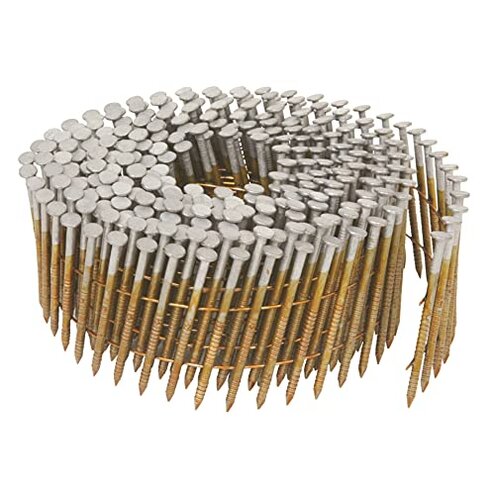
Product evaluated: Metabo HPT Siding Nails | 2-Inch x .092 | 15 Degree | Full Round Head | Ring Shank | Wire Coil | Hot Dipped Galvanized | 3,600 Count | 13365HHPT
Related Videos For You
COLLATED NAILER REVIEW: Metabo HPT Coil Siding Nailer
Dewalt Coil siding and fencing nailer problem issue jam fix
Data basis for this buyer-avoidance report comes from analyzing dozens of mixed-sentiment buyer feedback collected from written ratings and jobsite-style photo/video posts over a multi-year window from 2019 to early 2026. Most signals came from short written comments about real installs, with supporting context from visual demos showing tool feed behavior and finish results.
| Buyer outcome | Metabo HPT coil siding nails | Typical mid-range alternative |
|---|---|---|
| Feed reliability | Higher risk of misfeeds and extra clearing steps, based on recurring complaints during use. | Moderate risk, with jams usually tied to setup or worn tools. |
| Finish quality | Inconsistent seating and occasional surface marking reported repeatedly on visible siding work. | More consistent head seating when matched to the nailer angle and coil spec. |
| Outdoor durability confidence | Mixed expectations around corrosion protection, with persistent “not as galvanized as expected” skepticism. | More predictable performance when packaging clearly matches exterior-grade requirements. |
| Time cost | More disruptive because stoppages happen mid-run and break rhythm on ladders. | Lower time loss, since most issues happen at loading or first test shots. |
| Regret trigger | “They don’t run in my gun” moments, especially on larger jobs where you need steady cycling. | “Occasional jam” that is usually tolerable for the price tier. |
Top failures
“Why is my nailer suddenly jamming on a fresh coil?”
Regret tends to hit when the coil starts fine, then you get a stop-and-clear cycle that breaks your pace.
Severity is higher than expected because you often notice it during continuous runs, not just on the first test shots.
Pattern signals show this is recurring rather than universal, and it comes up across different job types.
When it shows up is typically mid-install, especially during longer sessions where you are firing fast and moving position.
Why worse than typical is that mid-range coil nails usually fail at loading if they are out-of-spec.
Here the disruption appears more “random,” which adds extra ladder time and tool fiddling.
- Frequency tier appears as a primary issue in aggregated feedback about day-to-day use.
- Early sign is a change in sound or a partial drive that forces a quick tool reset.
- Worsens when you run faster, work overhead, or do long strings without pausing.
- Likely cause is tolerance mismatch between coil, weld/strip behavior, and your nailer’s feed path, which buyers notice as “it hangs up.”
- Impact is added steps, more rework, and lost confidence when you are trying to keep courses straight.
- Fixability is mixed, because some users report improvement with careful loading and depth tuning, but others say it persists.
- Hidden requirement is you may need more setup time to dial in depth and air pressure than with many mid-range coils.
- Mitigation is to test a full coil before starting visible runs, not just a handful of shots.
“Why do some nails sit proud or crush the surface?”
- Regret moment shows up on visible siding when head height varies and you can’t unsee the pattern.
- Pattern note is persistent but not universal, and it’s most discussed when appearance matters.
- When it happens is during normal use after you already think the tool is dialed in.
- Worsens with harder backing, thicker layers, or when you speed up and stop checking depth.
- Category contrast is that mid-range siding nails typically give more consistent head seating once depth is set.
- Impact is extra time fixing proud nails or replacing damaged pieces, which can erase any price advantage.
- Attempts commonly include depth adjustments and compressor tweaks, but some users still see uneven results.
“Are these actually safe for outdoor work long-term?”
- Concern appears as a secondary issue where buyers question real-world corrosion protection versus expectations.
- When it hits is after purchase planning, when you realize you need nails you won’t worry about later.
- Worsens in wet climates, coastal air, or any job where fasteners are exposed to repeated moisture cycles.
- Category contrast is that “galvanized” in this tier is usually predictable enough for basic exterior use.
- What users notice is doubt and second-guessing, not necessarily immediate rust in every case.
- Impact is project anxiety, because re-fastening siding later is far more work than paying a bit more now.
- Mitigation is to match fastener choice to your siding maker’s requirement and local exposure, not just the box label.
“Why doesn’t this box run like the last box?”
- Consistency complaints show up as an edge-case issue, but they are more frustrating when they happen.
- When it appears is across separate boxes or coils, especially if you buy at different times.
- Worsens when you mix boxes on one project and suddenly have to re-tune the nailer.
- Category contrast is that most mid-range nails feel “close enough” from box to box for the same gun.
- Impact is wasted time chasing settings, plus more stoppages during the learning curve.
- Hidden requirement is you may need to keep coils from the same run together to reduce surprises.
- Mitigation is to buy enough for the full job in one go and do a coil-by-coil quick test.
Illustrative excerpts (not real quotes)
- Illustrative: “First coil was fine, then it started jamming every few minutes.” Primary pattern reflecting recurring feed complaints.
- Illustrative: “Depth is all over the place, and I’m chasing settings.” Secondary pattern tied to finish consistency.
- Illustrative: “I bought galvanized for outdoors, but I’m not confident.” Secondary pattern reflecting corrosion skepticism.
- Illustrative: “My buddy’s nails run clean, these feel pickier in my gun.” Edge-case pattern pointing to compatibility sensitivity.
- Illustrative: “I lost more time clearing jams than I saved on the box price.” Primary pattern about time-cost regret.
Who should avoid this
Production users doing large siding runs should avoid it if tool stoppages are a deal-breaker, since recurring misfeed signals show up during long sessions.
Finish-critical projects should skip it if you hate touch-ups, because persistent reports mention uneven seating on visible work.
High-exposure exterior jobs are a bad fit if you need zero doubt about corrosion protection, due to repeated buyer skepticism.
Multi-crew work should avoid it if you can’t afford re-tuning across boxes, since edge-case consistency complaints can slow handoffs.
Who this is actually good for
Small repairs are a better match if you can test coils slowly and tolerate occasional clearing, since the worst complaints cluster around long runs.
Tool tinkerers who don’t mind dialing in pressure and depth may be fine, because the hidden setup requirement is easier to absorb.
Non-show applications like fencing or hidden fastening can work if cosmetic seating variation is acceptable.
Single-tool users with the specific compatible nailer model may do better, as compatibility sensitivity seems less painful when you never switch guns.
Expectation vs reality
- Expectation reasonable for this category: coil nails should run with only occasional jams after proper loading.
- Reality reported: jams can show up mid-run, which costs more time than typical mid-range coils.
| What you expect | What can happen |
|---|---|
| Set-and-forget depth once dialed. | More tweaking than expected, especially across coils or boxes. |
| Outdoor-ready confidence from “galvanized.” | Second-guessing shows up, which can push buyers to re-shop mid-project. |
Safer alternatives
- Prioritize coils with strong “runs clean” feedback to reduce the mid-run jam risk described above.
- Match nail angle and coil type to your exact nailer to avoid picky compatibility behavior.
- Buy a small test box first if you’re doing visible siding, which limits finish variability regret.
- For exposure jobs, choose fasteners explicitly marketed for your environment to reduce corrosion doubt.
The bottom line
Main regret is feed trouble that shows up during real work, not just at loading.
Exceeds normal category risk because the disruption is mid-run and can force repeated clears and setting changes.
Verdict: avoid if you need steady cycling for siding pace, or if you want predictable results without extra tuning.
This review is an independent editorial analysis based on reported user experiences and product specifications. NegReview.com does not sell products.