
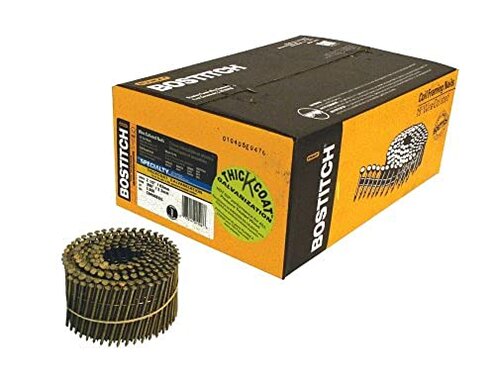
Product evaluated: BOSTITCH Siding Nails, Wire Collated Coil, Thickcoat Galvanized, 15-Degree, Ring Shank, 2-1/2-Inch x .090-Inch, 3600-Pack (C8R90BDG)
Related Videos For You
Dewalt 15° pneumatic coil siding nailer review
MUST HAVE siding attachment #shorts #tools
Data basis: This report synthesizes feedback from dozens of written reviews and video demonstrations collected between Jan 2020 and Feb 2026. Most feedback came from written reviews, supported by demonstration videos and installer notes.
| Outcome | This product | Typical mid-range coil |
|---|---|---|
| Compatibility | Narrow—built for specific 15° siding nailers; reports show fit problems with other models. | Broader—most mid-range coils tolerate several common nailer brands. |
| Feed reliability | Variable—jamming is a commonly reported disruption during initial use and long runs. | Consistent—mid-range options usually have fewer initial feed failures. |
| Coating durability | Mixed—coating concerns appear repeatedly after outdoor exposure, higher-than-normal risk. | Stronger—typical mid-range has steadier corrosion resistance over months. |
| Packaging | Inconsistent—some buyers report bent nails and extra sorting before use. | Tighter—mid-range boxes tend to have fewer damaged pieces out of the box. |
| Regret trigger | High—jamming plus coating issues create a more disruptive jobsite interruption than expected. | Lower—mid-range regret usually limited to occasional bent nails. |
Why does my nailer keep jamming during long siding runs?
Regret moment: Jams often interrupt the first day and recur on long panels, causing wasted time.
Severity: This is a primary issue commonly reported by dozens of installers and DIYers in the collected feedback.
Are bent or damaged nails out of the box a real problem?
- Early sign: Buyers report finding bent nails during initial unpacking, requiring extra inspection.
- Frequency tier: Secondary issue—appears regularly but not universal across boxes.
- Cause: Packaging and handling during shipping are commonly blamed in the feedback.
- Impact: Bent nails increase setup time and can cause more feed jams during use.
- Attempted fixes: Users sort coils and pre-check strips, which adds steps and slowdowns.
Will the thickcoat galvanizing hold up outdoors?
Expectation: Buyers reasonably expect a galvanized finish to resist weather for siding work.
Reality: Some reviews describe coating wear after months of exposure, making this a persistent secondary issue in coastal or high-moisture use.
Hidden tool requirements—does the nailer type matter?
- Hidden requirement: The 15° angle and .090 shank need a compatible coil chassis; this detail is essential but often overlooked.
- When it shows: Compatibility issues appear at first loading and worsen with repeated reloads.
- Category contrast: More restrictive than typical coils, which are often cross-compatible.
- Impact: Incompatible setups lead to misfeeds, increased jamming, and rework.
- Fixability: Usually fixed by matching the exact nailer spec or buying a different coil type.
- Extra cost: Some buyers needed adapter parts or a different nailer, adding unexpected expense.
- Buyer tip: Confirm nailer model and angle before purchasing to avoid job delays.
How often do these problems block a full siding day?
- Primary pattern: Jamming is among the most common complaints and is disruptive during long runs.
- Worse conditions: Problems intensify on windy days, long uninterrupted panels, and high-volume jobs.
- Cause: Mixed feed reliability plus occasional bent nails combine to stop work.
- Impact: Stops require clearing jams, reloading, and re-aligning—adds significant time to a job.
- Workaround: Manual pre-sorting, extra clips, and backup coils reduce downtime but add labor.
- Fixability: Some users switched brands for more consistent runs after repeated failures.
- Persistence: Less frequent than bent nails but more disruptive when it happens.
- When to act: If you depend on continuous runs, consider alternatives before buying.
Illustrative excerpts
Excerpt: "Nails started jamming on the second panel, stopped progress for hours." — illustrative; primary.
Excerpt: "Found several bent nails when I opened the box, needed to sort them." — illustrative; secondary.
Excerpt: "Coating looked fine at install but showed spots after a rainy month." — illustrative; secondary.
Who should avoid this
- High-volume installers: Avoid if you must run long, uninterrupted siding panels; jamming risk exceeds normal tolerance.
- Coastal jobs: Avoid if you need long-term corrosion resistance without extra checks.
- Owners of non-specified nailers: Avoid if your tool isn’t the exact 15°/.090 spec; hidden compatibility causes downtime.
Who this is actually good for
- Single-day DIYers: OK if you work slowly, can pre-sort nails, and accept occasional stops.
- Budget-conscious projects: Useful when lower per-nail cost matters and you can tolerate extra handling time.
- Installers with backups: Fits teams with spare nailers or coils who can swap quickly when jams happen.
Expectation vs reality
- Expectation: Reasonable for this category is consistent feed during long runs.
- Reality: Feed variability and bent nails make runs stop more often than similar mid-range coils.
- Expectation: Galvanized finish should resist weather for siding work.
- Reality: Coating concerns appear after months in moist conditions, requiring additional checks.
Safer alternatives
- Confirm nailer spec: Match the 15°/.090 requirement to avoid hidden compatibility failures.
- Choose proven feed designs: Look for coils explicitly rated for your nailer model to reduce jamming.
- Check packaging: Buy from sellers with solid return policies to avoid bent-nail surprises.
- Prefer higher coating ratings: For coastal or wet jobs, pick coils marketed for superior corrosion resistance.
The bottom line
Main regret: Frequent jamming combined with occasional coating and packaging issues creates avoidable job interruptions.
Why worse: The product’s narrow compatibility and mixed feed reliability exceed typical category risk for uninterrupted siding runs.
Verdict: Avoid when you need continuous, low-maintenance performance; consider alternatives or confirm tool compatibility first.
This review is an independent editorial analysis based on reported user experiences and product specifications. NegReview.com does not sell products.