
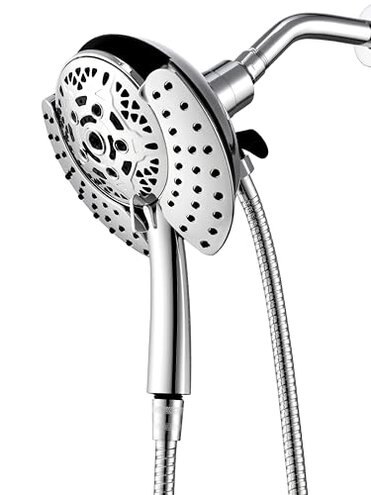
Product evaluated: Shower Head with Handheld High Pressure: INAVAMZ Hand Held Shower Head & Rain Shower Head 2-IN-1 Shower Head with 59" Rotatable Stainless Steel Hose, Shower Trim Systems
Related Videos For You
How to Install a New Shower Head For Dummies
EASIEST Way To Clean Your Shower Head💥(UNBELIEVABLE RESULT)!!
Data basis: This report synthesizes feedback from dozens of written reviews and user videos collected between Jan 2023–Feb 2026. Most feedback came from written reviews, supported by a smaller set of video demonstrations and Q&A posts.
| Outcome | INAVAMZ (this listing) | Typical mid-range shower |
|---|---|---|
| Water pressure | Inconsistent pressure reported; performance drops when both heads run simultaneously. | Stable high-pressure flow for single-head use; dual-flow often balanced better. |
| Leak risk | Higher-than-normal leak and drip reports at connections and diverter. | Lower leak incidence with firmer fittings and pre-installed washers. |
| Durability | Mixed longevity; some users report premature handle or hose issues. | More durable finishes and hoses are common in mid-range models. |
| Installation | Simple physically, but may require extra washers or tape to stop leaks. | Smoother out-of-box install with included quality seals and clear guidance. |
| Regret trigger | Fail during daily use: leaks or pressure drops that force service or return. | Minor nuisance like occasional drip but fewer service-level failures. |
Top failures
Why does the water pressure feel weak or inconsistent?
Regret moment: You notice weak spray when both the rainfall head and handheld run together, making showers feel underwhelming.
Pattern: This is commonly reported across feedback and appears repeatedly when users try the dual-flow mode.
Usage anchor: The issue shows up during first use of dual-mode or when both outlets run for long showers.
Category contrast: This is worse than typical mid-range dual-head units, which usually maintain usable pressure with both heads on.
Are leaks and drips a real problem?
- Early sign: Visible drip at the connector right after initial install, commonly reported by buyers.
- Frequency tier: This is a primary issue for many reviewers, not just an isolated case.
- Likely cause: Loose or thin seals at the hose and diverter connections appear to be the root.
- Impact: Drips force extra tightening, added tape, or periodic re-tightening during use.
- Fixability: Some buyers stop leaks with extra washers or more Teflon tape, but this is an added chore.
Will the handle, hose, or diverter hold up?
- Durability signal: Reports show persistent complaints about handle loosening and hose kinks after weeks of use.
- Early sign: Stiff rotation or small cracks near the handle within first months for some users.
- Frequency tier: This is a secondary issue but more disruptive than expected because repairs are messy.
- Cause: The fixture finish and hose connection tolerances are less forgiving under frequent handheld use.
- Impact: You may need to replace the hose or diverter sooner than with a typical mid-range set.
- Attempted fixes: Replacing washers or avoiding heavy downward force helps but does not fully prevent wear.
- Hidden cost: Replacements add extra time and expense compared with sturdier alternatives.
Is installation really 'tool-free' for everyone?
- Starter sign: The package claims quick install, but many buyers find they need extra washers or tape after test use.
- Pattern: This is a commonly reported hidden requirement rather than universal.
- Usage anchor: The need appears after first shower when minor leaks become visible.
- Hidden requirement: Expect to supply additional Teflon tape and spare washers to stop leaks.
- Why worse: Unlike many mid-range sets, this model often requires extra DIY steps to be leak-free.
- Impact: Installation becomes a small project instead of a single-minute swap.
- Fixability: The fixes work for some but not all, so returns or part swaps are common.
- When it worsens: Frequent switching between heads and long showers accelerate seal wear.
Illustrative excerpts (not actual quotes)
"Pressure drops when both heads run, feels like a trickle." — Primary pattern reflecting common dual-flow weakness.
"Small drip at hose connector after a few days of use." — Primary pattern showing early leak signs.
"Needed extra tape and washers to stop the leak." — Secondary pattern pointing to hidden install work.
"Handle felt loose after a month of regular use." — Edge-case pattern; less frequent but disruptive.
Who should avoid this
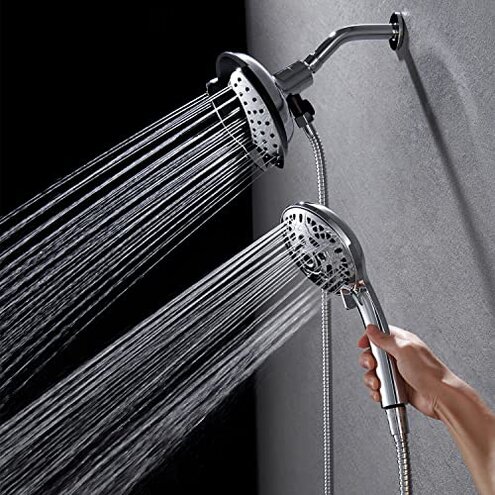
- High-pressure seekers: Avoid if you need consistently strong water flow with two heads running.
- Low-maintenance buyers: Avoid if you do not want to add washers, tape, or perform follow-up tightening.
- Frequent handheld users: Avoid if you expect heavy daily handheld use that stresses the hose and diverter.
Who this is actually good for
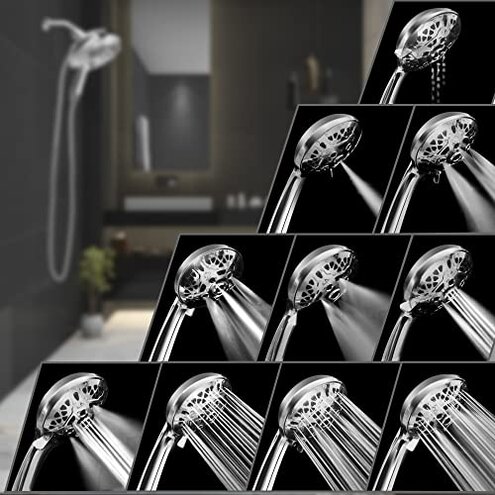
- Budget spa tryers: Good if you want dual-head features at low cost and can tolerate occasional pressure trade-offs.
- DIY fixers: Suitable if you are comfortable adding extra washers or tape to secure fittings.
- Light-use households: Works well where handheld use is occasional and leaks would be noticed and fixed quickly.
Expectation vs reality
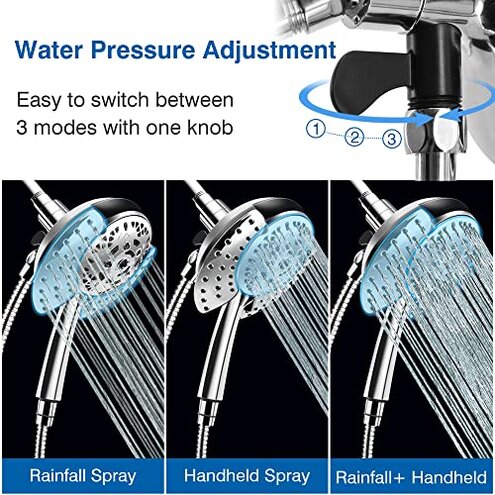
- Expectation (reasonable for this category): A mid-range dual-head should balance flow when both heads run.
- Reality: This model often shows pressure drop in dual mode, making showers weaker than expected.
- Expectation: Tool-free install finishes the job for most buyers.
- Reality: Many buyers must add tape and washers, turning a quick swap into extra work.
Safer alternatives
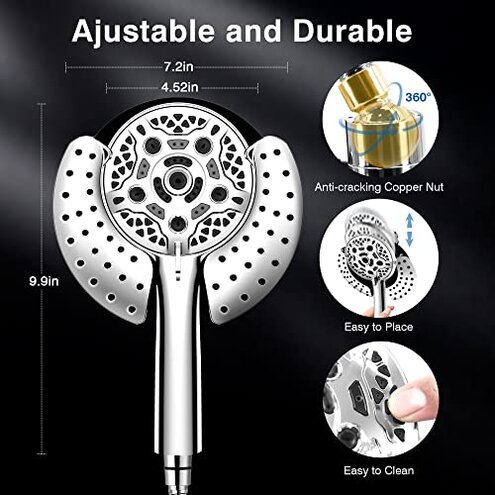
- Choose models with reinforced fittings: Look for products that advertise stronger seals to avoid leaks.
- Prioritize tested dual-flow balance: Prefer units reviewed for stable pressure with both outlets on.
- Check included hardware: Pick options that ship with extra washers and clear install guidance to avoid hidden fixes.
- Prefer braided metal hoses: A sturdier hose reduces kinks and premature wear from regular handheld use.
- Buy from sellers with clear warranty support: Warranty clarity reduces the risk of out-of-pocket replacements.
The bottom line
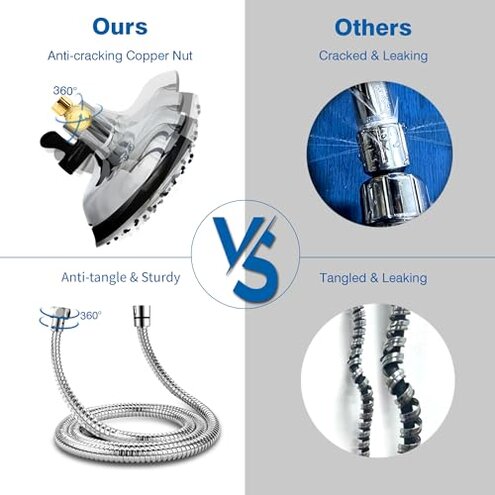
Main regret: The most common trigger is pressure inconsistency and leak risk that appears after setup or during dual-head use.
Why it matters: These failures exceed normal category risk because they require extra parts and hands-on fixes.
Verdict: Avoid if you want a dependable, low-maintenance high-pressure shower; consider alternatives with firmer fittings.
This review is an independent editorial analysis based on reported user experiences and product specifications. NegReview.com does not sell products.