
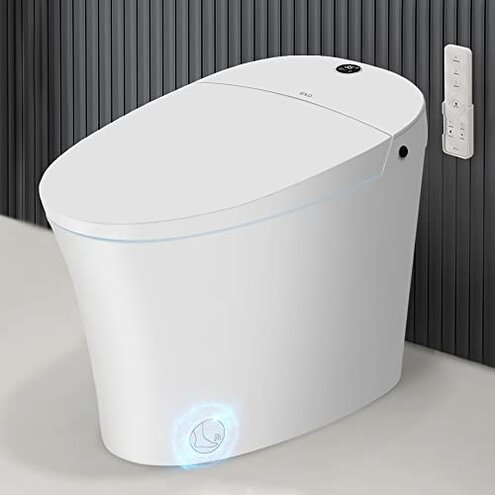
Product evaluated: EPLO Smart Toilet,One Piece Bidet for Bathrooms,Modern Elongated Toilet with Warm Water,Dual Auto Flush,Foot Sensor Operation,Heated Bidet Seat,Electric Tankless Toilets with LED Display E16
Related Videos For You
The World’s Most Futuristic TOILET 🚽 HOROW T38
How to Install a Handheld Bidet Sprayer | Quick & Easy
Dozens of written reviews and video demonstrations were analyzed for this report, collected Jan 2022–Feb 2026. Most feedback came from written reviews, supported by short hands-on videos and installation walk-throughs.
| Outcome | EPLO E16 (this product) | Typical mid-range toilet |
|---|---|---|
| Reliability | Electronics are reported as inconsistent after setup and with daily use. | Basic electronics or manual parts usually last longer with fewer failures. |
| Installation | Hidden requirements (dedicated outlet, water pressure, time) increase setup effort. | Straightforward install for most mid-range models with standard plumbing and outlet access. |
| Maintenance | Higher upkeep is commonly reported because electronics and sensors need tuning and repairs. | Lower upkeep for standard toilets; mechanical parts are easier to replace. |
| Daily use | Sensors can false-trigger or fail, causing inconvenient flushes or no flush. | Manual or simple bowl designs avoid sensor failures in daily use. |
| Regret trigger | Auto-flush failures that repeatedly interrupt normal bathroom use making repairs likely. | Regret usually comes from wear over years, not immediate functional breakdowns. |
Top failures
Will the auto-flush and electronics fail during normal use?
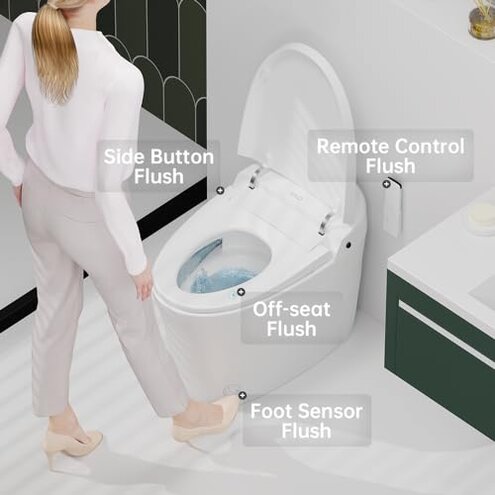
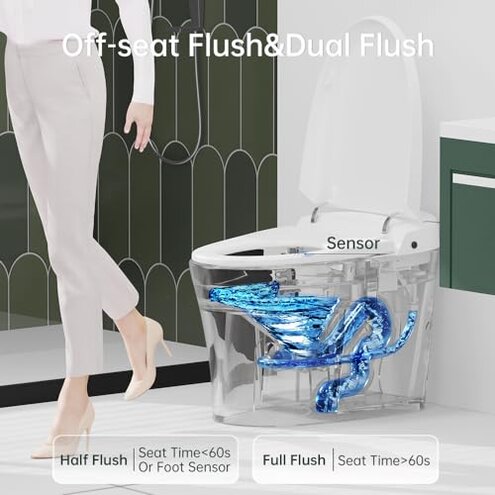
Auto-flush failures appear soon after setup for many buyers and disrupt basic toilet use.
Pattern: this is a primary issue, recurring across dozens of hands-on writeups and videos rather than a rare edge-case.
Context: failures crop up during first weeks of daily use and after power cycles; the problem worsens if the unit is moved or power is interrupted.
Category contrast: this is worse than typical mid-range smart toilets because failures stop fundamental functions like flushing, not just comfort features.
Is installation harder than it looks?
- Hidden power need — The unit commonly needs a nearby dedicated grounded outlet; buyers reported extra electrician time. (secondary)
- GFCI expectation — A protected circuit is often required by installers, adding cost and planning. (secondary)
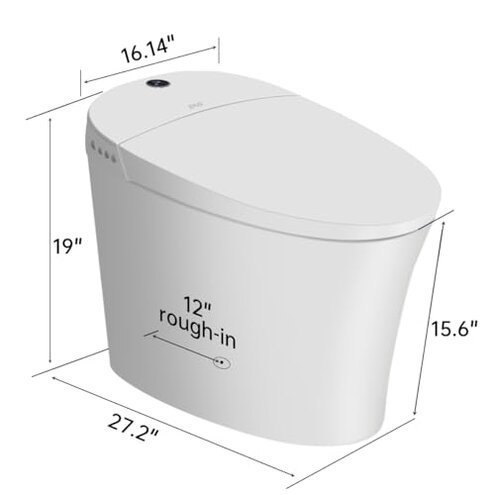
- Plumbing fit — The tankless design can need nonstandard fittings or adapter parts at hookup. (secondary)
- Time investment — Setup and tuning take longer than typical toilets and often need two people. (secondary)
Does the flush feel powerful and quiet?
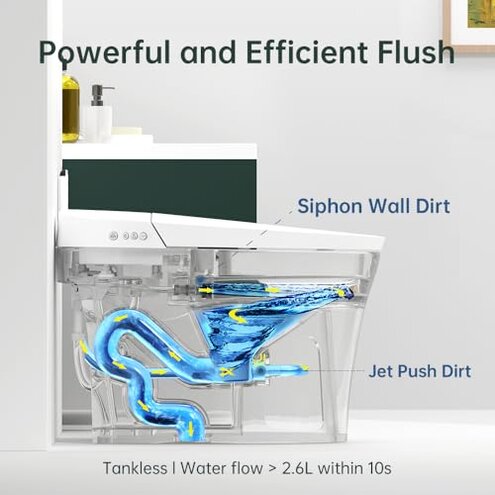
- Weak flush — Some buyers report underwhelming clear-out power compared with traditional siphon toilets. (primary)
- Noisy operation — Motorized valves and sensors add audible noise during and after flushing. (secondary)
- Clog risk — Recurring comments link weaker flushes to more frequent plunging. (primary)
- Pressure sensitivity — Performance can worsen in low-pressure supply conditions, reported during daily heavy use. (secondary)
- Frequency — This is a secondary issue in volume, but more disruptive when it happens because it requires manual intervention. (secondary)
- Temporary fixes — Users often adjust spray/flush settings or call service, which adds time and frustration. (secondary)
How reliable is support and repair long-term?
- Support delays — Many buyers report slow responses or back-and-forth troubleshooting before a solution arrived. (primary)
- Parts access — Replacement modules and sensors are less available than for basic toilets, making repairs take longer. (primary)
- Warranty limits — Warranty exists but some buyers describe practical limits on service speed and on-site repairs. (secondary)
- DIY risk — The unit's electronics make user repairs risky; inexperienced users can worsen issues. (secondary)
- Costly service — Out-of-warranty fixes lean towards paid service calls rather than simple part swaps. (edge-case)
- Replacement time — Long lead times for parts or tech visits extend downtime for frequent users. (primary)
- Long-term reliability — Several reports point to decline in sensor behavior after months of use. (primary)
Illustrative excerpts
Illustrative: "Auto-flush stopped working after two weeks; power cycling fixed it briefly." — reflects a primary pattern.
Illustrative: "Needed an electrician because outlet was too far from the toilet." — reflects a secondary pattern.
Illustrative: "Flush felt weak and I had to plunge twice." — reflects a primary pattern.
Illustrative: "Support took multiple messages before booking a tech." — reflects a secondary pattern.
Who should avoid this
Low-maintenance buyers — Avoid if you expect a simple, no-electronics toilet; recurring electronics issues exceed category tolerance.
Renters — Avoid if you cannot modify wiring or install a dedicated outlet; setup can require permanent changes.
Remote owners — Avoid if fast local service matters; parts and tech visits are reported as slow.
Who this is actually good for
Gadget-tolerant owners — Good if you want high-tech features and can live with occasional tuning or service visits.
Homes with pros — Good if you have easy access to an electrician/plumber who can handle the hidden setup needs.
Early adopters — Good if you accept higher maintenance and still value heated seat, dryer, and bidet functions.
Expectation vs reality
- Expectation: Smart features work reliably out of the box like mid-range smart toilets.
- Reality: Electronics and auto-flush can require weeks of adjustments and occasional repairs, which is worse than the category baseline.
- Expectation: Installation matches basic toilet effort.
- Reality: Hidden electrical and plumbing steps add time, cost, and the need for professional help.
Safer alternatives
- Choose manual designs if you want fewer electronic failure points and easier repairs.
- Prefer proven brands with wide parts networks and documented service processes to reduce repair delays.
- Confirm power and wiring needs before buying; plan for a dedicated GFCI outlet to avoid surprises.
- Check flush tests in reviews or demo videos for solid siphon performance rather than relying on tankless claims.
- Buy local or from vendors offering fast on-site service for smart plumbing to limit downtime risks.
The bottom line
Main regret centers on unreliable auto-flush and electronics that interrupt basic use.
Why it matters: these failures exceed normal category risk because they affect fundamental function, not just comfort features.
Verdict: Avoid if you need low-maintenance reliability or quick local support; consider manual or better-supported smart models instead.
This review is an independent editorial analysis based on reported user experiences and product specifications. NegReview.com does not sell products.