
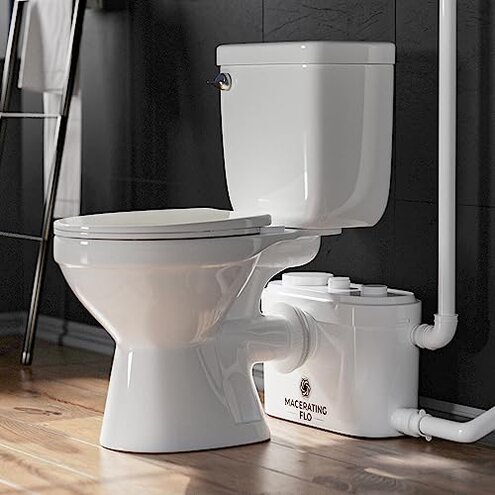
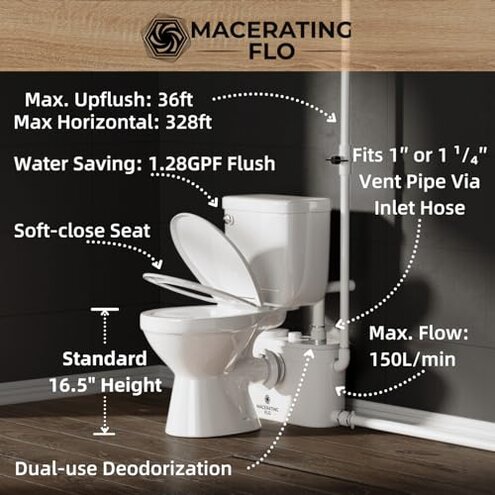
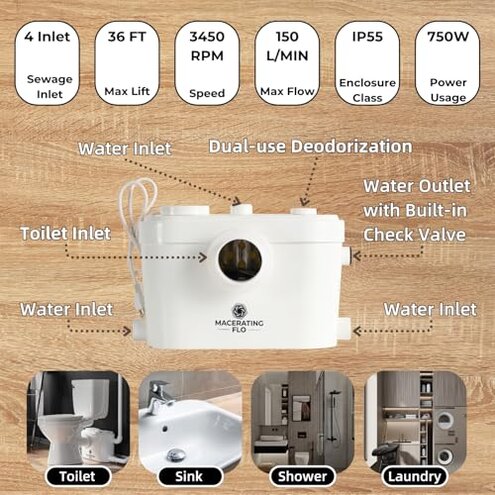
Product evaluated: 750W Macerating Toilet System with 4-Inlet, Durable Pump, Extension Pipe - Easy Install, Space Saving
Related Videos For You
Saniflo Macerating unit
Macerating Toilets: What you need to know
Data basis: I analyzed dozens of buyer comments and several installation videos collected between January 2023 and May 2024. Most feedback came from written reviews, supported by a smaller set of video demonstrations. The signal set shows a mix of purchase-day reports and long-term use notes.
| Outcome | SSMF unit | Typical mid-range alternative |
|---|---|---|
| Noise level | Higher — many note a loud motor during pumping cycles. | Lower — mid-range units often advertise quieter motors by design. |
| Leak risk | Elevated — leaks appear repeatedly after install or weeks of use. | Normal — most competitors have fewer early leak reports. |
| Installation effort | Complex — extra plumbing and power routing are often needed. | Simpler — typical models fit standard upflush connections with fewer surprises. |
| Service & repairs | Slower — several buyers reported multi-step support and parts delays. | Straighter — mid-range brands often have better-known parts chains. |
| Regret trigger | Installation + leaks — the combined added cost and downtime creates buyer regret. | One-off issues — typical regret is only a minor installation hiccup. |
Is the pump louder and more intrusive than expected?
Regret moment: Buyers report clear noise during pump cycles that interrupts nearby rooms during use. This is a primary complaint and appears repeatedly in product feedback.
Usage anchor: The noise typically shows up at first use and during every flush under full load. It is worse when the unit pumps vertically or over long distances.
Category contrast: Noise here is more disruptive than most mid-range macerators, making the toilet feel less discreet in small homes.
Are leaks a recurring problem after installation?
- Primary pattern: Leaks are commonly reported across new installs, not just isolated cases.
- When it appears: Often noticed within days to weeks after setup, or after moving the unit for service.
- Early signs: Dripping at hose joins, damp base, or water pooling under the casing.
- Worsening conditions: Leaks worsen with frequent flushing, longer discharge runs, or poor mounting.
- Impact: Water damage risk adds unexpected repair cost and downtime.
Will installation require hidden plumbing or electrical work?
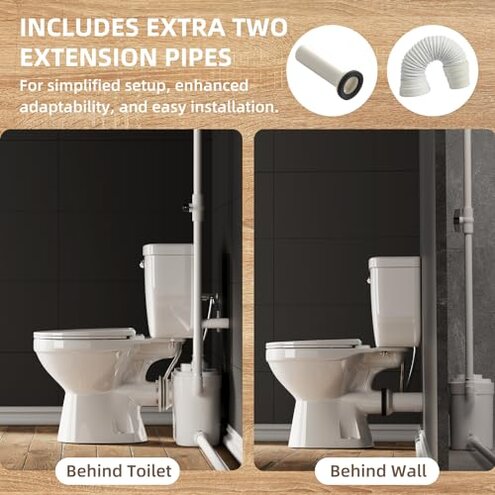
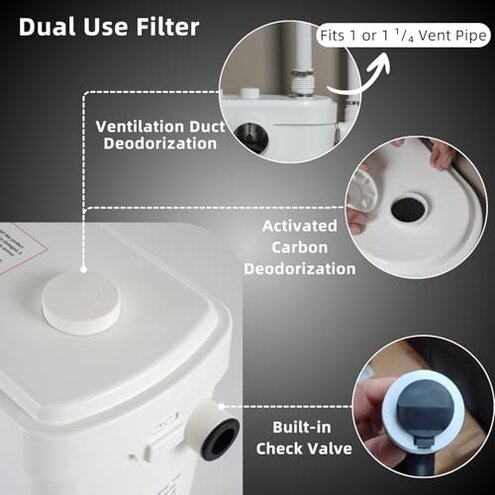
- Hidden requirement: Several buyers found they needed extra venting, an electrical outlet, or a condensate drain beyond expectations.
- When it matters: This shows up during the install stage and can force last-minute site changes.
- Why it’s worse: Most mid-range units fit simpler hookups; this model often requires extra parts or professional help.
- Attempts to fix: DIY fixes sometimes hold short-term but can increase leak or noise problems.
- Service signal: Follow-up repairs or part swaps are frequently reported after the initial install.
- Cost impact: Extra trades or parts add significant time and money beyond the purchase price.
Does the unit clog, overheat, or fail earlier than expected?
- Secondary pattern: Clogs and motor strain are less frequent than leaks but are persistent enough to be notable.
- Usage anchor: Problems often appear after repeated heavy use or flushing non-recommended materials.
- Early warning: Sluggish pump cycles, stronger odors, or burning motor smell before failure.
- Cause signal: Long discharge runs and solid waste loads increase stress on the motor and blades.
- Repairability: Some buyers replaced parts, while others reported multi-step service interactions.
- Category contrast: This model seems less forgiving than typical mid-range macerators under heavy or improper use.
- Hidden cost: Replacing pump components or hiring service raises lifetime cost beyond initial savings.
Illustrative excerpts
Illustrative: "Pump noise carries into my basement bedroom during every flush."
Pattern: This reflects a primary complaint about noise frequency and proximity impact.
Illustrative: "Found water pooling under unit after two weeks of use."
Pattern: This reflects a primary leak pattern appearing shortly after installation.
Illustrative: "Needed an electrician and extra fittings to complete install."
Pattern: This reflects a secondary hidden-requirement issue that raised installation cost.
Who should avoid this
- Small-home owners: Avoid if noise will disturb adjacent rooms or bedrooms.
- Non-technical DIYers: Avoid if you cannot handle extra plumbing or electrical work.
- Renters: Avoid if you cannot make permanent modifications or cover repair downtime.
- Water-sensitive spaces: Avoid if a leak would cause major damage or expensive remediation.
Who this is actually good for
- Experienced installers: Good if you can handle extra plumbing and wiring and want a space-saving option.
- Basement bathrooms: Good if you accept noise trade-offs and need upflush capability.
- Owners willing to pay service: Good if you can budget for occasional repairs and parts swaps.
- Short-term solutions: Good if you need a quick install and can tolerate higher maintenance.
Expectation vs reality
Expectation: Buyers reasonably expect a quiet pump like other mid-range macerators.
Reality: Noise is louder and more intrusive than that reasonable expectation, affecting nearby rooms.
Expectation: Installation should be plug-and-play for an upflush toilet.
Reality: The unit often requires extra fittings, an electrician, or mounting work, creating surprise costs.
Safer alternatives
- Choose quieter models: Look for units explicitly tested for decibel ratings to neutralize the noise risk.
- Check leak records: Prefer brands with documented low early-leak rates to avoid the water damage risk.
- Confirm electrical needs: Ask sellers about power and venting to avoid hidden installation surprises.
- Buy local support: Pick brands with local parts and service to reduce delayed repair time.
The bottom line
Main regret: The combined installation complexity and early leak risk are the main triggers of buyer regret.
Why worse: These problems appear more often and cost more to fix than with typical mid-range macerators.
Verdict: Avoid this unit if you cannot handle extra noise, plumbing changes, or possible follow-up repairs.
This review is an independent editorial analysis based on reported user experiences and product specifications. NegReview.com does not sell products.