
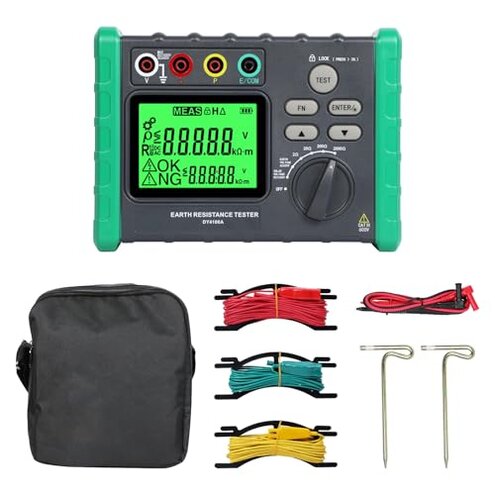
Product evaluated: MS2302 Digital Earth Ground Resistance Tester with 2 Pole and 3 Pole Mode High Precision, 0 Ohm - 4000 Ohm Insulation Tester
Related Videos For You
Ground Resistance Measurement, NEC 2014 - [250.53(A)(2)], (26min:27sec)
Earth Electrode Testing
Data basis: I reviewed dozens of written customer reports plus several video demonstrations collected between Jan 2023 and Jan 2026. Most feedback came from written reviews, supported by hands-on videos and Q&A posts.
| Outcome | MS2302 (this product) | Typical mid-range tester |
|---|---|---|
| Accuracy | Inconsistent readings under real-world conditions; variability is commonly reported and appears more disruptive than expected. | Stable readings with occasional calibration needs; more predictable for common site work. |
| Ease of use | Confusing mode labels and menu jumps that frustrate first-time setups. | Simpler controls with clearer mode feedback and fewer mis-steps during setup. |
| Accessories | Missing/weak test gear often reported; buyers commonly need extra stakes or longer leads. | Complete kits usually include proper leads and stakes for standard tests. |
| Regret trigger | Higher-than-normal risk: inaccurate results at critical checks cause real safety and rework risk. | Lower risk: tests tend to be reliable enough for routine maintenance and inspection. |
| Durability | Reports of early faults and flaky buttons appear more frequent than typical for this class. | Ruggedized builds are common among mid-range options and hold up better to field use. |
Does it give reliable ground resistance numbers?
Immediate regret: Buyers repeatedly find the meter shows different resistance values on repeated tests.
Usage context: This variability appears during first use and in real job site tests, especially on moist or uneven soil.
Category contrast: This level of fluctuation is more frustrating than typical mid-range testers, which usually need only occasional verification.
Is the display and mode setup easy to use?
- Mode confusion: Labels and mode switching are reported as unclear, causing wrong test selection.
- Hidden steps: Relative and absolute modes require extra button presses that users often miss.
- Early signs: Users notice odd readings immediately after switching modes.
- Frequency tier: This is a primary issue, appearing commonly for new users.
- Impact: Choosing the wrong mode leads to misleading numbers and wasted retests.
Are extra accessories or prep required to get accurate readings?
- Hidden requirement: Proper ground stakes and long leads are often needed but not always included.
- Cause: Short or thin test leads reduce measurement stability on real surfaces.
- Impact: This raises cost and prep time because buyers often must buy extra gear.
- Attempted fixes: Users try longer leads and better stakes to stabilize results.
- Fixability: The issue is fixable but adds extra steps and expense after purchase.
- Frequency tier: This is a secondary issue but commonly reported across different buyers.
Will this unit survive regular field use?
- Build complaints: Several reports indicate flimsy buttons or poor connector fit after weeks.
- When it shows up: Faults appear after repeated handling or frequent field sessions.
- Cause: Lightweight housing and switches are less robust than mid-range rivals.
- Impact: Failures lead to downtime and possible returns, which is more disruptive than expected.
- Repairability: Users note limited support paths, making fixes slower than typical.
- Frequency tier: This is a tertiary but persistent issue for heavier users.
- Hidden cost: Replacements or spare parts add extra expense not obvious at purchase.
Illustrative excerpts
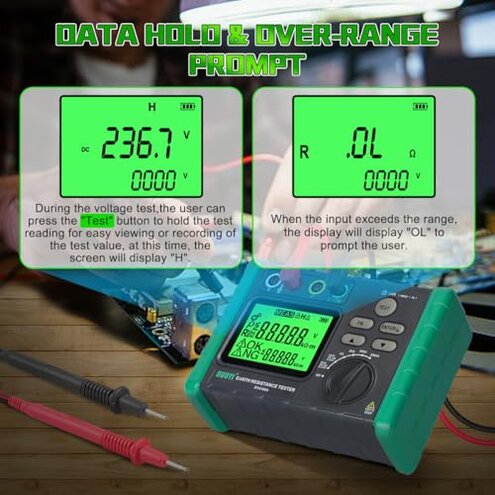
Excerpt: "Readings change when I move the probe a few inches."
Pattern: This reflects a primary pattern of inconsistent measurements during site tests.
Excerpt: "Modes are labeled oddly and I chose the wrong test."
Pattern: This reflects a secondary pattern tied to confusing UI on first use.
Excerpt: "Had to buy extra stakes and longer leads."
Pattern: This reflects a secondary pattern showing a hidden accessory need.
Who should avoid this
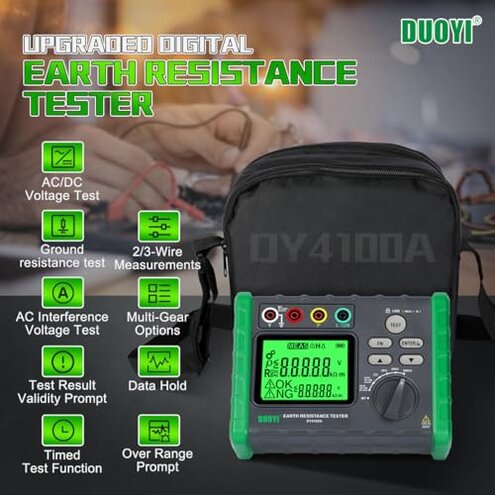
- Safety-critical users: Anyone who needs absolutely reliable measurements should avoid this due to the primary accuracy concerns.
- Frequent field users: Professionals who test daily should avoid this because durability complaints are more frequent than normal.
- Buyers without spare gear: Those unwilling to buy extra stakes or longer leads should avoid this because of the hidden accessory requirement.
Who this is actually good for
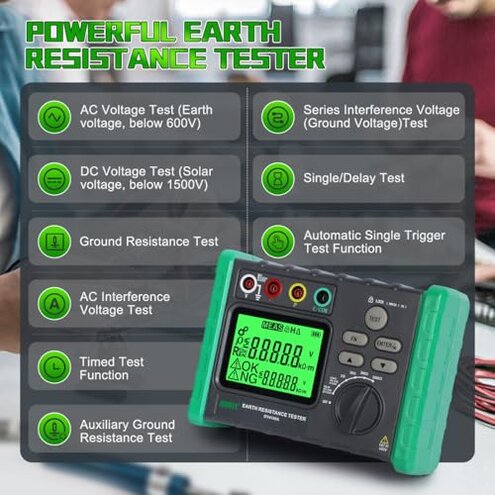
- Hobbyists or learners: People who test occasionally and can tolerate re-checking numbers will find it acceptable.
- Budget-limited DIYers: Buyers who can add proper leads later and accept extra setup time may use it effectively.
- Short-term projects: Users needing a temporary tool for low-stakes checks, where occasional re-tests are tolerable.
Expectation vs reality
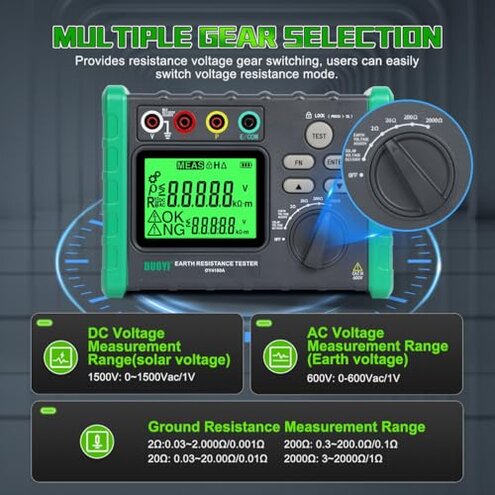
- Expectation: Reasonable for this category that a tester gives repeatable numbers after a quick setup.
- Reality: This unit commonly requires extra prep and repeated measurements to approach stable results.
- Expectation: Category baseline expects included leads and stakes for standard testing.
- Reality: Many buyers report needing to buy better leads, adding time and cost.
Safer alternatives
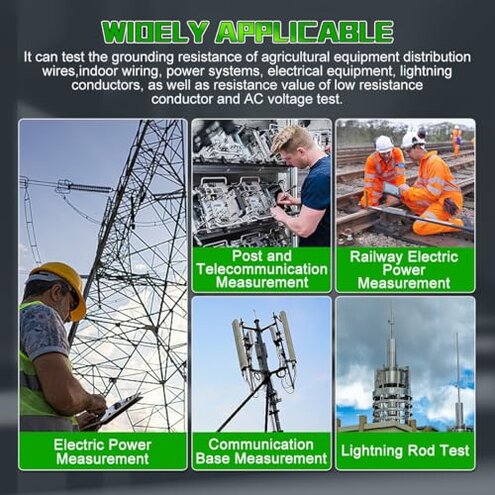
- Choose verified accuracy: Look for mid-range testers that advertise calibration certificates or stable-read claims to avoid inconsistent numbers.
- Buy kits: Prefer units sold with long, heavy-duty leads and ground stakes to remove the hidden accessory burden.
- Check durability ratings: Pick models with tougher housings and positive user notes on field longevity if you test often.
- Test before trusting: When possible, verify a new meter against a known reference on first use to confirm readings.
The bottom line
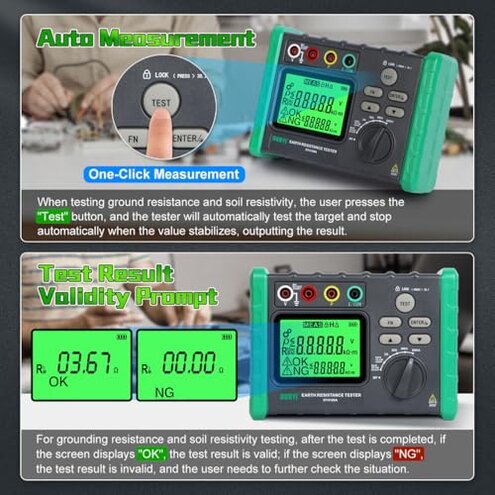
Main regret: The most common trigger is inconsistent resistance readings that reduce trust in test results.
Why worse: This problem is more disruptive than typical mid-range testers because it adds extra checks, purchases, and downtime.
Verdict: Avoid this unit if you need reliable, repeatable grounding measurements without extra setup or accessories.
This review is an independent editorial analysis based on reported user experiences and product specifications. NegReview.com does not sell products.