
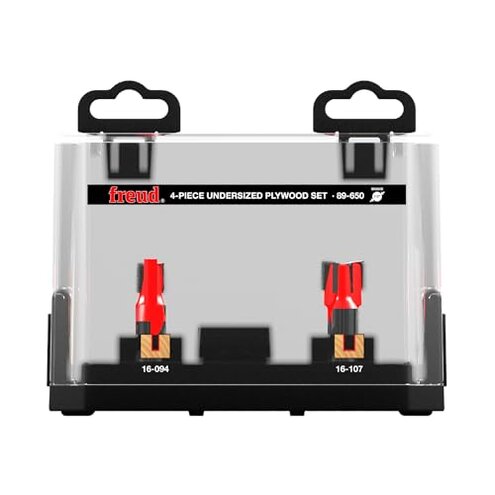
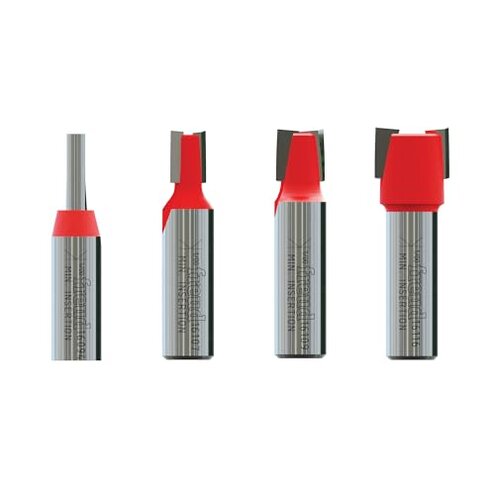
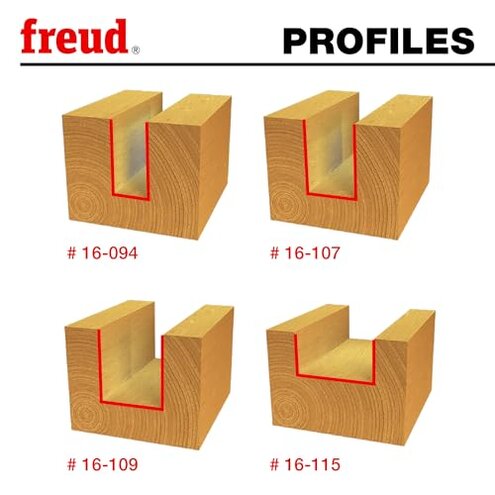
Product evaluated: Freud 4 Piece Undersized Plywood Bit Set - Ideal for Routing Accurate Grooves in Undersized Panels - 1/2" Shank, Fits 1/4"-3/4" Thickness - 89-650
Related Videos For You
99% of Beginners Don't Know the Basics of Router Bits
Router Bits for Beginners | Rockler Skill Builders
Data basis: Dozens of buyer reports and video demonstrations were reviewed between 2018 and 2025. Most feedback came from written reviews, supported by demonstration videos. The synthesis focuses on recurring, user-visible problems rather than rare praise.
| Outcome | Freud 89-650 | Typical mid-range router bit set |
|---|---|---|
| Fit accuracy | Inconsistent cuts reported; fits can be loose on undersized plywood. | Generally steady for plywood panels with fewer adjustments needed. |
| Durability | Premature dulling appears repeatedly after normal use, higher-than-normal wear. | Better retention across the category; fewer mid-term sharpening needs. |
| Setup friction | Needs calibration (depth/alignment) to get snug joints. | Lower setup burden for typical mid-range sets. |
| Storage & protection | Wooden case protects lightly but may not prevent nicks during transport. | Foam or plastic cases on alternatives provide firmer protection. |
| Regret trigger | Loose joints & quick dulling cause wasted panels and extra work. | Fewer reworks for typical mid-range choices. |
Why are my routed plywood grooves not snug?
Regret moment: You cut a panel and the joint is loose, so glue gaps appear and trim work is needed.
Pattern: This is a primary issue that appears repeatedly in user reports, especially after the first setup cuts.
Usage anchor: Problem shows up during initial installation and when switching plywood thicknesses; small depth changes magnify the gap.
Category contrast: This feels worse than normal because most mid-range sets require less fine-tuning for snug plywood joints.
Do the bits dull faster than expected?
- Early sign: Users notice rougher cuts after only a few panels.
- Frequency tier: This is a secondary issue reported frequently enough to affect project timelines.
- Cause: Reports point to edge wear during routine routing of veneered plywood.
- Impact: Faster sharpening or replacement adds extra cost and downtime compared with category norms.
Why is there vibration or wobble when routing?
- Observation: Some buyers report shank runout and noticeable vibration.
- When it happens: Appears during longer routing passes or at higher RPMs.
- Scope signal: This is a persistent but not universal complaint across reviews and demonstrations.
- Cause hint: Poor collet seating or slight bit out-of-roundness magnifies wobble.
- Effect: Vibration worsens cut quality and can increase wear on both bit and router.
- Fixability: Requires collet checks, precise tightening, and sometimes replacement to cure.
Do I need extra setup, shims, or calibration to get a snug joint?
- Hidden requirement: Many buyers discover a need for fine calibration beyond “plug-and-play.”
- Early sign: Initial trial cuts show visible gaps that require depth tweaks.
- Frequency tier: This is a primary issue for users seeking tight cabinetry tolerances.
- Why it matters: Unlike some mid-range kits, this set often needs shimming or micro-adjustments to match plywood thickness exactly.
- Attempts: Buyers report extra steps like multiple test strips and adjusting router fences.
- Impact: Adds project time and material waste when precision is required.
- When worse: Problems increase when switching between veneered and composite panels.
Illustrative excerpts (not real quotes)
"Cuts felt loose, needed three test pieces to dial depth." — reflects a primary pattern.
"Edge seemed dull after routing five cabinet doors." — reflects a secondary pattern.
"Router vibrated until I rechecked the collet and retightened." — reflects an edge-case pattern.
Who should avoid this
- Precision cabinetmakers who require snug joints without extra setup.
- High-volume shops where premature dulling causes extra downtime and cost.
- Mobile tradespeople who rely on rugged, fully protective cases for transport.
Who this is actually good for
- Hobby woodworkers who accept extra test cuts and light sharpening to save upfront cost.
- Occasional DIYers making one-off cabinets who can tolerate extra setup time.
- Users comfortable with tuning (collet checks and depth trimming) to achieve snug fits.
Expectation vs reality

Expectation (reasonable): Router bit sets should produce consistent grooves for undersized plywood with minimal setup.
Reality: This set often needs multiple test passes and sharpening sooner than category peers.
Expectation (reasonable): A wooden case should protect bits during transport.
Reality: The case provides basic protection but may not prevent nicks if jostled.
Safer alternatives

- Choose bits with stronger edge retention to reduce the premature dulling problem.
- Pick sets with precision-matched shanks or buy a test collet to reduce wobble.
- Use foam or molded cases to neutralize the light protection of the included wooden box.
- Plan for calibration time in project schedules to handle the hidden setup requirement.
The bottom line

Main regret: Users mainly report inconsistent fit and faster dulling, which leads to rework and extra sharpening.
Why it matters: These issues exceed normal category risk for buyers needing fast, repeatable results.
Verdict: Avoid this set if you need plug-and-play precision; consider it only if you accept extra setup and maintenance.
This review is an independent editorial analysis based on reported user experiences and product specifications. NegReview.com does not sell products.