
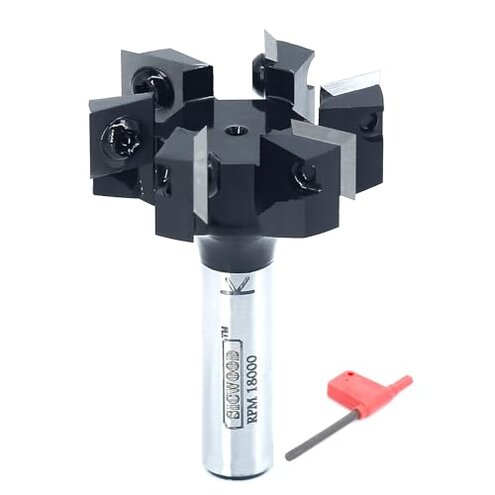
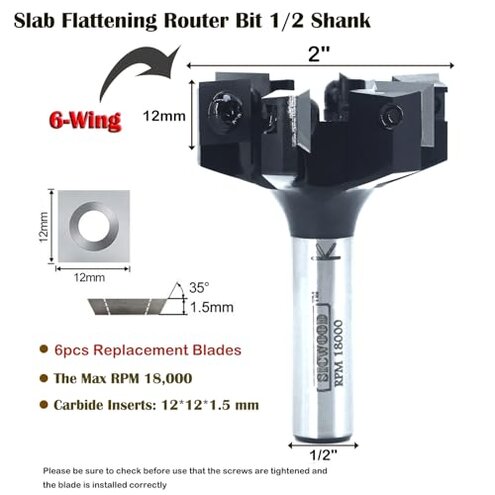
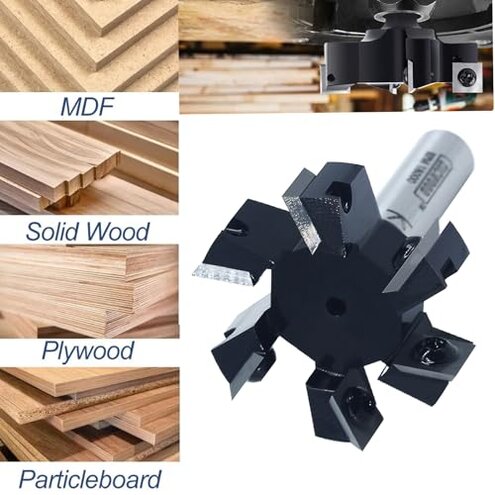
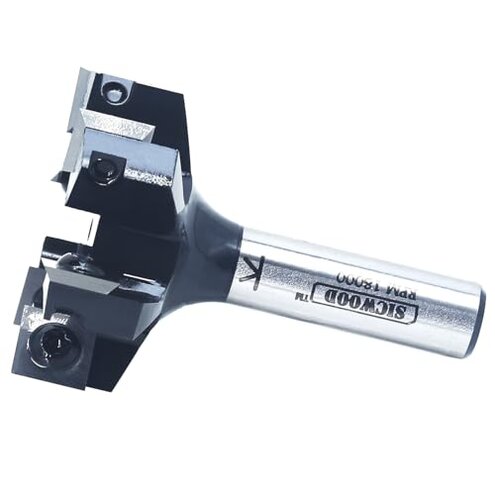
Product evaluated: Slab Flattening Router Bit 1/2 Shank, 6-Wing, 2" Cutting Dia, Insert Carbide CNC Spoilboard Surfacing Router Bit, Wood Planer Planing Bit for Flycutter/ Slab Leveler/ Rabbeting by SICWOOD
Related Videos For You
Flattening Boards with a Router Sled
How to clean, maintain and sharpen your Router Bit - Diamond Cross Sharpening
Data basis: I analyzed dozens of buyer comments collected from written reviews and video demonstrations between Dec 2023–Jan 2026. Most feedback came from written reviews, supported by hands-on video tests and Q&A posts.
| Outcome | SICWOOD (this product) | Typical mid-range alternative |
|---|---|---|
| Finish quality | Uneven cuts reported more often; users saw visible tear-out on slabs. | Smoother finish is common with comparable bits when properly set up. |
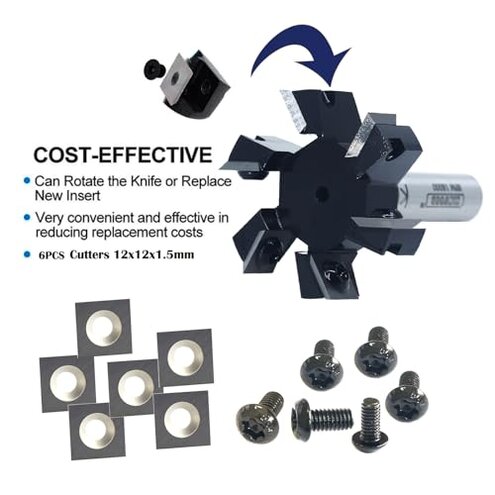
| Insert longevity | Faster wear on carbide inserts compared with category expectations, causing frequent replacement. | Longer life is typical for mid-range bits with similar use patterns. |
| Setup sensitivity | High setup need — requires very rigid sled rails and tight screws to perform well. | More forgiving setups are usual for mid-range spoilboard bits. |
| Compatibility | Specific fit issues appear when used on non-square or loose sleds. | Broader fit works across most router sleds without extra mods. |
| Regret trigger | High — finish defects plus insert wear combine into higher-than-normal replacement cost. | Moderate — fewer combined failures for mid-range alternatives. |
Top failures
Why does the surfacing leave tear-out and chatter?
Regret moment: Buyers notice tear-out or chatter during the first full pass on live slabs, which ruins prep time.
Pattern & context: This issue is commonly reported after initial setup and during longer flattening passes, especially on figured hardwoods.
Category contrast: The problem feels worse than normal because mid-range spoilboard bits usually produce an acceptable surface without extra sanding.
Why do the carbide inserts wear or chip quickly?
- Recurring pattern: Insert damage is a primary issue seen repeatedly across buyer reports.
- When it shows up: Wear appears after repeated use, not just first session, and worsens with abrasive materials.
- Cause clue: Users link faster wear to aggressive feeds, high RPM sessions, or abrasive epoxy in slabs.
- Impact: Faster replacement leads to higher ongoing cost than buyers expected for this price tier.
- Attempted fixes: Buyers reported swapping inserts often or reducing cut depth to extend life, which cuts productivity.
Why is installation and alignment so picky?
- Hidden requirement: The bit needs a very rigid sled and perfectly square rails to avoid wobble.
- Usage anchor: Problems appear during first setup when users skip rail shimming or loose fasteners.
- Frequency tier: This is a secondary issue that appears across multiple reports but not universally.
- Why worse than normal: Most mid-range options tolerate minor sled play; this one magnifies it.
- Practical impact: Expect added setup time, trial cuts, and possible hardware upgrades before acceptable results.
- Fixability: Fixing requires mechanical adjustments rather than a simple blade change.
Why do buyers find the value lower than expected?
- Value complaint: The combination of finish issues and insert replacement reduces perceived value.
- When it becomes clear: This is obvious after a few projects when ongoing costs appear.
- Scope: This is a primary issue for regular slab flatteners and a secondary annoyance for occasional users.
- Attempts to mitigate: Buyers tried buying extra inserts or slowing feeds, which lowered throughput.
- Comparison note: Mid-range bits often balance life and finish better for similar budgets.
- Hidden cost: You may spend extra time and money on sanding, inserts, or sled upgrades.
- Decision impact: For buyers expecting plug-and-play surfacing, this product raises total project time and expense.
Illustrative excerpts
Illustrative: "Left deep tear-out on the first full pass, had to sand for hours." — Primary
Illustrative: "Inserts showed tiny chips after only three slab runs, disappointing lifespan." — Primary
Illustrative: "Needed to re-square rails and tighten everything before usable results." — Secondary
Illustrative: "Worked fine on MDF but struggled on figured walnut edges." — Edge-case
Who should avoid this
- Professional slab mills: If you value consistent finish and high throughput, this product is riskier than typical options.
- High-volume users: Regular users who don't want frequent insert replacement should avoid it.
- Buyers with loose sleds: If your sled rails are not perfectly rigid, you face alignment failures that worsen results.
Who this is actually good for
- Budget hobbyists: Occasional users willing to accept extra sanding and buy spare inserts can get acceptable results.
- DIY upgrader: Someone ready to invest time in sled tuning and setup can make it work.
- Non-figured woods: Users flattening soft or uniform boards where tear-out risk is low may be satisfied.
Expectation vs reality
- Expectation (reasonable for this category): A surfacing bit should give a mostly flat, sandable finish after one pass.
- Reality: This bit often needs multiple passes, sanding, or feed reductions to reach that state.
- Expectation: Carbide inserts should last through several slab jobs without visible chipping.
- Reality: Inserts commonly show wear sooner, increasing cost and downtime.
Safer alternatives
- Choose a more forgiving bit: Look for mid-range surfacing bits noted for longer insert life to reduce replacements.
- Prioritize finish quality: Pick bits advertised for clean cuts on figured hardwoods to avoid heavy sanding.
- Check compatibility: Select bits with user notes about forgiving setup if your sled isn't rigid.
- Buy extra inserts: If you still buy this, include spare inserts to avoid project delays from early wear.
The bottom line
Main regret: The combination of finish defects and faster insert wear is the main buyer trigger to regret this purchase.
Why it matters: Those combined issues increase setup time, sanding, and replacement costs beyond normal expectations for this category.
Verdict: Avoid if you need reliable, low-maintenance slab flattening; consider mid-range alternatives for better balance.
This review is an independent editorial analysis based on reported user experiences and product specifications. NegReview.com does not sell products.