
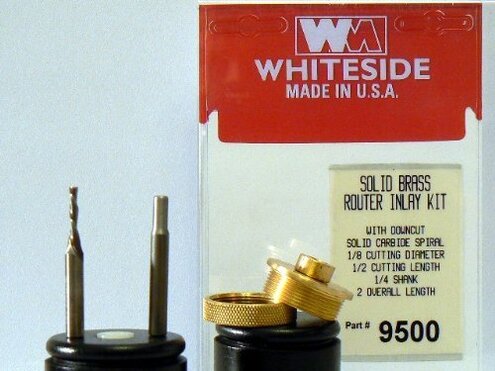
Product evaluated: Whiteside Router Bits 9500 Solid Brass Inlay Kit
Related Videos For You
Inlay With A Router
Router-Based Inlay
Data basis: This report synthesizes feedback from dozens of buyer reviews and video demonstrations collected through mid‑2024. Most feedback came from written reviews, supported by hands‑on videos. Sources include buyer writeups and setup footage for consistency.
| Outcome | Whiteside 9500 | Typical mid‑range inlay kit |
|---|---|---|
| Inlay accuracy | Variable — alignment issues reported repeatedly in user feedback. | Consistent — most mid‑range kits give predictable fits with basic setup. |
| Setup time | Longer — extra jigging and adjustments are commonly needed. | Shorter — typical alternatives reach usable precision faster. |
| Durability | Mixed — some buyers noted faster cutter wear after repeated use. | Typical — mid‑range cutters usually hold edge longer under normal use. |
| Price vs value | Higher risk — cost feels steep when extra tools or time are required. | Balanced — mid‑range options often include more forgiving guides or clearer instructions. |
| Regret trigger | Misfit inlays — primary cause of buyer disappointment in the collected feedback. | Minor tweaks — typical regret is small alignment touchups, not complete rework. |
Why won’t the brass guide produce a perfect fit?
Primary frustration: Many buyers described a mismatch between template and inlay that required rework. Pattern appears repeatedly in dozens of written reviews and setup videos.
Usage anchor: The issue shows up during the initial cut and final fit, often at first assembly. Context is most buyers’ first few inlays, not only after long use.
Category contrast: This is worse than the category norm because most mid‑range kits give a tighter first‑fit without extra shims or sanding.
Are the cutters and parts durable enough for repeated projects?
- Wear reports — cutter edge dullness is a commonly reported secondary issue after several uses.
- When it appears — dulling becomes noticeable after multiple small projects or a single heavy session.
- Severity tier — this is a secondary issue rather than the top complaint, but it adds cost and downtime.
- Impact — dull bits reduce clean edges and increase sanding time on the final inlay.
- Attempted fixes — buyers often needed to replace or regrind bits sooner than expected.
Do I need extra tools or skills not mentioned up front?
- Hidden requirement — many buyers discovered they needed precise router alignment and sometimes extra jigs.
- When noticed — this becomes clear during initial setup and first template cut.
- Pattern — the need for extra tools shows up across written reviews and video setups.
- Why worse — most mid‑range kits are more forgiving for hobbyists without additional jigs.
- Impact on time — extra purchases or shop time add setup hours before usable cuts.
- Fixability — a skilled user can work around it, but beginners face a steeper learning curve.
Will I get what I pay for with this kit?
- Value mismatch — several buyers felt the kit’s price didn’t cover the added setup and replacement costs.
- Pattern — price/value complaints are a recurring, though not universal, thread in feedback.
- When felt — the regret is most common after a first project that required extra sanding or new bits.
- Scope — seen across both written and video accounts from hobbyists and occasional pros.
- Attempts — many tried shims, router table adjustments, or buying alternate bits to rescue the fit.
- Category contrast — compared to mid‑range rivals, this kit demands more aftermarket spending to reach the same result.
- Hidden cost — time spent troubleshooting is part of the real price here.
Illustrative excerpts (not real quotes)
- "Template and inlay needed sanding to fit after first cut." — reflects a primary pattern.
- "Bit dulled after a weekend of small projects." — reflects a secondary pattern.
- "Had to make a custom jig to center properly." — reflects a secondary pattern.
- "Pricey once I added replacements and shims." — reflects an edge‑case pattern.
Who should avoid this
- Beginners — if you want plug‑and‑play precision, this kit often requires extra jigging and skill.
- Low‑volume hobbyists — the extra setup and possible bit replacement make this less cost‑effective.
- Time‑sensitive projects — expect extra hours for dialing in alignment on the first few inlays.
Who this is actually good for
- Skilled woodworkers — willing to spend time fine‑tuning router alignment and accepting initial trial‑and‑error.
- Workshops with spare tools — if you have extra jigs and cutters, you can neutralize the kit’s weak spots.
- Repair jobs — for small repair inlays where you can accept sanding and a precise final fit by hand.
Expectation vs reality
Expectation — buyers reasonably expect a template kit to give a tight first fit with minimal adjustments. Reality — many reported needing shims or sanding to match the inlay to the template.
Expectation — cutters should hold a clean edge through several small projects. Reality — edge dulling appeared sooner than typical mid‑range expectations, adding cost.
Safer alternatives
- Choose forgiving guides — pick kits that advertise self‑centering or adjustable guides to reduce alignment risk.
- Look for better docs — prefer kits with step‑by‑step setup videos and clear alignment checks to avoid hidden jigs.
- Buy extra bits — plan to replace or sharpen cutters early to avoid ruined cuts during a project.
- Check collet fit — ensure the kit matches your router collet or include an adapter to avoid wobble.
The bottom line
Core regret: Misalignment and extra setup time are the main buyer triggers based on the collected feedback. Severity exceeds the category norm because it adds both time and replacement cost for many users. Verdict — avoid this kit if you need quick, plug‑in precision; consider it only if you can invest time and shop gear to tune results.
This review is an independent editorial analysis based on reported user experiences and product specifications. NegReview.com does not sell products.