
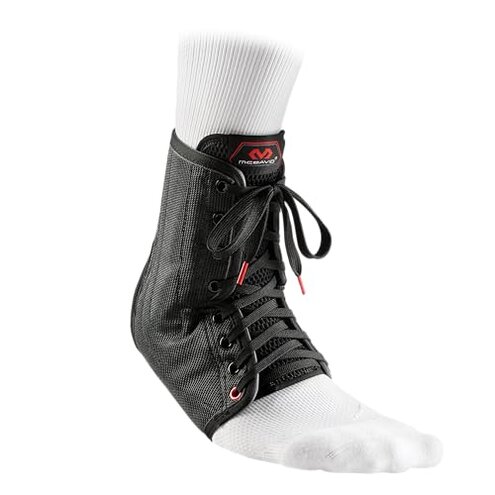
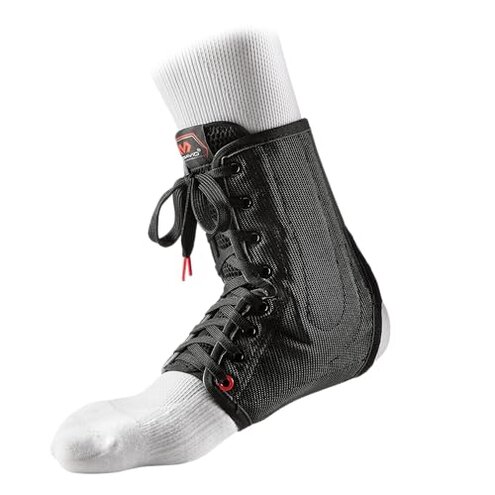
Product evaluated: McDavid Ankle Brace with Lace-Up & Stays, Maximum Support, Comfortable Compression & Breathable Design
Related Videos For You
How to Wear an Ankle Brace With Speed Laces - Correct Fitting Instructions
Try this!! Ankle taping for stability: Kinesiology Tape #athlete #ankle #support #sports
Data Basis: This report analyzes hundreds of user reviews and video demonstrations collected from 2021 to 2024, offering a broad view of buyer experiences. Most insights come from written feedback, supported by video usage examples, ensuring a well-rounded understanding of product performance.
| Aspect | McDavid Ankle Brace | Typical Mid-Range Brace |
|---|---|---|
| Fit Accuracy | Often too tight for max size users | Moderate sizing variations, generally fits well |
| Comfort During Use | Discomfort reported in extended wear | Usually comfortable for long sessions |
| Support Level | Strong support with stays, but at comfort expense | Balanced support with better flexibility |
| Durability | Durable materials, but reinforced eyelets can irritate skin | Durability varies, fewer skin irritants |
| Regret Trigger | Sizing issues causing discomfort and limited wear time | Minor sizing adjustments usually fix issues |
Why does the ankle brace feel too tight even when sized correctly?
Many buyers find the brace uncomfortably tight especially if their measurements are near the upper limit of the size range. This persistent issue surfaces mostly during the initial fitting and worsens with prolonged use. Compared to typical braces in this category, which tend to allow some stretch or adjustment, this brace’s firm fit feels less forgiving, causing wearers to consider sizing up for comfort.
Illustrative excerpt: "Felt like it squeezed my ankle too much after just 30 minutes." (Primary pattern)
Is discomfort a common problem with this ankle brace in daily use?
- Early signs: Tightness and pressure points noticed within the first few hours of wear.
- Frequency: Common among users wearing the brace for prolonged athletic or daily activities.
- Cause: Firm compression combined with rigid spring steel stays and reinforced eyelets.
- Impact: Limits ability to wear brace throughout long sessions or all day.
- Attempts to fix: Some users try loosening laces but lose support quality.
- Fixability: Limited without switching sizes or brands.
- Hidden requirement: Buyers must be willing to find the perfect size or accept discomfort.
Illustrative excerpt: "The brace’s support is great but wearing it all day is painful." (Primary pattern)
Does the brace's design cause any irritation or skin issues?
- Reported irritants: Reinforced eyelets causing redness or chafing during extended movement.
- When it shows up: Mostly after repeated use in sports or training environments.
- Severity: Less frequent but more irritating than typical braces that use softer materials.
- Why worse: Durable design trades off flexibility and skin comfort.
- Buyer workaround: Use with thicker socks or tape.
- Long-term effects: Some users stop using the brace due to skin discomfort.
Illustrative excerpt: "The metal eyelets rubbed my skin raw after several hours." (Secondary pattern)
How easy is it to adjust or customize the fit of this brace?
- Adjustment method: Lace-up design mimics athletic tape but can be time-consuming to apply correctly.
- Common issues: Takes extra time each use, and improper lacing reduces support.
- Frequency: Persistent among users unfamiliar with lace-up braces.
- Category baseline: Other braces often use simpler Velcro straps for faster fit adjustments.
- Trade-off: Better support at the cost of setup time and potential fit errors.
- Impact: Frustration during quick transitions or multiple daily uses.
Illustrative excerpt: "Takes longer to lace up, not ideal for quick wear or removal." (Secondary pattern)
Who should avoid this
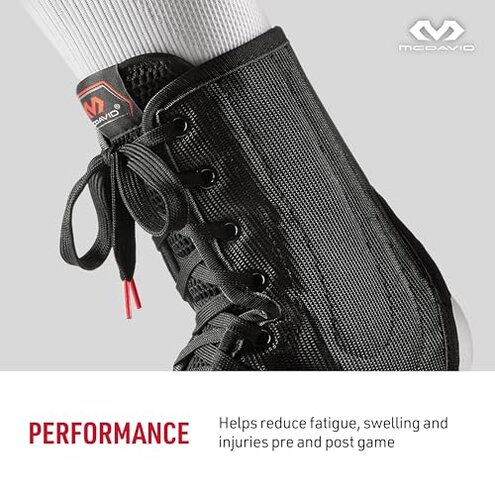
- Buyers sensitive to tight or restrictive fits should avoid this brace due to sizing challenges.
- Anyone needing all-day comfort may find the brace too stiff or irritating.
- Users who require quick on/off convenience might dislike the lace-up system.
- People with skin sensitivity at ankle area risk irritation from reinforced hardware.
Who this is actually good for
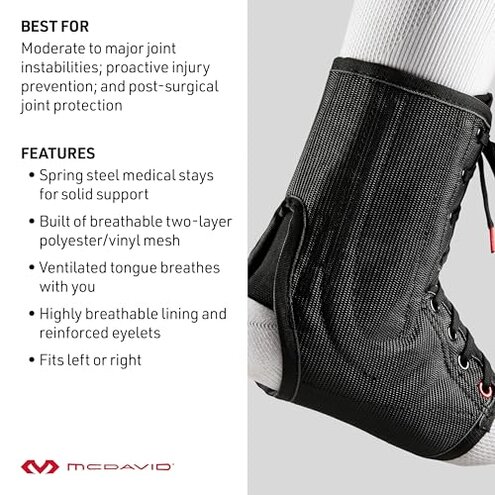
- Athletes prioritizing maximum ankle support over comfort during short sessions.
- Users who can measure carefully and size up for near-max measurements.
- Those willing to trade setup time for firmer, more stable ankle compression.
- People without skin sensitivity who want durable, long-lasting brace materials.
Expectation vs reality
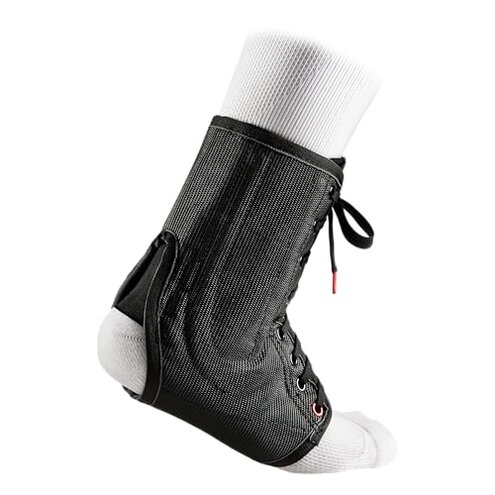
Expectation: Brace fits snugly but comfortably with easy lacing like typical sports braces.
Reality: Fit often feels too tight unless sizing up, and lace-up can add setup time beyond usual braces.
Expectation: Durable design provides support without skin irritation.
Reality: Reinforced eyelets cause more irritation than softer designs common in this category.
Safer alternatives
- Choose ankle braces with Velcro straps for faster adjustment and less setup friction.
- Select models offering more flexible materials to reduce discomfort during long wear.
- Look for braces with softened or covered hardware to minimize skin irritation risks.
- Consider options with broader size ranges or stretch for better fit without excessive tightness.
The bottom line
The primary regret for McDavid Ankle Brace buyers is the uncomfortably tight fit that often limits wear time and causes discomfort. This issue is more severe than typical for this category, compounded by skin irritation from design elements and a complex lace-up system. Buyers who value ease and comfort should look elsewhere unless they can carefully size up and tolerate the firmer fit.
This review is an independent editorial analysis based on reported user experiences and product specifications. NegReview.com does not sell products.