
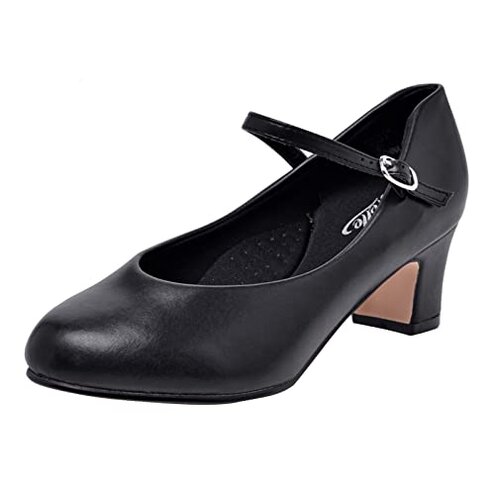
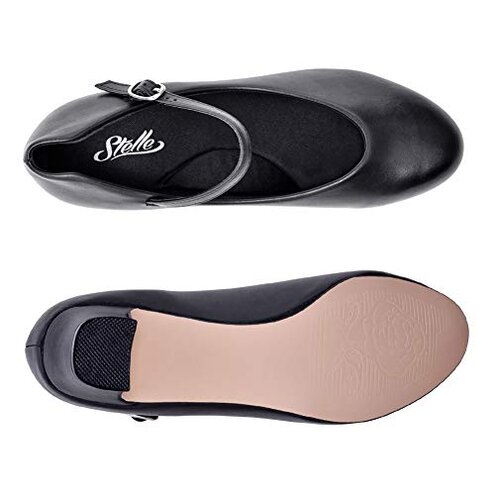
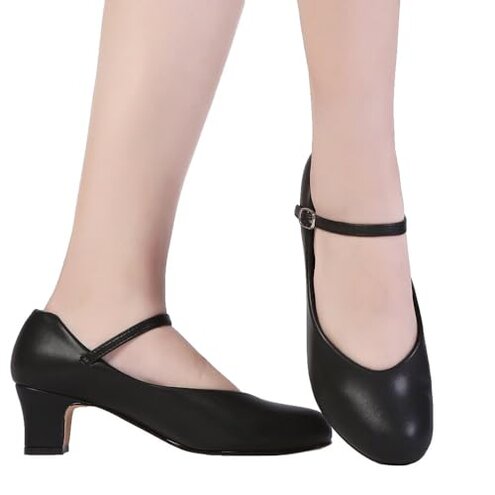
Product evaluated: Stelle Character Shoes for Women Dance Shoes 1.5"/2" Ankle Strap Dancing Heels for Ballroom Salsa Tango Flamenco Latin (2''Black,8MW)
Related Videos For You
Learn How to Dance High Heels in 15 min | Tutorial for Beginners
Pointe Shoe Fitting for ADULTS
Data basis: This report used dozens of written reviews, Q&A posts, and video demonstrations collected through January 2026, with most feedback from written reviews supported by demonstration clips.
| Outcome | Stelle (this listing) | Typical mid-range alternative |
|---|---|---|
| Fit accuracy | Variable — sizing complaints appear repeatedly and often require exchanges. | More reliable — most mid-range peers fit true with fewer exchanges. |
| Comfort for long sessions | Mixed — memory-foam insole helps short wear but often fails on long dances. | Better padding — competitors often use thicker supportive insoles for long wear. |
| Durability | Higher risk — scuffing and sole wear reported sooner than expected for the category. | Lower risk — mid-range shoes usually last longer before visible wear. |
| Heel stability | Occasional issues — strap adjustment and heel wobble appear in active use. | More secure — comparable shoes typically have firmer heel blocks and straps. |
| Regret trigger | Fit + wear — mismatched sizing combined with faster wear is the main buyer regret. | Single-issue — most buyers face either fit or wear, not both together. |
Top failures
Does the shoe actually fit like the listing says?
Regret moment: Many buyers find the fit wrong on first wear, creating immediate exchange headaches.
Pattern: This is among the most common complaints and appears repeatedly across sizes and widths.
When it shows: Fit problems appear at first use and often when trying to walk or dance for the first 10–30 minutes.
Why worse than normal: Unlike many mid-range dance shoes that run true, this product often requires ordering an extra size or width, which adds returns and fitting time.
Will these hold up after a few wears?
- Early signs: Scuffing and shiny creases appear commonly after only a few wears.
- Frequency tier: This is a primary issue that appears repeatedly, not just one-off cases.
- Usage anchor: Wear shows up during regular practice sessions and street-to-studio use.
- Cause: Surface finish and thin sole materials seem to accelerate visible wear.
- Impact: Premature wear shortens useful life and raises replacement cost relative to similar-priced shoes.
Are these comfortable for long rehearsals or performances?
- Primary sign: Cushioning feels adequate for short use but degrades in longer sessions.
- Secondary sign: Arch support is commonly described as minimal, which stresses feet over hours.
- When it gets worse: Discomfort increases during long rehearsals, turning into hotspots or rubbing.
- Attempts to fix: Buyers often add aftermarket insoles or heel pads to restore comfort.
- Fixability: Moderate — aftermarket insoles help but require extra cost and fitting time.
- Hidden requirement: Some buyers must plan for an extra insole purchase before long use.
Will the heel and strap stay secure during turns and fast movement?
- Early sign: Strap buckles can feel loose or need frequent re-adjustment in active use.
- Frequency tier: This is a secondary but persistent issue for users who pivot, turn, or dance quickly.
- Usage anchor: Problems appear during choreography or social dancing that includes quick weight shifts.
- Cause: Narrow ankle straps and light buckles can allow micro-movement at the heel.
- Impact: Heel wobble reduces confidence and can cause slips during complex steps.
- Attempted fixes: Users tighten straps, add tape, or use silicone heel grips to reduce slippage.
- Category contrast: Less secure than typical mid-range character shoes, which usually have firmer heel blocks.
- Hidden cost: Fixes add time and small purchases, making the total cost higher than the listing price.
Illustrative excerpts (not real quotes)
Excerpt: "Size felt small right away, needed to order one size up." — primary pattern
Excerpt: "Cushioning wore down after two rehearsals, needed extra insoles." — secondary pattern
Excerpt: "Strap creaked and loosened during turns, was unnerving." — secondary pattern
Who should avoid this
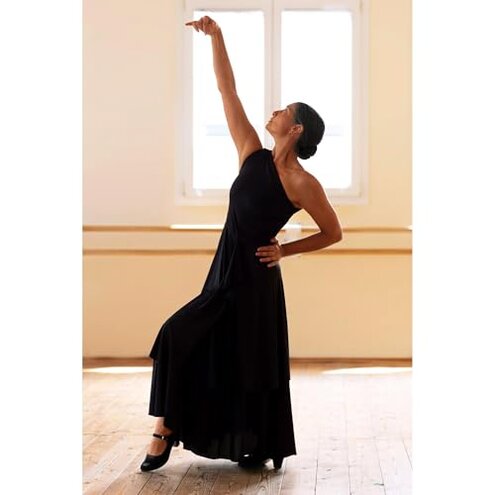
- Frequent dancers: Avoid if you need reliable long-session comfort and durability beyond occasional wear.
- Performance pros: Avoid if you cannot accept fit uncertainty before shows or competitions.
- Buyers on tight budgets: Avoid if you cannot afford extra insoles or early replacements.
Who this is actually good for
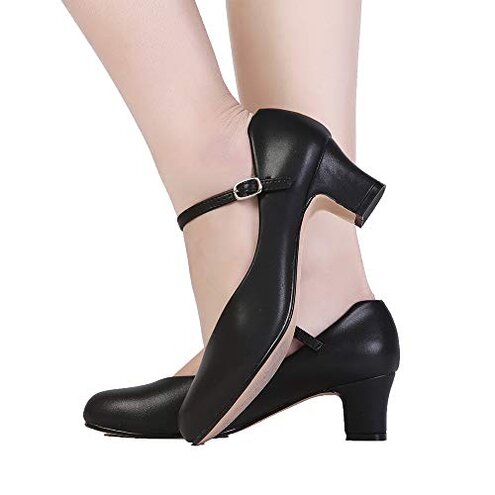
- Casual wearers: Good for occasional social dancing where short comfort and price matter more than durability.
- Quick fittings: Good if you need a low-cost pair for a single event and accept potential early wear.
- DIY fixers: Good if you are willing to add insoles or heel grips to correct fit and comfort.
Expectation vs reality
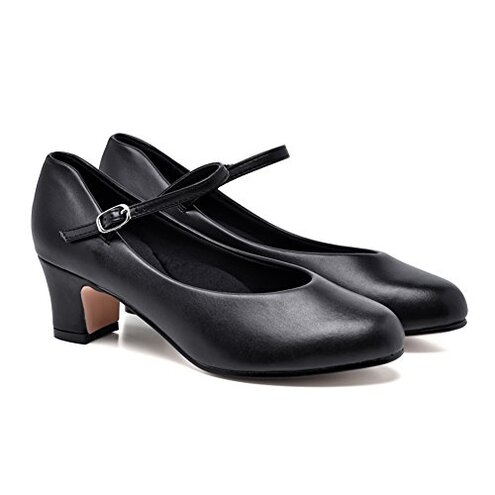
Expectation: Buyers reasonably expect a mid-range dance heel to fit true and hold up for months of practice.
Reality: Fit variability and faster wear create extra returns, replacements, and corrective purchases, which is worse than the category baseline.
Safer alternatives
- Check fit first: Buy from sellers with easy returns or try in-store to avoid fit exchanges.
- Prioritize support: Choose shoes that advertise reinforced heels or thicker factory insoles to avoid comfort fixes.
- Inspect materials: Prefer shoes with reinforced soles and higher-grade finishes to reduce premature scuffing.
- Plan extras: Budget for aftermarket insoles and heel grips if you still buy to handle hidden fit issues.
The bottom line
Main regret: The biggest trigger is combined fit variability plus faster-than-expected wear.
Why worse: This double-hit increases returns and hidden costs more than typical mid-range dance shoes.
Verdict: Avoid if you need consistent fit and long-term durability; consider it only for short-term or backup use.
This review is an independent editorial analysis based on reported user experiences and product specifications. NegReview.com does not sell products.