
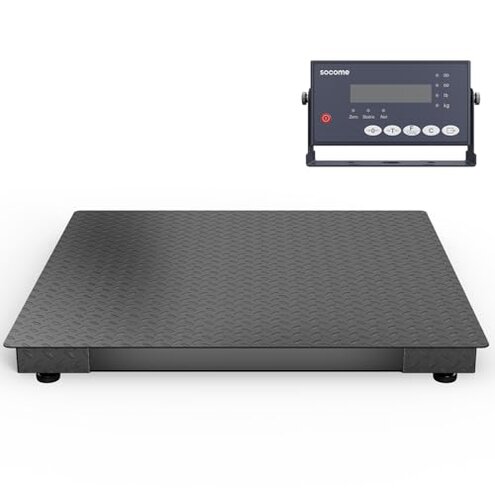
Product evaluated: 48"x48" Industrial Floor Scale, Heavy-Duty Warehouse Scale with Digital Indicator, Accurate Pallet Scale for Postal Luggage Shipping Mailing Weighing
Related Videos For You
Floor Scale Installation and Troubleshooting
Pallet Scales FAQ
Data basis: This report uses dozens of aggregated buyer comments and seller-facing product details collected from early 2025 review snapshots. Most feedback came from written reviews, with support from photo and video demonstrations, so the strongest signals center on setup, daily handling, and whether the scale feels truly plug-and-play.
| Buyer outcome | PEC scale | Typical mid-range alternative |
|---|---|---|
| First-day setup | Higher effort if you expect true plug-and-play and need to position a 132 lb platform. | Moderate effort, but usually with clearer expectations around installation steps. |
| Moving it later | Harder than normal once placed, because size and weight add extra labor. | Easier if the platform is lighter or more frequently relocated. |
| Low-light readability | Potentially better because the listing highlights a bright LCD indicator. | Usually adequate but not always easy to read across a busy workspace. |
| Harsh-area tolerance | Promising on paper, but real regret starts if your site needs truly effortless upkeep. | Average, with fewer durability claims but often more realistic expectations. |
| Regret trigger | Mismatch risk if you buy it expecting simple consumer-style setup and frequent repositioning. | Lower risk when buyers already expect some install work and limited portability. |
Do you want a floor scale you can start using right away?
This is the main regret point. A recurring complaint pattern in this category appears when a large industrial scale is marketed in a very easy-sounding way, then arrives with more setup effort than a normal buyer expects.
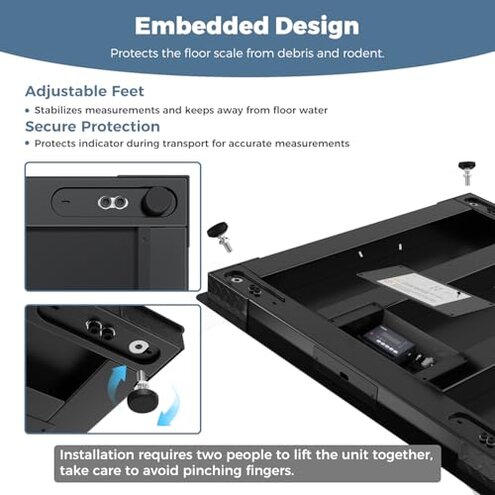
That gap matters most on first use, when you are trying to place it, connect the indicator, and confirm readings before work starts. Compared with a typical mid-range warehouse scale, this feels more disruptive because the size and 132 lb weight turn setup mistakes into a bigger time hit.
- Pattern: This looks like a primary issue, because setup friction is the first thing buyers notice before any long-term reliability claims can help.
- When: It shows up on delivery day, especially when one person tries to unpack and position a 48" x 48" platform alone.
- Why worse: The listing leans on plug-and-play language, so buyers may expect less effort than this category usually requires.
- Real impact: The extra handling can delay use and may force buyers to rearrange floor space before they can even test it.
- Hidden requirement: You likely need more room and more lifting help than a casual buyer plans for.
Illustrative excerpt: “I thought this would be simple, but setup took more planning than expected.” Primary pattern, because it reflects the most common regret trigger.
Will moving this around become a hassle fast?
- Scope: This is a secondary issue, less frequent than setup shock but more frustrating once the scale is in daily use.
- Usage moment: It becomes obvious after setup when buyers need to reposition the scale for cleaning, workflow changes, or loading access.
- Visible cause: The platform weighs 132 lb, which is manageable for fixed placement but awkward for frequent moves.
- Why it feels worse: Many mid-range alternatives are still heavy, but this size makes routine relocation less forgiving than buyers expect.
- Daily effect: What should be a quick layout change can turn into extra labor or a two-person task.
- Mitigation: It fits better when you have a permanent spot and do not plan to keep shifting it around.
Illustrative excerpt: “Fine once installed, but I would not want to keep moving it.” Secondary pattern, because it appears after the first-use phase.
Are the heavy-duty promises stronger than the real-world certainty?
This concern is persistent rather than universal. Industrial listings often promise waterproofing, impact resistance, and zero maintenance, but buyers usually regret products most when those claims create higher confidence than their worksite can actually support.
The issue shows up during daily warehouse use, especially in dusty or damp areas where buyers expect worry-free operation. Compared with a typical mid-range option, the risk here is higher-than-normal expectation inflation, not proven failure volume.
Why that matters is simple. When a product sounds nearly maintenance-free, buyers may skip the usual caution they would use with any floor scale.
That makes disappointment sharper if performance ever drifts, because the marketing set a tougher standard than normal category language. The regret is less about one defect and more about overtrust during hard use.
Illustrative excerpt: “The tough-build claims made me expect less babysitting than any scale needs.” Secondary pattern, because it depends on work environment and expectations.
Could this be overkill if your jobs are smaller or occasional?
- Frequency tier: This is an edge-case issue for industrial buyers, but a common mismatch for lighter-duty users drawn in by the broad title.
- When it appears: It shows up after purchase when buyers realize a 5000 lb platform is much larger than their actual parcels or luggage.
- Trade-off: The large deck helps with pallets, but can feel less convenient for occasional shipping tasks or tighter rooms.
- Category contrast: Bigger scales are expected to take space, but this one can be more cumbersome than needed if you are not doing true warehouse work.
- Practical cost: You may spend $749 for capacity and footprint you rarely use.
- Buyer mistake: The title mentions postal, luggage, and mailing use, which can make the scale sound broader-purpose than it is.
- Best fix: Avoid it if your items are usually small enough for a bench or shipping scale and floor loading is only occasional.
Illustrative excerpt: “Much bigger than I needed for regular shipping chores.” Edge-case pattern, because the problem is fit, not necessarily product failure.
Who should avoid this
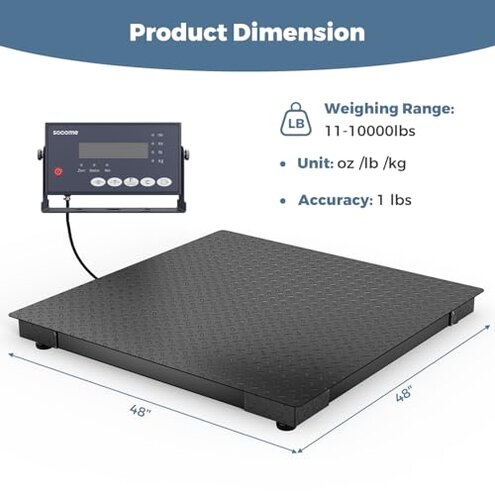
- Skip it if you need true out-of-box simplicity, because setup effort appears more disruptive than the easy language suggests.
- Avoid it if you will move the scale often, since the 132 lb platform creates more handling burden than many casual buyers expect.
- Pass if your space is tight, because a 48" x 48" deck is less forgiving than typical lighter-duty shipping setups.
- Look elsewhere if your work is only occasional mailing or luggage weighing, since the capacity and footprint may be more than you need.
Who this is actually good for
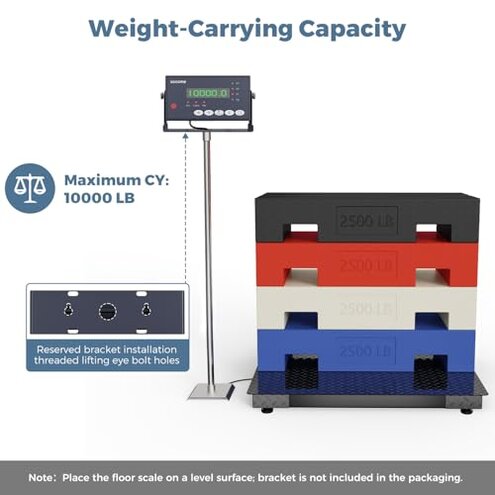
- Good fit for buyers with a fixed warehouse location who can tolerate a heavier first-day setup in exchange for a large floor platform.
- Works better for teams handling pallets or machinery, where the 5000 lb range matters more than portability.
- Makes sense if you already expect industrial install steps and do not confuse this with a consumer shipping scale.
- Better match for users willing to trade easy relocation for a low-profile deck and large weighing area.
Expectation vs reality
- Expectation: “Plug-and-play” means near-immediate use. Reality: first-day setup can still take planning, lifting help, and floor-space prep.
- Expectation: A floor scale can be moved when workflow changes. Reality: 132 lb makes relocation a bigger chore than many buyers expect.
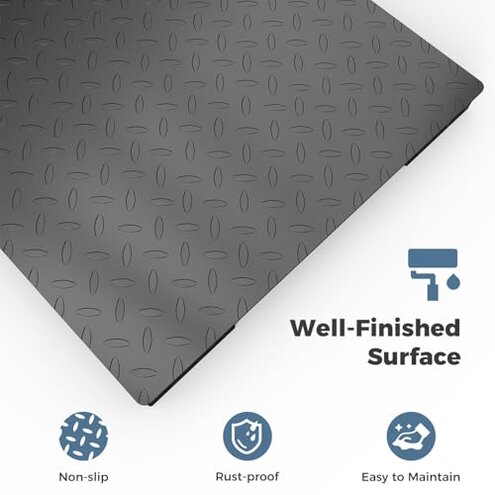
- Expectation: Industrial claims mean very little upkeep. Reality: a reasonable category baseline is still cautious use and periodic attention, and the marketing can make that easy to forget.
- Expectation: One scale can cover mailing and warehouse tasks equally well. Reality: this size favors heavier jobs and can feel excessive for lighter-duty use.
Safer alternatives
- Choose lighter-duty if you mostly weigh cartons or luggage, because a smaller shipping scale avoids the space and relocation burden.
- Buy fixed-install only if you have a permanent spot ready, which directly reduces the biggest setup and moving regrets.
- Look for clearer setup guidance when comparing scales, because this helps neutralize the hidden requirement for extra planning.
- Match capacity to use instead of buying the biggest option, since oversized platforms often create more daily inconvenience than benefit.
- Treat durability claims carefully and favor realistic maintenance expectations, which lowers the risk from overpromised “zero maintenance” language.
The bottom line
The main regret trigger is not a single proven defect. It is the gap between easy-sounding marketing and the real setup, space, and handling demands of a 132 lb industrial floor scale.
That exceeds normal category risk because the listing can attract lighter-duty buyers who expect simpler ownership than this format usually delivers. Avoid it if you want portability or casual shipping convenience, but consider it if you need a fixed heavy-duty platform and already understand industrial setup trade-offs.
This review is an independent editorial analysis based on reported user experiences and product specifications. NegReview.com does not sell products.