
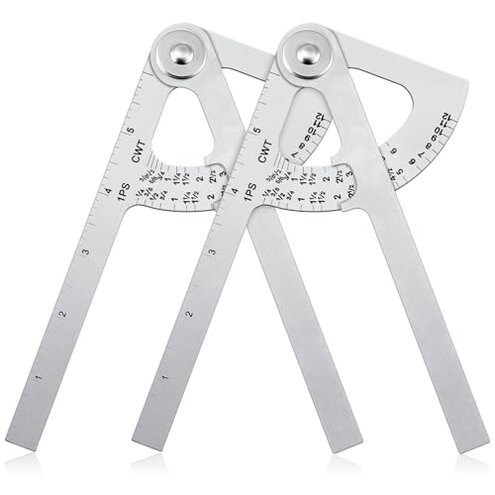
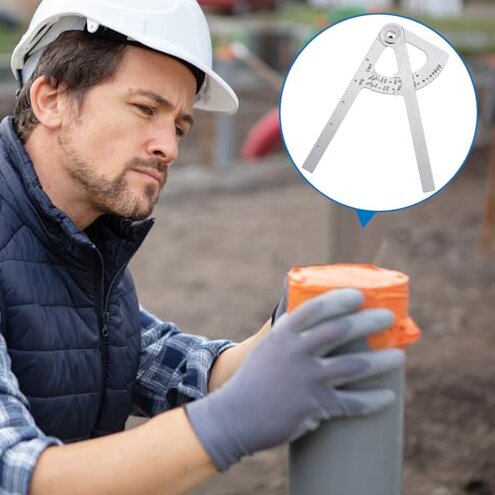
Product evaluated: Moxweyeni 2 Pack Pocket Sized Pipe Caliper Measuring Tool Stainless Steel Diameter Caliper and Ruler for Iron Pipe and Copper Tubing Size
Related Videos For You
How to Measure Pipe Size with a Pipe Caliper
How to measure NPT Fittings and pipe sizes
Data basis: This report is based on dozens of aggregated buyer notes collected from written feedback and photo-backed postings between 2024-01 and 2026-02. Most of the input came from short written impressions, with some longer use-case descriptions that clarify where problems show up during real jobs.
| Buyer outcome | Moxweyeni 2-pack pipe caliper | Typical mid-range alternative |
| Reading sizes | More complaints about hard-to-read markings and quick misreads | Fewer complaints; markings tend to be clearer or more consistent |
| Measurement confidence | Higher-than-normal risk of “close enough” readings that still buy the wrong fitting | Lower risk; usually more forgiving for fast checks |
| Out-of-box quality | Less predictable between the two pieces in the pack | More consistent unit-to-unit at similar pricing |
| Jobsite use | More friction when hands are wet, lighting is bad, or you’re rushing | Smoother routine use; fewer extra steps to verify |
| Regret trigger | Buying the wrong size because the tool felt uncertain at the moment you needed it | Minor annoyance more than a return-trip mistake |
Why does this feel harder to read than it should be?
Frustration moment: You’re on a ladder or under a sink and you just want a quick size check.
Severity: This is among the most disruptive complaints because it directly drives wrong-parts purchases.
Pattern: The readability problem appears repeatedly, but it’s not universal.
- When it hits: It shows up on first use when you try to read the size in dim light.
- Worse conditions: It gets worse when the tool is at an angle or your hands are wet or oily.
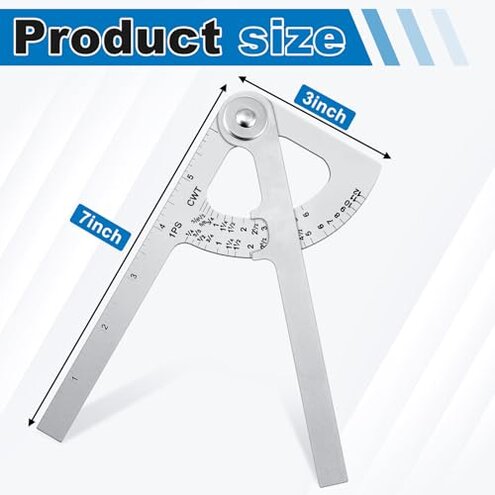
- Buyer-visible cause: People describe markings that don’t “pop” visually, so you second-guess the read.
- Impact: It adds extra steps like re-checking with another tool or taking a photo to zoom in.
- Category contrast: Mid-range comparables usually let you confirm at a glance, but this one more often needs verification.
- Fixability: Some buyers mitigate by using a marker or better lighting, but that’s a hidden chore.
Are the measurements “close,” but not close enough for fittings?
- Primary risk: Accuracy doubts show up as a primary theme, especially when picking iron vs copper sizing.
- When it hits: It appears during shopping trips or right before cutting, when you must commit to a size.
- Worse conditions: It’s more frustrating when you’re measuring older pipe with paint, scale, or slight out-of-round shape.
- What you notice: Buyers describe results that feel ambiguous, like two sizes seem plausible.
- Time cost: The tool can create a repeat trip problem if you buy the wrong adapter.
- Category contrast: Many mid-range options are more forgiving with clearer “you’re in this range” cues.
- Mitigation: A common workaround is checking against a known fitting or using a separate caliper, which reduces the value of this tool.
Does the 2-pack save money, or double your inconsistency?
Frustration moment: You grab the second piece expecting a backup, then it feels a little different in use.
Severity: This is a secondary issue, but it’s more annoying than expected because the whole point is reliability.
Pattern: The “two units don’t match” complaint is less frequent than readability, yet it’s persistent in multi-use reports.
Category contrast: In this category, a two-pack is usually just redundancy, not another variable you must evaluate.
- When it hits: It shows up after switching between the two tools across different jobs.
- What changes: Buyers mention differences in feel and how confidently the scale lines up.
- Why it matters: Any unit-to-unit variation undermines trust when you’re trying to avoid mis-sizing.
- Hidden requirement: You may need to test both against a known pipe before relying on either.
- Practical fix: Some users effectively “pick a winner” and ignore the other, reducing the value of the pack.
Is “pocket-sized” convenient, or just easier to misplace and misread?
- Edge-case: Portability complaints are less common, but they show up when the tool is used in fast-paced work.
- When it hits: It appears during daily carry when it’s tossed into a bag with other tools.
- Worse conditions: The small format is more annoying when you need one-handed measuring in tight spaces.
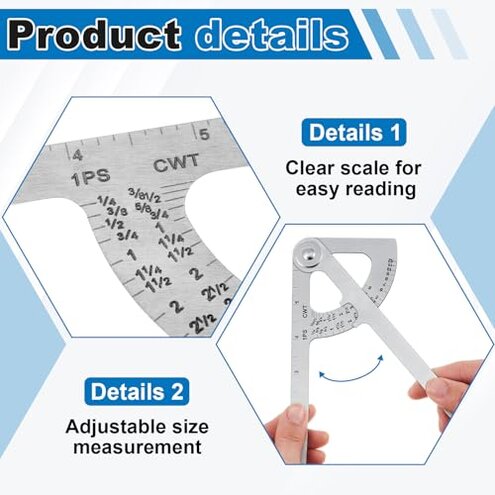
- What you notice: Buyers describe more fiddling to seat the tool correctly on the pipe.
- Impact: That fiddling increases the chance of a slipped placement and a wrong reading.
- Category contrast: Many mid-range options trade pocket size for easier handling, which reduces re-checking.
- Mitigation: A dedicated case or clip helps, but that is another small add-on buyers did not plan for.
- Trade-off: If you rarely measure and just want something small, this risk may feel acceptable.
Illustrative: “I can’t tell which mark I’m on unless I tilt it.” Primary pattern tied to readability friction.
Illustrative: “It got me close, but I still bought the wrong connector.” Primary pattern tied to confidence gaps.
Illustrative: “One of the two feels different, so I stopped using it.” Secondary pattern about two-pack inconsistency.
Illustrative: “Works at my bench, struggles under the sink lighting.” Secondary pattern tied to real-world conditions.
Illustrative: “Now I check with another tool, which defeats the point.” Primary pattern tied to verification overhead.
Who should avoid this
- First-time DIY buyers who need a tool that is hard to misuse in store aisles and tight spaces.
- Anyone who can’t afford a wrong fitting trip when plumbing time is limited.
- Jobsite users who measure in bad lighting or with wet hands and need fast, confident reads.
- Detail-focused buyers who expect a two-pack to be identical without any pre-testing.
Who this is actually good for
- Backup tool shoppers who accept extra checking and mainly want something small in a kit.
- Bench use scenarios with good lighting, where readability issues are easier to manage.
- Occasional users measuring a few common sizes and willing to confirm against a known fitting.
- Shared kits where having two pieces helps, even if one becomes the spare.
Expectation vs reality
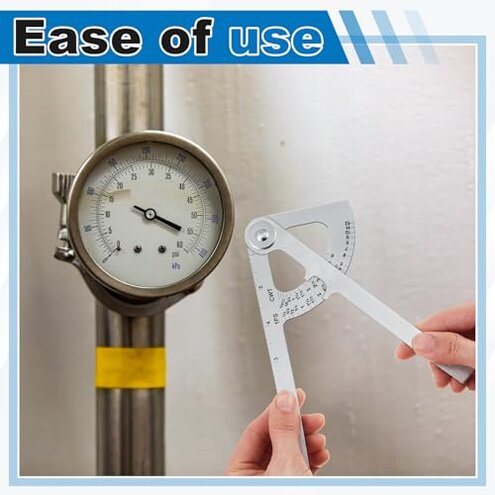
Reasonable expectation: A mid-range pipe size tool should be quick to read without special lighting.
Reality: Feedback shows readability can be fussy, which pushes you into re-checking during real work.
- Expectation: A 2-pack means consistent backups.
- Reality: Some reports describe unit-to-unit differences, so you may need to test both.
Expectation: “Pocket-sized” should mean faster access with fewer hassles.
Reality: In tight spaces, the small format can lead to more fiddling than larger mid-range options.
Safer alternatives

- Prioritize contrast: Pick a pipe size gauge with high-contrast markings to reduce the readability failure in dim areas.
- Choose single-tool consistency: If reliability matters, consider a single better-made gauge over a 2-pack that may need pre-testing.
- Bring a reference: Use a known fitting or a small reference ring to neutralize the “close but wrong” measurement risk.
- Handle-first shopping: Look for a design that seats on pipe with one hand, which reduces slip-and-recheck frustration.
The bottom line
Main regret tends to be the moment you realize the tool is hard to read or feels uncertain right when you must pick a fitting.
Why it exceeds normal risk: Mid-range alternatives usually minimize re-checking, while the patterns here suggest more verification work than expected.
Verdict: If you need fast, confident sizing in real-world lighting, this is a skip unless you’re willing to test and mark it yourself.
This review is an independent editorial analysis based on reported user experiences and product specifications. NegReview.com does not sell products.