
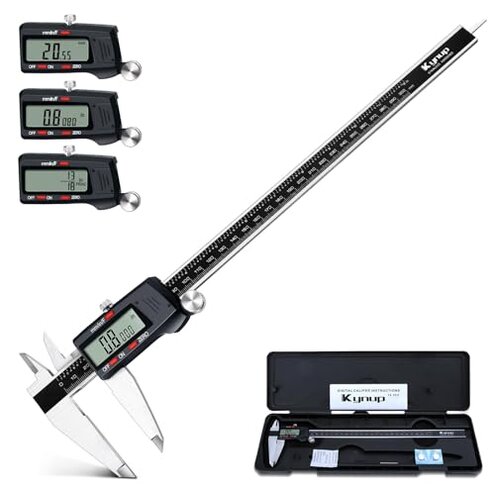
Product evaluated: Kynup Micrometer Caliper Tool, 12Inch Digital Caliper, Vernier Caliper with Stainless Steel, Large LCD Screen, Auto - Off Feature, Inch Metric Fraction Conversion
Related Videos For You
How to Use and Read a Digital Caliper
I've Been Proven Wrong About Calipers!
Data basis Dozens of buyer comments and several video demonstrations were reviewed between Jan 2023–Feb 2026 to build this report.
| Outcome | Kynup (this product) | Typical mid-range caliper |
|---|---|---|
| Accuracy | Inconsistent readings reported after first use and with repeated measurements. | Stable readings that usually require only occasional calibration. |
| Build quality | Slippage and looseness seen across multiple user reports while sliding jaws. | Tighter slides and firmer locking mechanisms in mid-range options. |
| Display & controls | Fast-off auto-shutdown and reset quirks add setup friction for some buyers. | More intuitive readout and reliable zero/reset behavior on typical models. |
| Higher-than-normal risk | Calibration upkeep is more frequent than expected for this price tier. | Lower maintenance needs under normal home and shop use. |
| Regret trigger | Measurement mismatch during project-critical moments leading to rework. | Fewer measurement surprises for household and hobby tasks. |
Why are my readings jumping between measurements?
Primary pain Many buyers experience accuracy drift that appears after initial setup and with repeated measurements.
Usage anchor The problem shows up when you measure the same part multiple times or compare against a reference gauge.
Category contrast This is worse than normal because mid-range calipers usually remain consistent for many cycles without calibration.
Is the sliding action and jaw alignment reliable?
- Early sign Loose or uneven sliding felt during first handling.
- Frequency tier A commonly reported issue across written feedback and videos.
- Probable cause Slight manufacturing tolerance leads to jaw misalignment under light pressure.
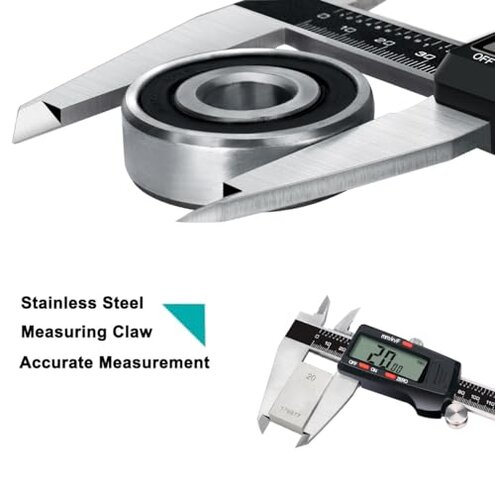
- Impact Misaligned jaws produce small but meaningful measurement errors for tight tolerances.
- Fix attempts Users tried tightening the lock screw and adding shims to stabilize the jaws.
Why does the display reset or go blank during use?
- Symptom The auto-off cuts power during longer measurement sessions.
- When it happens This appears during extended use or when leaving the caliper idle between checks.
- Secondary pattern Zero/reset sometimes fails after auto-off, requiring re-zeroing.
- Underlying trade-off Auto-shutoff saves battery but adds repeated setup steps.
- Workaround Some buyers keep a finger on the scale or replace batteries more often.
- Category note Typical mid-range models manage idle power with less user friction.
- Hidden cost Extra time for re-zeroing adds up on multi-part measurements.
Do I need extra tools or steps to keep this accurate?
- Hidden requirement Frequent recalibration against a known gauge is commonly reported to restore accuracy.
- When needed Recalibration is often needed after transit, rough handling, or daily shop use.
- Why worse here This product requires more frequent adjustments than most mid-range calipers.
- Consequences Extra steps cost time and may invalidate quick checks during projects.
- Fixability Calibrating helps but doesn’t always remove drift for all users.
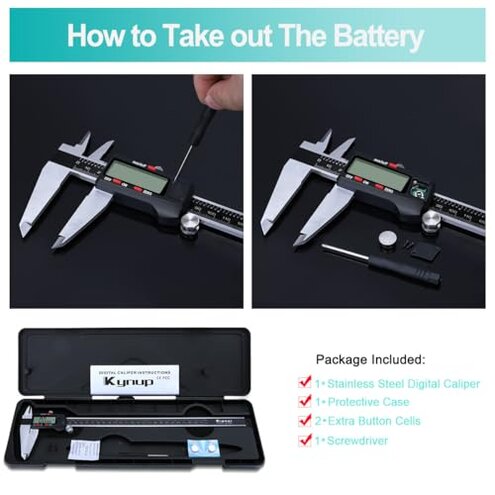
- Battery note The provided spare batteries are welcome but battery changes can alter zeroing.
- Tool requirement A small reference block or gauge is recommended but not included.
- Practical impact Professionals may find this added upkeep unacceptable for precision tasks.
Illustrative excerpts (not real quotes)
- Excerpt "Measurements disagree each time I check the same part, causing rework." — primary pattern
- Excerpt "Jaws felt loose out of the box, needed manual shimming to stay steady." — secondary pattern
- Excerpt "Display timed out mid-measure and I had to reset zero twice." — primary pattern
- Excerpt "Needed a gauge block to recalibrate after shipping; not ideal." — edge-case pattern
Who should avoid this
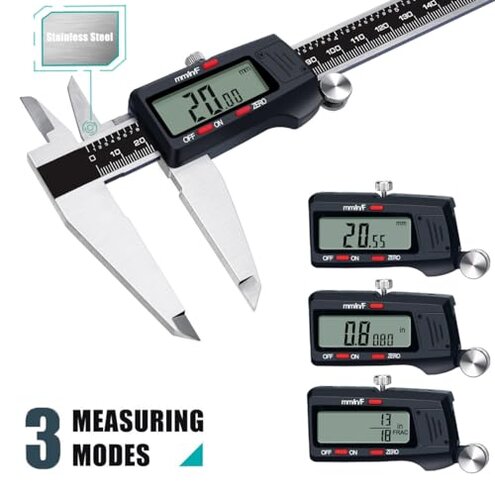
- Precision shops Avoid if you need reliable, repeatable measurements for tight tolerance work.
- Production users Avoid if you perform long measurement runs without time for frequent recalibration.
- Buyers wanting plug-and-play Avoid if you expect consistent out-of-box accuracy like better mid-range models.
Who this is actually good for
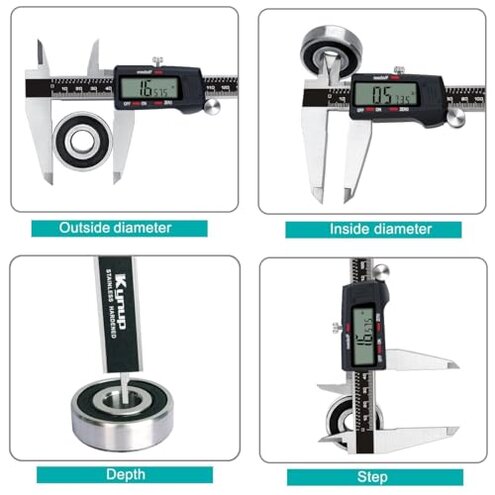
- Hobbyists Good if you tolerate occasional recalibration and need an affordable 12" range.
- Occasional DIYers Good for one-off home projects where absolute precision is not critical.
- Budget-conscious users Good if you accept extra setup time in exchange for a lower price point.
Expectation vs reality
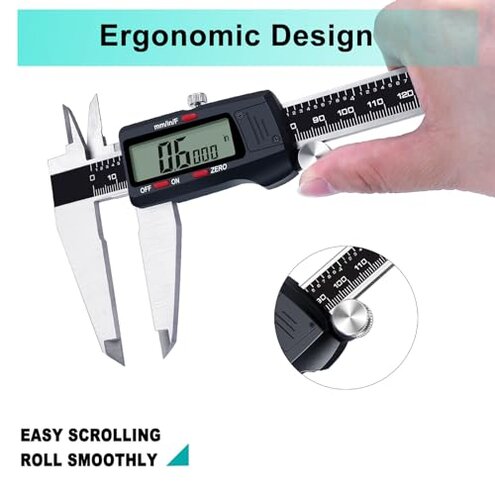
- Expectation Reasonable for the category: a caliper should hold zero across multiple checks.
- Reality This unit often requires re-zeroing after auto-off or light handling, adding workflow friction.
- Expectation Reasonable for the category: jaws stay aligned after basic use.
- Reality Some users report early jaw looseness that needs manual correction to avoid measurement error.
Safer alternatives
- Buy recommendation Choose a mid-range caliper with advertised factory calibration and stronger sliding tolerances to avoid frequent recalibration.
- Feature check Look for models with a confirmed zero-lock and longer auto-off delay to cut reset steps.
- Durability tip Prefer tools with firmer locking screws and documented alignment specs to reduce slippage.
- Calibration plan If buying this model, budget for a reference gauge block and set weekly calibration routines.
The bottom line
Main regret The biggest buyer trigger is inconsistent measurements from drift, jaw slippage, and reset quirks.
Why it matters These issues create more upkeep and rework than typical mid-range calipers and raise project risk.
Verdict Avoid this unit if you need reliable, repeatable precision; consider it only for low-stakes DIY or as a temporary budget tool.
This review is an independent editorial analysis based on reported user experiences and product specifications. NegReview.com does not sell products.