
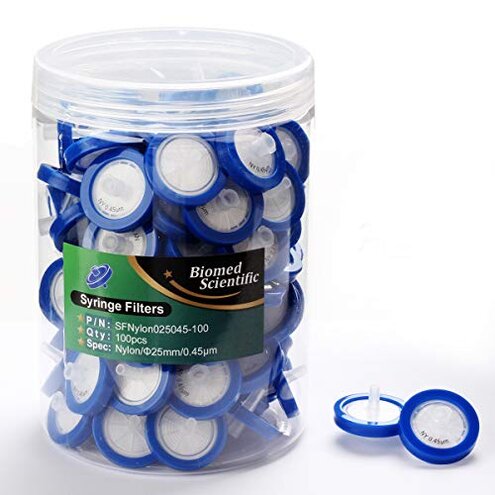
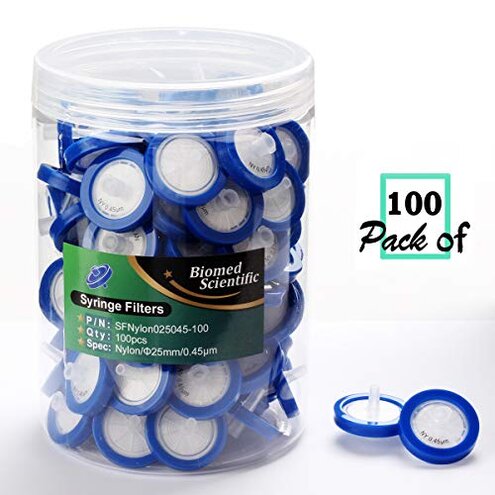
Product evaluated: Syringe Filters Nylon 25mm Diameter 0.45um Pore Size Non Sterile Pack of 100 by Biomed Scientific
Related Videos For You
Syringe Filter
Easy Fix for Clogged Syringe Filters
Data basis: This report used dozens of buyer reports plus video demonstrations collected 2018–2025, with most feedback from written reviews supported by hands-on videos. The summary focuses on recurring, demonstrable problems seen across multiple user reports.
| Outcome | Biomed Scientific (this product) | Typical mid-range alternative |
|---|---|---|
| Flow consistency | Unreliable flow — users report clogging and slow throughput more often than expected. | Smoother flow — mid-range filters usually maintain steady flow under similar conditions. |
| Connector fit | Fit issues — reported misfits or leaks with some syringes and tubing sizes. | Better compatibility — typical mid-range parts use tighter luer tolerances. |
| Sterility risk | Non-sterile — product is non-sterile, raising contamination risk for sensitive tasks. | Often sterile — many mid-range packs are supplied sterilized or clearly labeled for lab use. |
| Value per pack | Low unit price — bulk 100/pack is economical if performance meets needs. | Balanced cost — mid-range may cost more but reduce rework or replacements. |
| Regret trigger | Service disruption — clogging plus non-sterile status leads to lost time and extra prep. | Lower disruption — alternatives tend to cause fewer workflow interruptions. |
Will this clog during filtering and slow my work?
Primary frustration: Users commonly report clogging that appears repeatedly when filtering viscous fluids or particulate-laden samples.
Usage anchor: Clogging typically shows up during first use or after only a few passes and worsens with thicker liquids or high-volume runs.
Category contrast: Some clogging is expected in syringe filters, but this product shows more frequent blockages than mid-range alternatives, creating extra filtration steps and wasted units.
Are connector leaks and compatibility a problem?
- Early sign: Loose fit at the first connect — some buyers notice fluid seepage immediately.
- Frequency tier: This is a secondary issue that appears repeatedly across reports, not universal but common.
- Root cause: Slight size variance on the luer ends leads to poor sealing with some syringes.
- Impact: Leaks cause wasted sample and require re-tightening mid-run, interrupting workflows.
- Fixability: Workarounds exist but add steps, such as using tape or adapters to secure connections.
Is the non-sterile label a hidden problem I must plan for?
- Hidden requirement: Buyers frequently note a need to sterilize before lab or clinical use.
- When it appears: The sterility concern arises at setup when users realize the product is non-sterile.
- Worsening conditions: Risk increases for microbiology or sensitive analytical work where contamination skews results.
- Category contrast: Many mid-range filters arrive sterile; needing extra sterilization is an added time and cost burden here.
- Impact on workflow: Autoclaving or chemical sterilization adds prep time and may affect membrane performance.
- Attempted fixes: Buyers report ad-hoc sterilization, but note that adds steps and potential membrane damage.
Will this kit meet lab or production needs without surprises?
- Expectation mismatch: Some buyers assumed lab-ready parts and found the non-sterile packaging surprising.
- Performance gap: Reports indicate inconsistent throughput across the pack, leading to unpredictable run times.
- Quality spread: Variability appears across multiple batches and is a persistent pattern in user reports.
- Frequency tier: This is a primary issue for users needing consistent single-use filters.
- Operational cost: More replaced filters and prep steps inflate real cost versus the sticker price.
- User attempts: Buyers try pre-filters or pre-rinsing to extend life, adding time and materials.
- Hidden need: Expect to budget for adapters or sterilization equipment to avoid contamination or leaks.
Illustrative excerpts (not real quotes)
Excerpt 1: "Filter slowed to a crawl after two uses, wasted time and sample." — primary
Excerpt 2: "I had to tape the luer to stop tiny leaks during runs." — secondary
Excerpt 3: "Non-sterile pack surprised our lab; we had to autoclave before using." — primary
Who should avoid this
- Clinical labs: Avoid if you need ready-sterile parts for diagnostics or culture work.
- High-throughput users: Avoid if you require consistent flow across many filters without rework.
- Precise-volume tasks: Avoid if leaks or fit variability would cause sample loss you cannot recover from.
Who this is actually good for
- Non-critical filtering: Good for general coarse filtration where sterility and perfect flow are not essential.
- Budget projects: Good for classroom demos or hobby use when buyers accept extra prep to save cost.
- Bulk disposables: Good when you need many filters cheaply and can tolerate variable performance.
Expectation vs reality
Reasonable expectation: Buyers expect a 25mm syringe filter to fit standard syringes and allow steady flow under light loads.
Reality: This product shows more frequent clogging and fit issues, causing extra prep and replacements.
Reasonable expectation: Shoppers often expect sterile options in packs meant for labs, especially at this unit count.
Reality: The non-sterile label forces sterilization or restricted use, raising hidden costs and time.
Safer alternatives
- Choose sterile packs: Buy filters labeled sterile to avoid extra sterilization steps and contamination risk.
- Pick tested brands: Select brands with consistent luer tolerances to reduce leak and fit problems.
- Use pre-filters: Add a coarse pre-filter to cut down on clogging when filtering particulate-rich fluids.
- Buy smaller trial packs: Test a small pack before committing to bulk to spot batch variability.
The bottom line
Main regret: The combination of clogging and non-sterile status creates real workflow disruptions for lab or production use.
Why it matters: These issues exceed normal category risk because they add sterilization steps, replacements, and fit fixes that offset the low unit price.
Verdict: Avoid for critical or sterile workflows; consider only for low-stakes, budget uses where extra prep is acceptable.
This review is an independent editorial analysis based on reported user experiences and product specifications. NegReview.com does not sell products.