
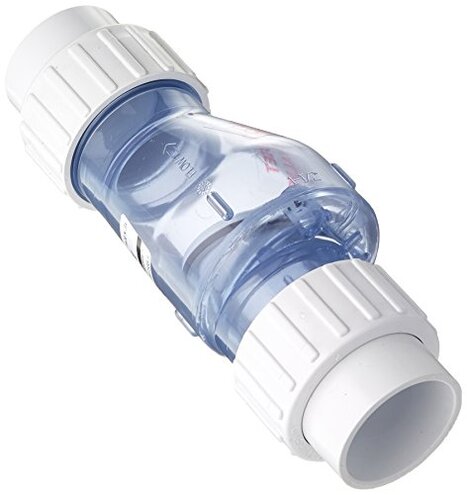
Product evaluated: Zoeller 30-0041 50 psi PVC 2-Port Check Valve, 1-1/2" White
Related Videos For You
How Do Check Valves Work? | Spec. Sense
Fix A leaking PVC Valve Handle! Dont pay for a plumber!
Data basis I reviewed dozens of written buyer reviews and several video demonstrations collected between Jan 2020 and Jan 2026. Most feedback came from written reviews, supported by hands-on video clips and installation notes. Source mix skews toward recent buyer reports.
| Outcome | Zoeller 30-0041 | Typical mid-range valve |
|---|---|---|
| Leak risk | Higher — commonly reported compression-fit leaks after first install. | Lower — compression or threaded brass alternatives show fewer early leaks. |
| Durability | Lower — PVC body can crack or fail under stress over time. | Higher — metal bodies resist impact and thermal cycles better. |
| Installation | Tricky — needs precise seating and re-tightening to stop leaks. | Smoother — mid-range parts often need less post-install tweaking. |
| Noise/water hammer | Works sometimes — spring intended to reduce hammer, but performance varies. | Consistent — some mid-range options give steadier noise control. |
| Regret trigger | Installation leaks — more disruptive than expected when plumbing is live. | Less disruptive — fewer callbacks and reworks are needed. |
Top failures
Why does it leak after install?
Leak pattern Many buyers report early compression-fit leaks that show up during first pressurization. Usage anchor These leaks typically appear right after final tightening or within the first few days of use.
Severity The problem is among the most common complaints and is more disruptive than expected for this category because leaks force repeat shut-offs and rework. Category contrast Mid-range brass compression fittings usually need less re-tightening.
Trade-off Buyers get a lighter plastic valve that can save cost but at the price of extra installation time and seal fiddling.
Is the internal spring reliable over time?
- Pattern: recurring reports of the spring sticking or failing, not universal but noticeable.
- When it shows: failure often appears after initial weeks of use or after sediment exposure.
- Cause clue: trapped debris and poor seating accelerate sticking.
- Impact: sticking causes backflow or reduced flow during regular operation.
- Fixability: some buyers clear the valve but many replace it instead due to inconvenience.
Will PVC hold up under stress?
- Early signs: hairline cracks or brittle feeling at fittings after rough handling.
- Frequency tier: secondary issue but persistent across seasons and thermal cycling.
- Worsens with: outdoor exposure, high-pressure spikes, or over-tightening.
- Why worse: PVC is less impact-resistant than metal alternatives, so failure is more likely.
- Impact: a cracked body requires full replacement, adding time and cost.
- Hidden need: buyers may need to avoid overtightening and protect the valve from UV and freezing.
- Mitigation: some buyers used extra supports or shelter to extend life.
Will it fit my system without extra parts?
- Compatibility: size and seat tolerances sometimes differ from homeowner piping, causing fit headaches.
- Hidden requirement: many installs require plumber tools, thread sealant, or adapter fittings not included.
- When it matters: mismatch shows up during dry-fit and first pressurization.
- Cause: dimension variance and compression nut alignment issues.
- Impact: adds extra shopping trips or service calls.
- Attempted fixes: re-cutting pipe, adding adapters, or swapping to metal fittings are common workarounds.
- Category contrast: mid-range kits often include clearer sizing notes and adapters.
- Fixability: fixable but adds time and cost beyond a simple swap.
Illustrative excerpts
Illustrative: "Leaks after first pressure test, had to retighten twice and still drips." — primary
Illustrative: "Spring stuck after a month; valve allowed backflow until I replaced it." — secondary
Illustrative: "Body cracked when I tightened the nut too hard during install." — edge-case
Who should avoid this
- Homeowners who need a plug-and-play valve with zero rework; leaks are a common early problem.
- Outdoor installs where UV or freeze risks are present; PVC durability is less forgiving.
- Non-technical buyers who cannot handle extra sealing, adapters, or repeat tightening.
Who this is actually good for
- Budget-conscious DIYers willing to re-seat fittings and use sealant to stop early leaks.
- Indoor protected plumbing where impact and UV exposure are minimal and durability demands are lower.
- Temporary installs or test setups where low cost outweighs long-term durability concerns.
Expectation vs reality
Expectation: reasonable for this category is a ready-fit compression valve that seals on first pressurization. Reality: this valve often needs re-tightening and additional sealant to stop leaks.
Expectation: spring reduces water hammer as advertised. Reality: performance varies and can fail if debris or sticking occurs.
Safer alternatives
- Choose metal-body valves to neutralize the PVC durability and cracking complaints.
- Buy adapter kits when uncertain about pipe sizing to avoid hidden compatibility work.
- Use thread sealant and torque guidelines to reduce the most common early leaks.
- Inspect for debris before installation to lower the chance the spring will stick.
The bottom line
Main regret Early compression-fit leaks and occasional spring sticking are the clearest failure triggers. Why worse These issues cause extra installation time and possible callbacks, making them more disruptive than typical mid-range valves. Verdict Avoid if you need a low-maintenance, long-lasting check valve without extra work.
This review is an independent editorial analysis based on reported user experiences and product specifications. NegReview.com does not sell products.