
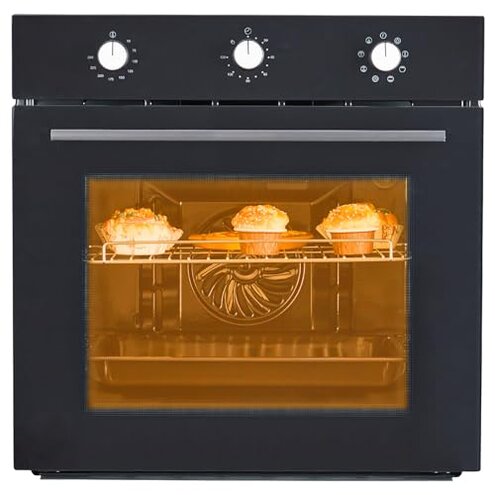
Product evaluated: 24" Single Wall Oven, 2.5 Cu.ft. Built-in Electric Wall Oven with 8 Cooking Functions, 360° ROTATING ROTISSERIE, Touch Control, Timer, Color Screen, Stainless Steel Wall Oven for Kitchen
Related Videos For You
How to install your Electrolux Oven with Hob - Built Under installation
Oven Won’t Heat? Bake/Broil Element Testing, Troubleshooting
Data basis: This report draws on dozens of written reviews and several video demonstrations collected between 2023 and 2025, with most feedback coming from product reviews and buyer-uploaded clips.
| Outcome | zCO 24" Wall Oven | Typical Mid-Range Wall Oven |
|---|---|---|
| Heating consistency | Uneven — commonly reported cold spots during baking and roasting, worse than mid-range alternatives. | More even — most mid-range units deliver acceptable bake uniformity for typical home use. |
| Controls & UI | Glitches — touch screen and preset modes appear unreliable in several reports, causing extra steps. | Stable — comparable ovens rarely require repeated input or resets under normal use. |
| Installation friction | High risk — cutout fit, ventilation, and hidden mounting needs increase installation time and cost. | Lower risk — many mid-range models fit standard cutouts with fewer surprises. |
| Cleaning & durability | Laborious — enamel interior and door removal are workable but reported as fiddly and sensitive to cleaning mistakes. | Typical — mid-range ovens usually need similar upkeep but feel more robust to everyday cleaning. |
| Regret trigger | Frequent baking failures — buyers who value consistent results report the strongest regrets. | Lower — buyers see fewer outright failures and fewer returns for regular ovens. |
Top failures
Does your roast come out burnt one side and raw the other?
Regret moment: Many buyers report discovering inconsistent browning or undercooked centers after a full bake cycle.
Pattern: This is a primary issue, commonly reported across written reviews and demonstration videos.
Usage anchor: Happens during baking and long roasts, and it often appears on the first few uses and persists with regular cooking.
Category contrast: This is more disruptive than expected for mid-range ovens because it affects finished food, not just temperature readout.
Do the touch controls freeze or reset mid-cook?
- Early sign: Touch panel delays or ignores taps on first uses, reported repeatedly in buyer descriptions.
- Frequency tier: This is a secondary issue that appears regularly enough to cause repeated restarts or manual timing workarounds.
- Cause pointer: Reports point to the touch interface or preset modes failing rather than the oven failing to heat.
- Impact: Buyers say it adds extra steps and uncertainty during cooking, increasing the chance of mistakes.
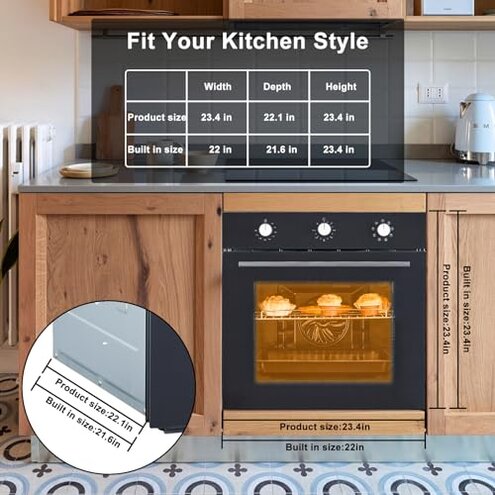
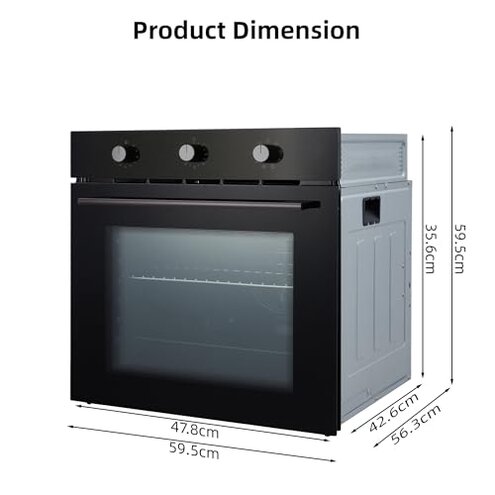
Will it fit your cabinet and vent properly?
- Hidden requirement: Installation needs specific cutout dimensions and ventilation clearance that many buyers did not expect.
- Scope: This is a primary to secondary issue seen across installation reports and buyer questions.
- When it shows up: Appears at the delivery and install stage, before the oven is usable.
- Why it worsens: Non-standard cabinets, lack of ventilation, or DIY installs make it take longer and cost more.
- Category contrast: Mid-range alternatives often match standard fitments, so this product raises the installation effort above average.
- Fixability: Some buyers solved it with trim kits or pro installers, which adds time and expense.
Is cleaning and the rotisserie a daily hassle?
- Early sign: Door removal and enamel care are described as fiddly by multiple buyers.
- Frequency tier: This is a secondary issue seen during regular cleaning cycles and after rotisserie use.
- Cause pointer: The rotating spit and interior shape trap grease and require careful cleaning to avoid staining.
- Impact: Cleaning adds time and may discourage frequent rotisserie use.
- Attempted fixes: Buyers report partial success with degreasing cleaners and soaking removable parts.
- Hidden cost: Replacement parts or service for the rotisserie may be needed if components wear from heavy use.
- Category contrast: More upkeep than most mid-range ovens, which have simpler removable racks and fewer moving parts.
- Edge cases: Heavy family cooks find the upkeep more annoying than occasional users.
Illustrative excerpts (not actual quotes)
Illustrative excerpt: "Cakes brown on one side, raw in the middle after normal bake." — reflects a primary pattern.
Illustrative excerpt: "Touch panel needed reboot in the middle of a timer countdown." — reflects a secondary pattern.
Illustrative excerpt: "Cabinet cutout was too small; needed trim and extra clearance." — reflects a secondary pattern.
Who should avoid this
- Precision bakers: Avoid if you require consistent bake results for pastries or layered dishes.
- DIY installers: Avoid if you cannot accommodate extra installation work or pay for a pro.
- Busy kitchens: Avoid if you need low-maintenance cleaning and frequent rotisserie use without added upkeep.
Who this is actually good for
- Occasional bakers: Good if you accept some unevenness because you cook infrequently and can test settings.
- Budget remodelers: Good if you want features like rotisserie and convection at a lower price and can handle installation work.
- Single-family meals: Good if you mostly roast simple dishes and are comfortable adjusting racks or rotating pans to compensate.
Expectation vs reality
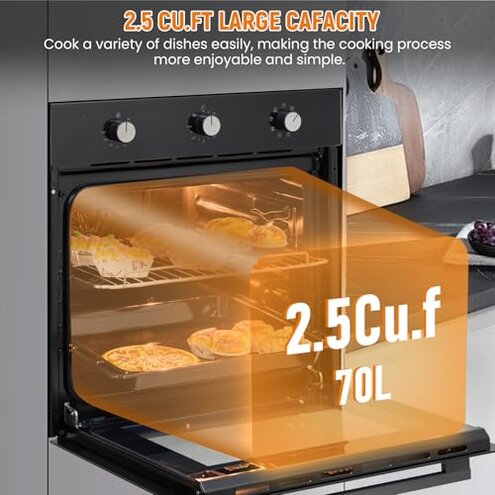
Expectation (reasonable for this category): Buyers expect usable convection and predictable presets like most mid-range ovens.
Reality: The product shows hot/cold spots and touch input glitches that make predictable cooking harder than usual.
Expectation: Installation should fit a 24" cutout without surprises.
Reality: Many buyers encountered fitment and ventilation surprises that required extra parts or professionals.
Safer alternatives
- Choose verified fit models: Look for ovens labeled with standard cutout fit to avoid hidden installation work.
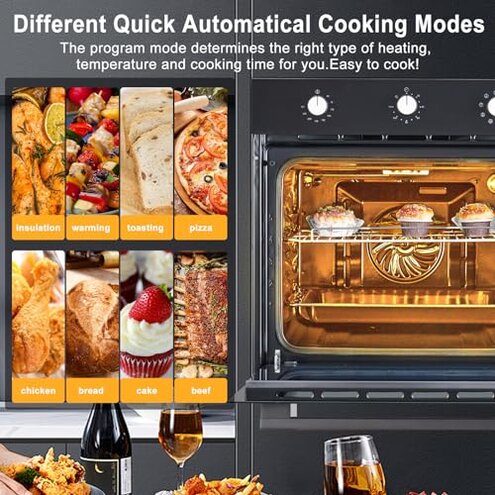
- Prefer physical knobs: If you want fewer control glitches, consider models with mechanical controls or proven capacitive panels.
- Test baking performance: Search for units with independent bake tests or third-party uniformity checks when possible.
- Avoid heavy rotisserie use: If cleanup matters, pick ovens with removable, dishwasher-safe parts for easier maintenance.
The bottom line
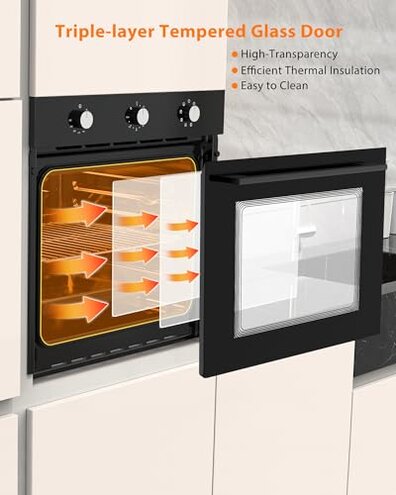
Main regret trigger: Uneven heating combined with occasional touch control failures causes the strongest buyer dissatisfaction.
Why it exceeds category risk: These issues directly affect finished food and daily use, making the product less forgiving than typical mid-range ovens.
Verdict: Avoid this oven if you need reliable, low-hassle baking and standard installation fit; consider it only if you accept extra setup and tuning.
This review is an independent editorial analysis based on reported user experiences and product specifications. NegReview.com does not sell products.